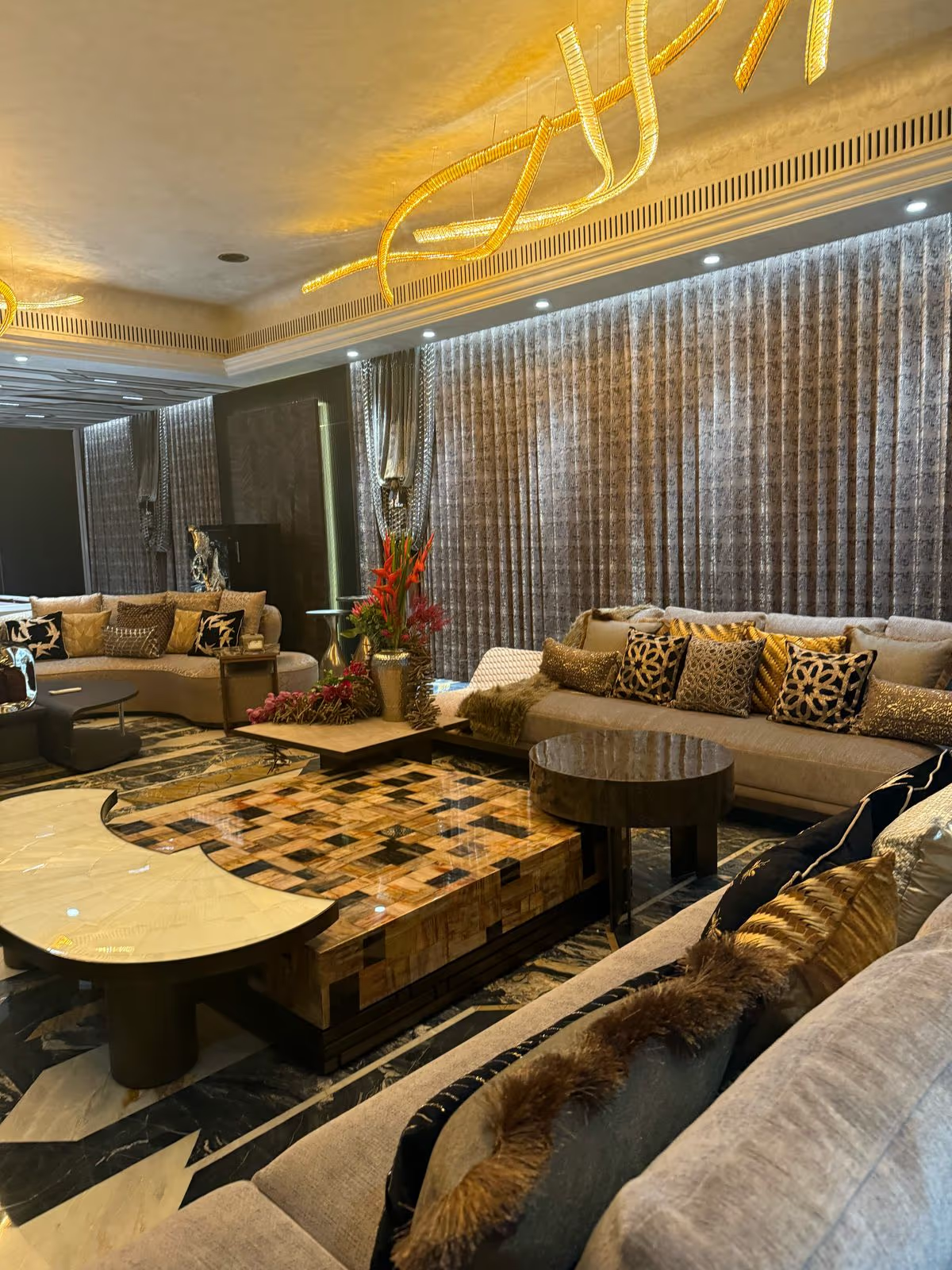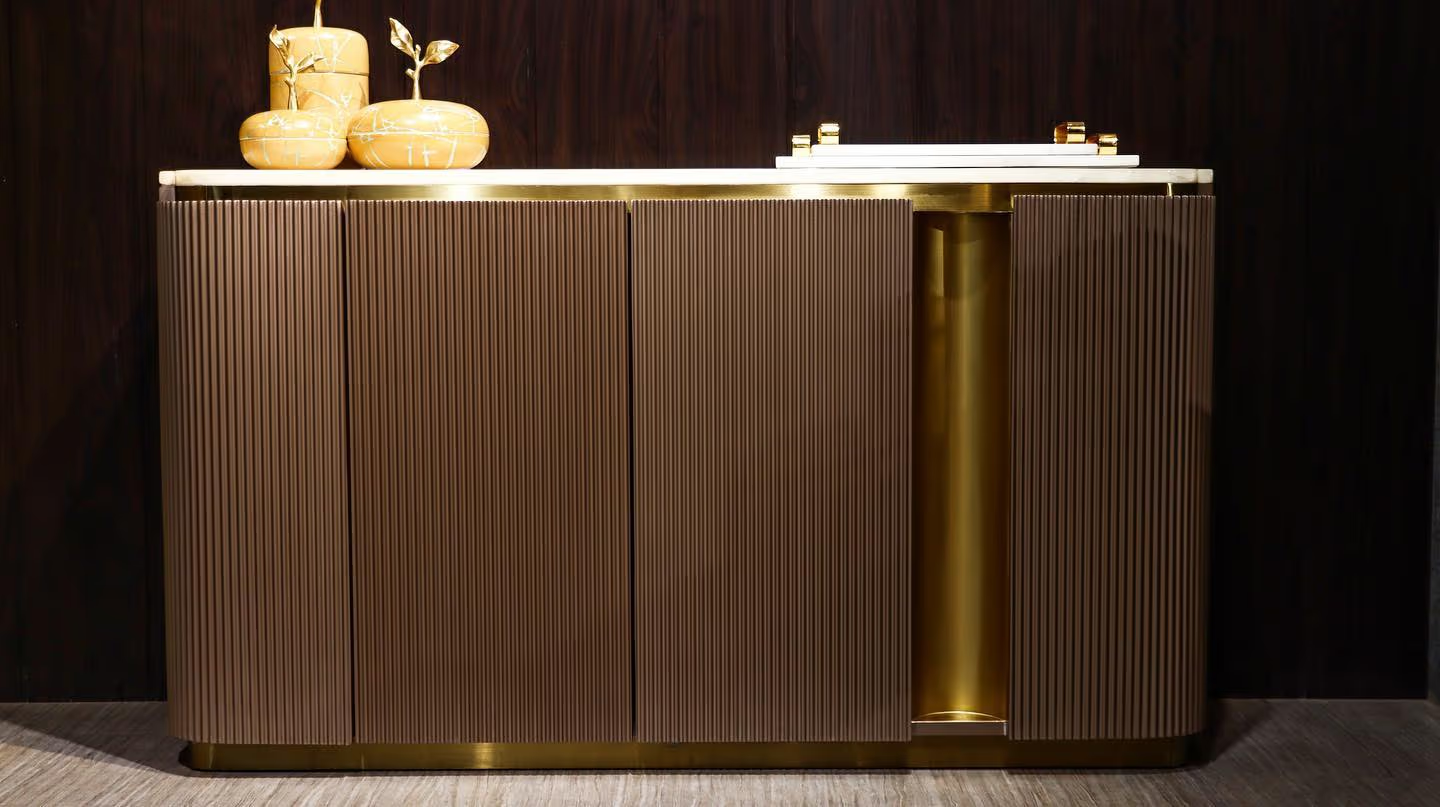

Bespoke furniture in India is furniture drawn, made and finished for one room and one client, from a blank page. Nothing is cut before you approve the drawing. Most projects run 8 to 20 weeks. Market prices sit two to five times above mass-made furniture. Designatore quotes every project in writing, in ₹ and $.
You have a wall that no standard piece fits, and a budget large enough that getting it wrong will hurt. Between a showroom that says yes to everything and a carpenter working from a photograph on a phone, there is a way to get exactly what you drew. This guide is that route, in order, with the numbers.
Designatore is a luxury furniture manufacturer in India, with its factory in Vadodara, Gujarat. We have made furniture since 2018, in our own building — 80,000 sq ft, 130+ people, ten departments under one roof. What follows is how the work actually runs.
What Bespoke Furniture in India Actually Means
Bespoke means the drawing comes before the piece. Someone measures your room, draws the piece to scale in plan, elevation and section, writes down every size, material and finish, and shows it to you. You approve it. Only then does a saw touch timber.
Three other things are sold in India under the same word. All three are useful. None of them is bespoke, and knowing where each one stops will save you money.
Catalogue furniture in a choice of three fabrics. A finished design you may re-cover. Often beautifully made, quick, and priced on the day. It stops at the tape measure. A 2,400mm sofa is 2,400mm in every fabric on the card. If your wall gives 2,650mm, you choose between a gap at one end or a sofa that blocks a walkway.
Modular carcasses with a custom shutter. Modular is good work. Boxes are made in standard 450mm, 600mm and 900mm widths, costed per unit, installed fast, and right for repeating storage in a square room. It stops at the filler panel. A 3,180mm wall in 600mm units gives five boxes and a 180mm strip of filler — and that strip is where the eye lands every morning. We compare the two in Made-to-Space vs Modular Furniture.
A carpenter building from a photograph. On site, flexible, lowest first price, and many are highly skilled. It stops at the absence of a drawing. No drawing means no record of what was agreed, no cut list, no moisture reading on the timber, and nothing to check the finished piece against. Every disagreement is settled by memory, and memory favours whoever holds the chisel.
| What you are offered | What you can really change | Where it stops |
|---|---|---|
| Catalogue piece, 3 fabric options | Colour and cover only | Size is fixed. A 2,400mm sofa stays 2,400mm. |
| Modular carcass + custom shutter | Shutter face, finish, handle | Widths are 450/600/900mm. An odd wall ends in a filler. |
| Carpenter working from a photo | Almost anything, verbally | No drawing, no cut list, no moisture check, nothing to inspect against. |
| True bespoke | Size, material, finish, hardware, joinery | Nothing — but it needs your approval and 8–20 weeks. |
For the short version, Bespoke vs Ready-Made Furniture sets the two side by side with cost-per-year maths. What Is Made-to-Space Furniture? explains the step beyond bespoke, where the piece is drawn for one wall rather than one client.
Who Bespoke Furniture Is For, and the Signs You Need It
Not every room needs this. A square bedroom with flat walls is well served by good ready-made furniture. Bespoke earns its cost when the room fights back. These are the honest signals.
- An odd wall. A splay, a curve, or a wall 40mm out of square end to end. Standard boxes cannot follow it. A drawn piece can.
- A niche or alcove. A 1,340mm recess is a gift to a bespoke maker and a trap for a modular one, because 1,340mm is not two 600mm units.
- A low beam or a duct. A wardrobe planned to 2,400mm under a 2,280mm beam is scrap. Draw it in section before anyone quotes.
- A 180mm gap you will look at for twenty years. If the standard size leaves a strip of dead wall, ask whether you will stop noticing it. Most people never do.
- Pieces that must match across a whole home. Six rooms in one veneer, one stone family and one metal finish cannot be assembled from six suppliers.
- Tight access. A lift car of 1,000 × 1,200mm decides the largest piece that can ever reach a fourteenth-floor flat.
If two or more are true, read Signs You Need Made-to-Space Furniture before you shop for anything.
Bespoke Furniture Cost in India: What Moves the Number
No honest maker prices a bespoke piece from a photograph, and none publishes a fixed price for one. A maker who publishes a firm price for a made-to-measure piece is publishing fiction — a starting figure dressed as a price. Designatore quotes per project, in writing, in ₹ and $, against a drawing you have already seen.
What you can know in advance is the range the Indian market runs, and the seven things that move a quote. Use ₹83 = $1.
- Size. Cost does not rise in a straight line with area. A 3,000mm dining top is 25% more surface than 2,400mm, but if it will not enter the lift it must be engineered as a segmented top with a concealed spline.
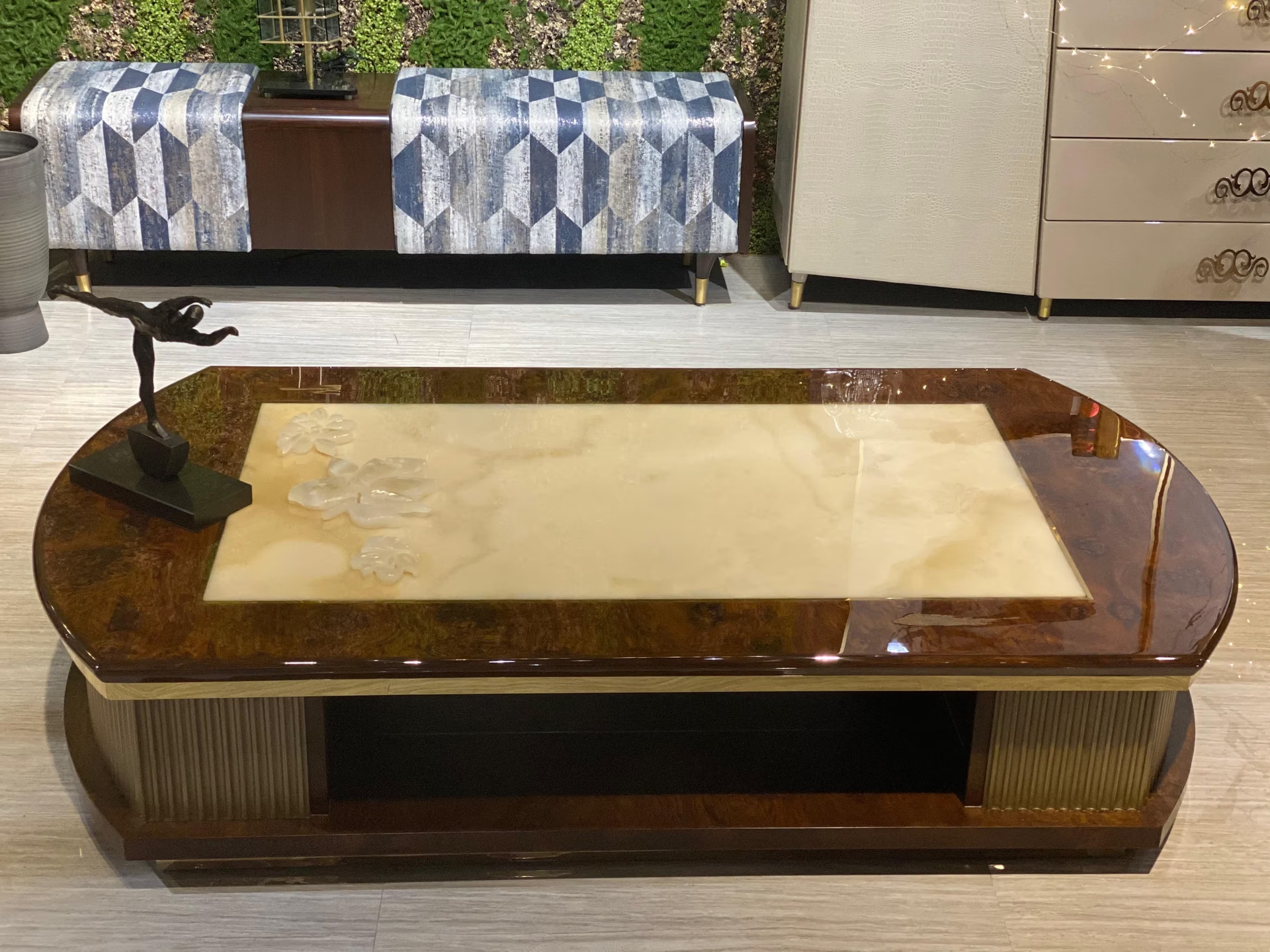
- Material tier. Veneer on a stable core, solid teak and a stone top are three price worlds. Stone is sold by the slab, not the square foot, and vein-matching means buying the block.
- Finish complexity. Open-pore matte is a handful of coats. High-gloss lacquer is many coats with flat-sanding and curing between each, and doubles the time in polishing.
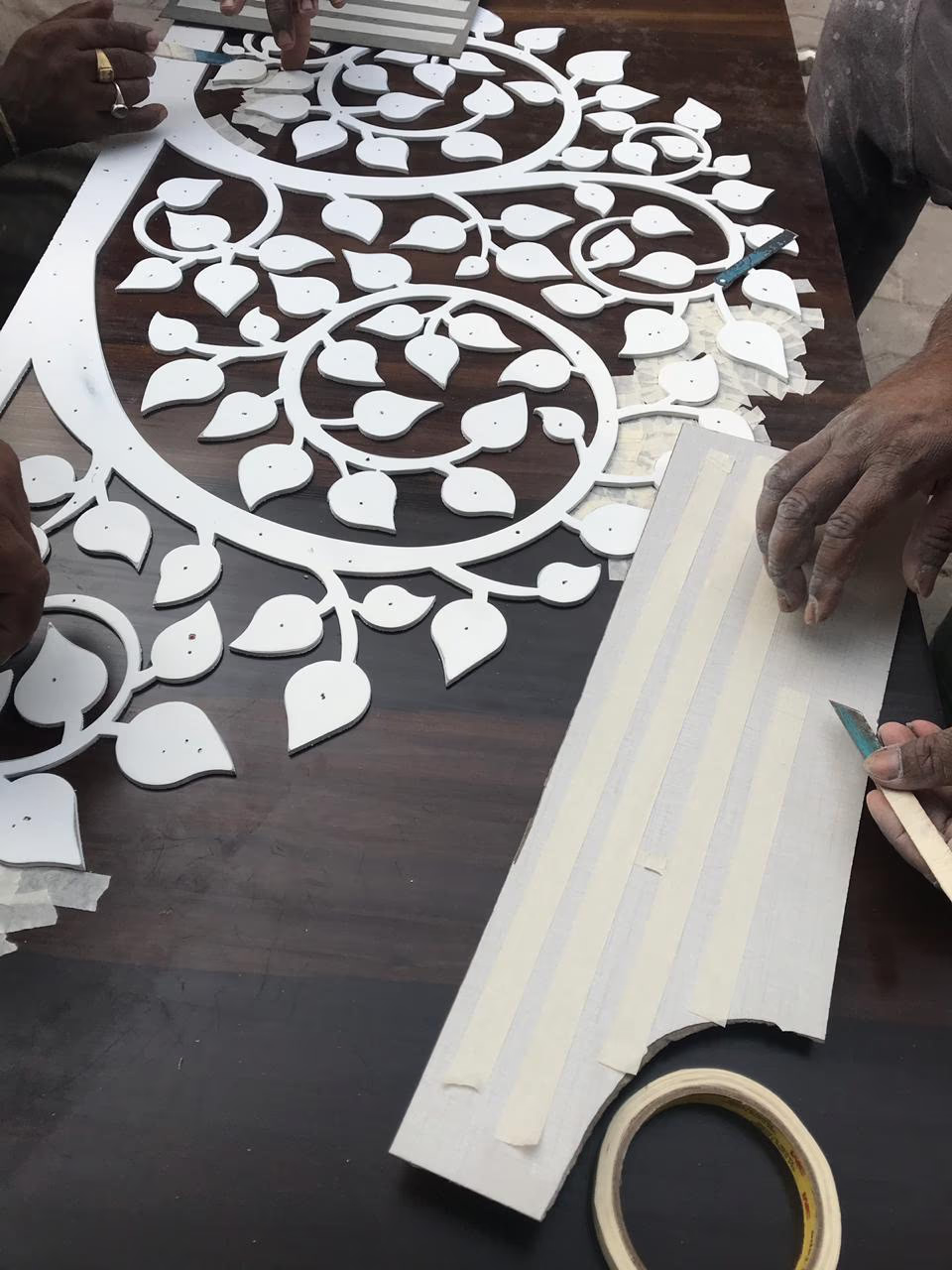
- Carving and inlay hours. Pure labour, counted in artisan-days. A mother-of-pearl mandala panel can take weeks of one person’s hands.
- Hardware. Soft-close runners, concealed hinges, a hidden lock. Good hardware is a real line, and the first thing a cheap quote removes.
- Quantity and repetition. The second identical piece is cheaper, because the drawing, jigs and setup are already paid for. Ten matching workstations cost far less each than one.
- Timeline. A compressed programme buys overtime and pushes other work aside. A sensible date is the cheapest thing you can give a factory.
As buyer guidance only, the Indian market broadly runs bespoke sofas at ₹2,50,000–₹8,00,000 ($3,000–$9,600), dining tables at ₹1,50,000–₹12,00,000 ($1,800–$14,400) depending on the top, and fitted units like wardrobes at roughly ₹1,800–₹4,500 ($22–$54) per square foot, which is the one place a per-area rate genuinely applies. The full working is in How Much Does Custom Furniture Cost?.
A fixed price for a made-to-measure piece is fiction. There is no fixed size, so there is no fixed price.
How Long Bespoke Furniture Takes, Stage by Stage
Most bespoke projects run 8 to 20 weeks. Two stages are unpredictable: material procurement, where stone and rare veneer are the long poles, and your own approval. Approval time is yours, not the factory’s, and it is the stage that slips most. A drawing that waits three weeks on a desk moves the delivery date by three weeks, exactly.
| Stage | Who owns it | Typical time |
|---|---|---|
| Design and drawing (plan, elevation, section) | Maker | 1–3 weeks |
| Your approval — drawing, samples, quote | You | 2 days – 6 weeks (slips most) |
| Material procurement | Maker | 1–6 weeks (stone and rare veneer longest) |
| Production — CNC, joinery, veneer, upholstery | Maker | 3–8 weeks |
| Finishing — paint, polish, lacquer | Maker | 1–3 weeks (high-gloss longest) |
| Quality control against the drawing | Maker | 2–5 days |
| Crating | Maker | 2–4 days |
| Transport within India | Maker | 2–10 days |
| Installation on site | Both | 1 day – 2 weeks |
| Realistic total | — | 8–20 weeks |
Stone deserves its own warning. A slab must be selected, sawn, calibrated and often resin-backed before a top can be cut from it, and two matching tops must come from one block. That alone can add weeks. How Long Does Custom Furniture Take? breaks the programme down piece by piece.
Send us your room — a photograph, a floor plan or a CAD file. We draw it, cost it in ₹ and $, and cut nothing until you approve.
Start a commission →Bespoke Furniture Materials, Named Specifically
Material choice is not decoration. It sets the joinery, the finish, the price and how the piece behaves through an Indian year, where relative humidity swings roughly between 30% and 85%.
| Material | Good for | What it demands in return |
|---|---|---|
| Heavy leather | Seats, desk tops, headboards | Hides run 45–55 sq ft with range marks; a large sofa takes 5–7 hides from one batch |
| Onyx and agate | Translucent, backlit tops and panels | Sold by the slab, usually resin-backed; the next slab of the same block will not match |
| Marble and petrified wood | Dining and centre tops | Porous, so it needs sealing; heavy, so the base must carry the load |
| Mother-of-pearl, selenite, tiger’s eye | Inlay and feature panels | Hand-cut, artisan-days per panel, with no way to rush it |
| Wood and veneer — burl, fluted, carved, ebony, teak | Structure, doors, carcasses, faces | 8–12% moisture before joinery; veneer needs a balancing backer or the panel cups |
| Brass and metal | Frames, inlay lines, legs | Brass darkens unless lacquered, so decide which patina you want |
| Velvet, bouclé, suede | Sofas, chairs, headboards | Velvet has a nap direction that must run one way across a whole suite |
| Cane, glass, mirror | Lightness and depth | Cane needs a frame that lets it move; glass needs edge protection in transit |
Go deeper in How We Choose Materials, Solid Wood vs Veneer and Velvet vs Bouclé vs Leather, or see the palette on our materials page.
How a Bespoke Piece Is Actually Made: Ten Departments
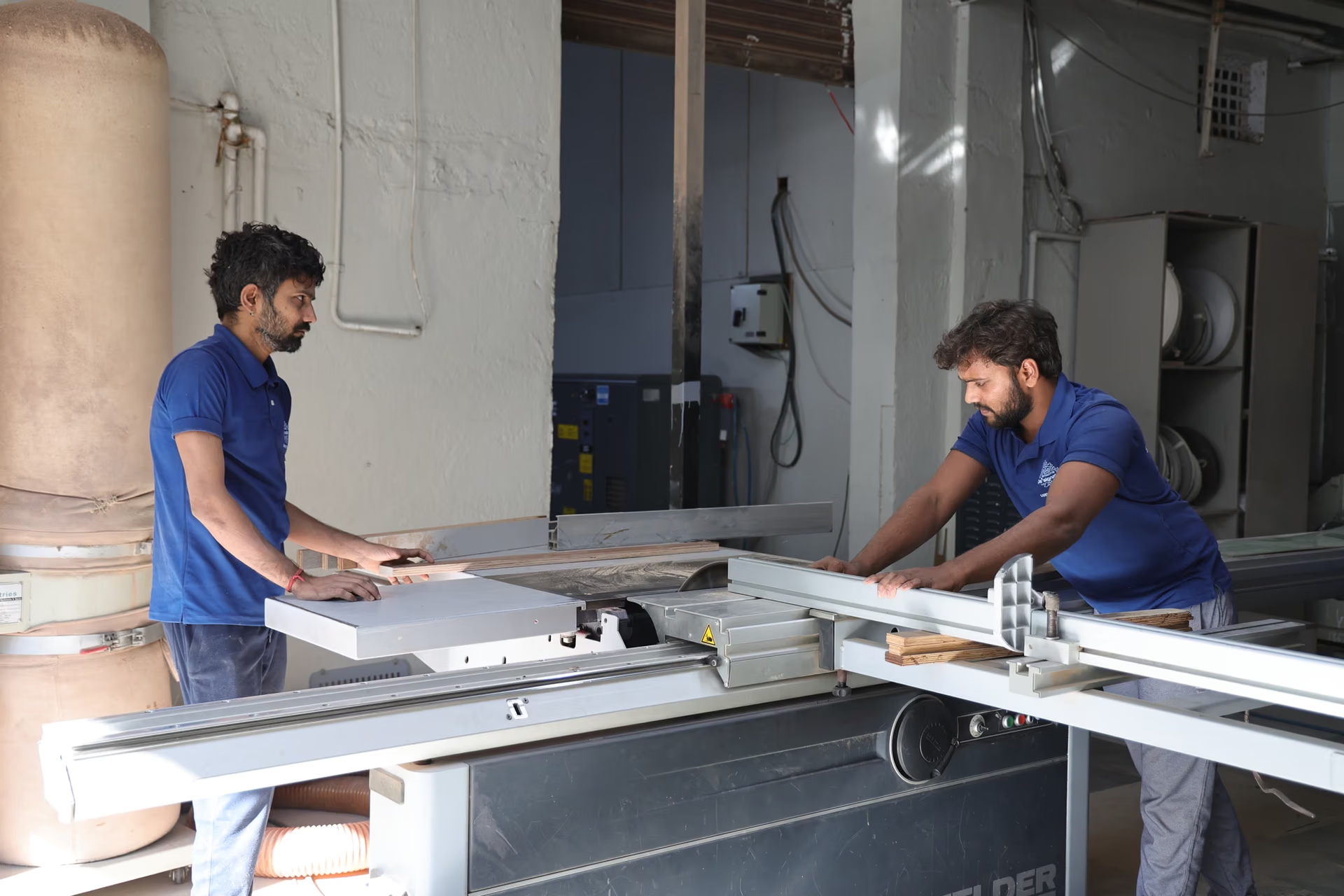
A bespoke piece is not made by one person. In our factory it passes through ten departments, in this order, and each one signs it on.
- 01 Design & Technical Development — your room becomes a scaled drawing and a cut list.
- 02 Material Storage & Processing — timber checked to 8–12% moisture; slabs and hides selected.
- 03 CNC & Precision Manufacturing — repeat parts and joints cut to the drawing, not by eye.
- 04 Woodworking & Joinery — frames, carcasses and hand-cut joints built and dry-assembled.
- 05 Veneering & Finishing — faces laid with a balancing backer so panels stay flat.
- 06 Painting & Polishing — coats, flat-sanding and curing; high-gloss lives here longest.
- 07 Upholstery — foam, webbing and cover, cut with the nap one way across the set.
- 08 Quality Control — the piece is measured against its own drawing, not against a memory.
- 09 Assembly & Packaging — dry-fit, then crated with edge and corner protection.
- 10 Research & Development — new joints, finishes and material pairings, tested before a client sees them.
The full sequence is in How Bespoke Furniture Is Made. If you would rather see it, walk through the craft pages or the factory itself — visitors are welcome, 10am to 7pm, Monday to Saturday, Sunday by appointment.
What to Give a Maker, and What You Must Get Back
A good commission is a fair exchange of documents. Here is what a maker genuinely needs. A scaled PDF with dimensions beats a beautiful render with no sizes, every time.
- The room — a photograph from two corners, plus a floor plan, a DWG, a PDF, or a sketch with real numbers on it.
- Overall sizes — wall lengths, ceiling height, window and door positions, and every switch, socket and duct.
- The access route — lift car, staircase turn, door widths, corridor. A 12-seat top that will not enter a lift must be segmented before it is made.
- The finish reference — a RAL or NCS number, a Pantone, a swatch, or a photograph of something you own.
- Who decides — one named person who can approve. Two decision-makers sharing one email address is the most expensive delay in this business.
And here is what you must get back before a single board is cut. If any of these five is missing, stop.
- A scaled drawing — plan, elevation and section, with dimensions written on it.
- A material sample you can hold — the actual veneer, stone chip, leather and fabric, not a screen image.
- A written quote in ₹ and $, itemised by piece, listing what is included and what is not.
- A timeline with stages and the dates your approvals are needed.
- Your approval, recorded. Nothing is cut before you approve. That sentence should be in writing.
If you work in CAD, send it — Custom Furniture from CAD Drawings covers the formats. Architects and designers should start at trade.
The Bespoke Furniture Mistakes That Cost the Most
Almost every expensive failure in this trade comes from one of five errors. All five are avoidable in an afternoon.
- Ordering without measuring the lift. The room fits it, the building does not. Measure the lift car, door, staircase turn and corridor before approving a size.
- Choosing a stone top from one photograph. The second slab of the same block can look like a different rock. Approve the actual slab.
- Using unseasoned wood. Timber that reaches joinery above 12% moisture moves. A mortise cut in a wet month opens in a dry one, and no finish hides it.
- Approving a design from a render with no dimensions. A render shows mood; a drawing shows size. Never sign the first without the second.
- Ordering a “3-seater” by name instead of by size. Specify overall length, seat depth 550–650mm, seat height 420–450mm and back height 800–900mm, or you will be surprised.
There are more, and they are all in Custom Furniture Mistakes to Avoid.
Buying Bespoke Furniture from India, from Anywhere
Delivery inside mainland India is free: the crate, road freight, transit insurance at full declared value, the e-way bill, all paperwork and the GST on it. There is no minimum order. The one exception is Andaman & Nicobar and Lakshadweep, which go by sea at actual cost.
Outside India we deliver worldwide, quoted per project. Export packing and documents are handled by us. Freight, duty and clearing depend on your destination port, so they are priced once we know the port. Furniture sits in HS Chapter 94, and every country taxes that chapter differently.
Furnishing an Indian home from abroad? Read Bespoke Furniture for NRIs and Worldwide Delivery. Full terms are on our delivery page.
How to Choose a Bespoke Furniture Manufacturer
Ask these four questions early. The answers tell you more than any showroom.
- Do you own the factory, or subcontract? Subcontracting is not a crime, but you should know. Split across three workshops, nobody owns the finish, and your wardrobe veneer will not match your bed.
- Will you show me the shop drawing before cutting? The right answer is yes, always, in writing. A maker who resists intends to decide sizes on the floor.
- Can I visit? A real manufacturer says yes and names the hours. Ours are 10am–7pm, Monday to Saturday, Sunday by appointment, at Village Bil, Vadodara.
- Who fixes it in year six? Ask who you call, what is covered, and how it is written into the quote. A slogan instead of a document should worry you.
Other answers that should worry you: a firm price quoted before anyone measured, a refusal to name the material grade, “we will decide the size on site”, and a portfolio with no photograph of anyone making anything. Our own numbers are on the facts page.
Your Reading Map: Every Bespoke Furniture Guide, by Topic
This page is the front door. These are the rooms behind it, grouped so you can go straight to the one you need.
Cost and value
- How Much Does Custom Furniture Cost? — base ranges, piece by piece
- Bespoke Furniture Price Factors — what makes one quote higher than another
- Why Is Custom Furniture Expensive? — where the money goes
- Is Bespoke Furniture Worth It? — the cost-per-year argument
Process and drawings
- Our Design Process — what happens at each approval
- Custom Furniture from CAD Drawings — file formats and what we need in them
Rooms and pieces
- Custom Dining Table Size and Wood Guide — seats, top sizes and what each wood does
- Custom Sofa Buying Guide — how to specify by size, not by seat count
- Luxury Walk-in Wardrobe Guide — hanging depths and shelf spacing
Corporate and office
- Luxury Boardroom Design — table sizes and the 1,050mm walkway
- Custom Executive Desk Guide — knee clearance, storage and stone tops
Materials and care
- Best Wood for India’s Climate — which timbers hold their shape
- Furniture Care in a Humid Climate — the yearly routine
- How to Protect Leather Furniture — feeding, sunlight and stains
To see finished work rather than read about it: shop, collections and the corporate pages.
Start where you are. Send a photograph or a plan through customization and we will draw it, cost it in ₹ and $, and show it to you before anything is cut. Specifying for a client? Begin at trade. Would rather see the work first? Walk through collections, or come to the factory.