
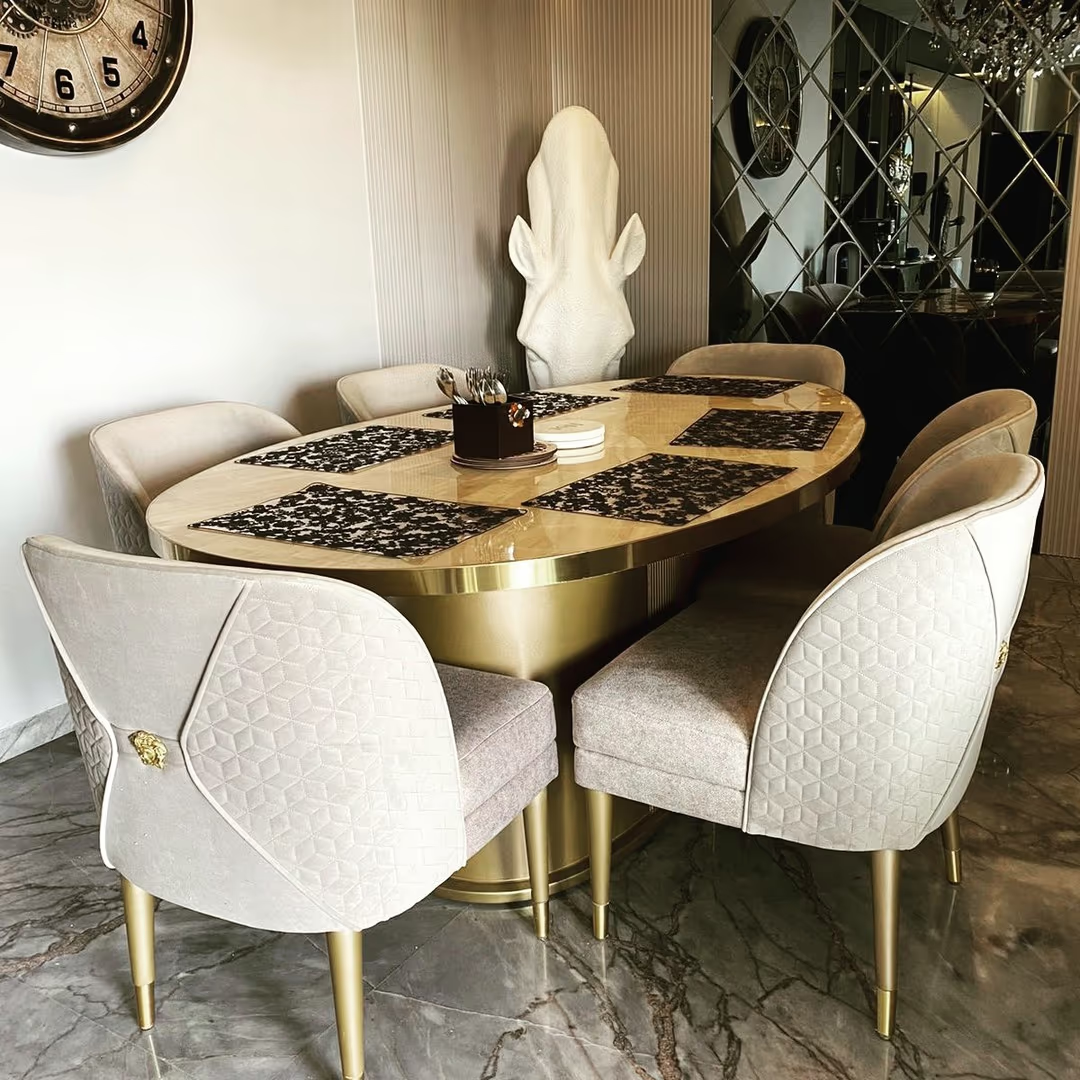
This custom dining table guide helps you pick the right size, wood, and finish with ease. For most homes, allow 60 cm of table edge per seat and 90 cm to 110 cm of walking room around the table. Then choose a wood or stone top that fits your room, your light, and the way you eat.
A dining table is the one piece of furniture your whole family touches every day. You eat there. You talk there. Children do homework there. So it has to be right. Not almost right. Right. And the only way to get it right is to size it for your room and pick a top that suits how you live.
The good news is that this is simpler than it looks. There are only three real choices to make: how big, which shape, and which top. Get those three right and the rest falls into place. This guide walks you through each one, in plain words, with real numbers you can use today.
We build these tables for a living, as a made-in-India furniture house working across India and worldwide. So the numbers below are not guesses. They are the same measures we use on the workshop floor when we draw a table for a real room.
How to size a custom dining table
Start with people, not the table. Ask how many seats you need every day, and how many you want for a big family meal. Then work out the length. The simple rule is 60 cm of table edge per person. That gives each guest room for a plate, a glass, and their elbows without touching the next seat.
So a table for six needs about 180 cm of length. A table for eight needs about 240 cm. Width matters too. A width of 90 cm to 100 cm lets two people sit across from each other with a serving dish down the middle. Go narrower and the food fights the plates for space.
Dining table size by seat count
Here is a quick dining table size chart. Use it as a starting point, then adjust for your room. These are the lengths we cut most often for rectangular tables. Round tables are listed by diameter, which is the width across the middle.
| Seats | Rectangular length | Round diameter |
|---|---|---|
| 4 people | 120 cm (4 ft) | 100 cm (3.3 ft) |
| 6 people | 180 cm (6 ft) | 130 cm (4.3 ft) |
| 8 people | 240 cm (8 ft) | 150 cm (5 ft) |
| 10 people | 300 cm (10 ft) | 180 cm (6 ft) |
| 12 people | 360 cm (12 ft) | Not advised |
One honest note on round tables. A round top is lovely for four to six people and for square rooms, because everyone can see everyone and the talk flows. But past six seats a round table grows so wide that no one can reach the middle. For large groups, a long rectangular table is the wiser choice.
If your room is an odd shape, a bay, a slope, a pillar in the wrong place, do not force a boxed table into it. That is exactly the problem made-to-space furniture for odd-shaped rooms is built to solve. The table is drawn around the room, so the shape works with your space instead of fighting it.
How much space to leave around the table
This is the step most people skip, and it is the one that ruins more dining rooms than any other. The table can be the perfect size, but if there is no room to pull out a chair, every meal feels tight. So measure the room, not just the table.
Leave at least 90 cm between the edge of the table and the nearest wall, unit, or window. That is the space a person needs to slide a chair back and stand up. If people also have to walk behind seated guests to reach the kitchen, push that gap to 110 cm so no one has to squeeze past.
A table that fits the room but not the clearance is a table that never feels calm.
Here is a simple way to plan it. Take your room length, subtract 180 cm for clearance on both ends, and the number you are left with is the longest table you can fit. Do the same for width. This one sum saves people from buying a table that looks right in a showroom and feels wrong at home.
Best wood for a custom dining table in India
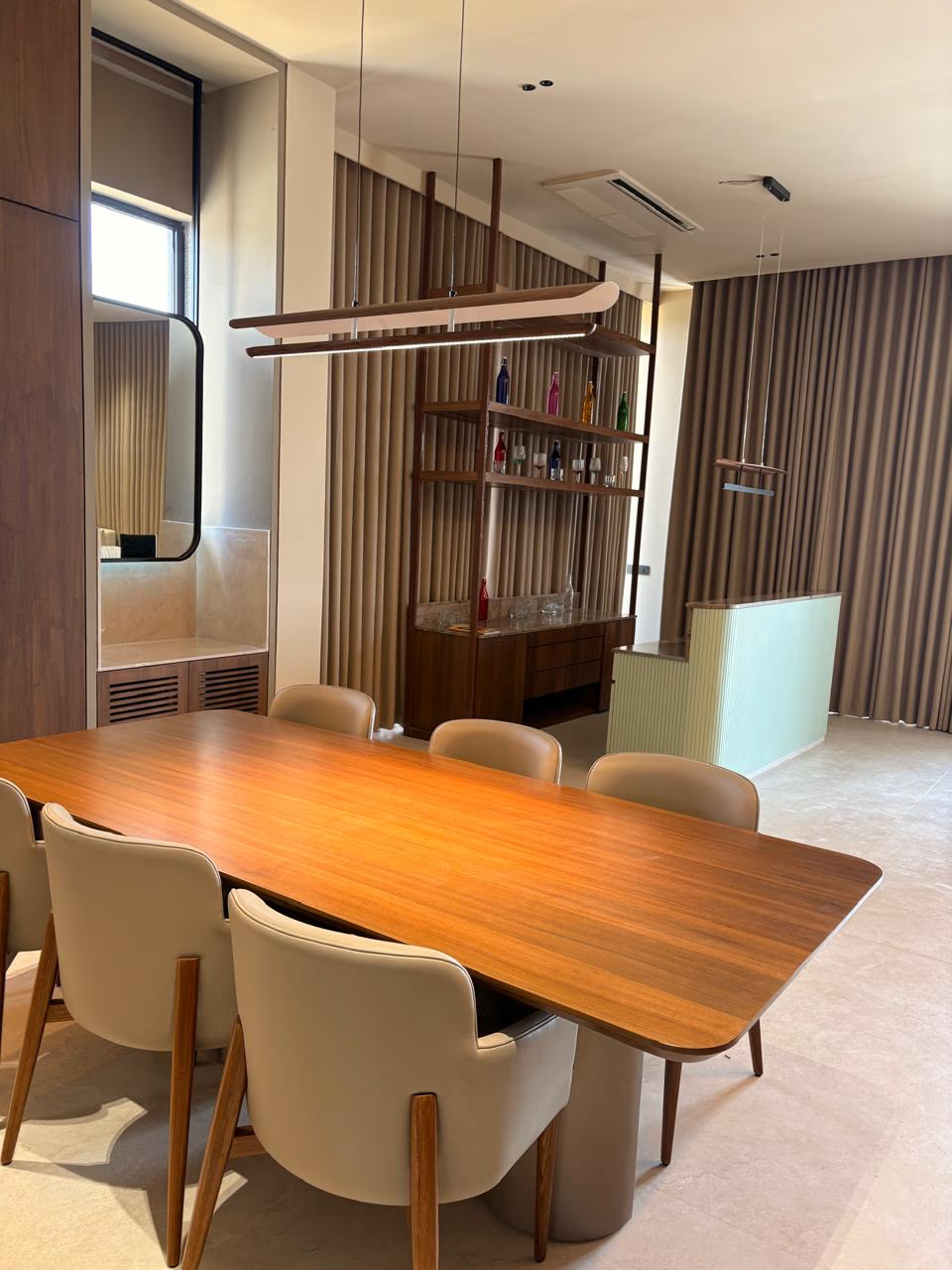
Once the size is set, the top is the choice that decides how the table looks and how long it lasts. Wood is the classic choice, and for good reason. It is warm, strong, and it ages well. But not every wood suits a dining table, and not every wood suits India’s heat and damp.
Three solid woods stand above the rest for daily dining. Each has its own look and its own feel. There is no single best. There is only the best for your room, your floor, and your light.
| Wood | Look | Best for |
|---|---|---|
| Teak | Warm honey-gold | Heat and humidity; long life |
| Oak | Pale, open grain | Bright, modern rooms |
| Walnut | Deep chocolate-brown | Rich, formal, quiet-luxury rooms |
Teak is the safe, wise pick for most Indian homes. It carries natural oils that shrug off heat and damp, so it stays flat and firm through the seasons. Oak is hard and pale, and it suits a bright, airy room. Walnut is dark and grand, and it gives a formal room real depth. You can read our fuller take in best wood for furniture in India’s climate.
One choice to make with any wood is solid timber or a fine veneer. Both can be beautiful and both can last. The difference is in cost and in certain looks that only one can give. Our guide to solid wood versus veneer lays out when each one is the smarter call, so you spend well.
Marble dining table: beauty, care, and cost
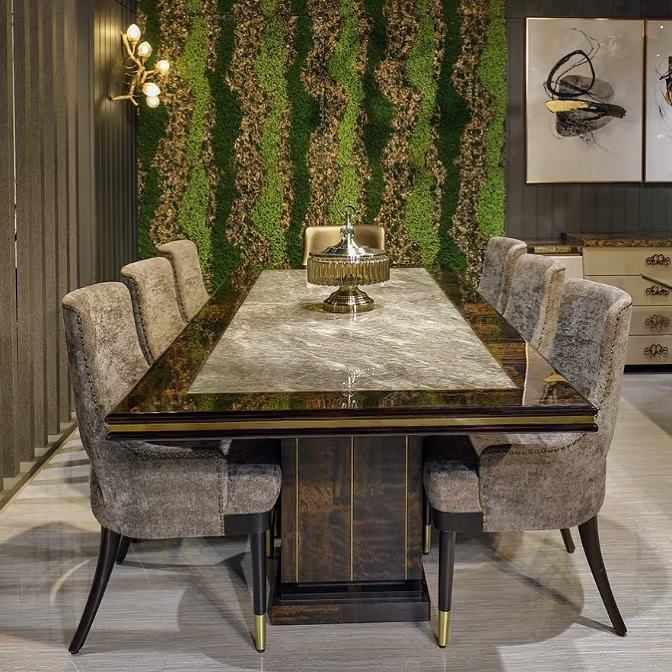
A marble dining table is the choice when you want the room to stop people at the door. Marble is cool to the touch, solid as anything, and no two slabs are ever the same, so your table is truly one of one. It is the top we reach for when a client wants quiet drama.
There is one thing to know before you choose it. Marble is a natural stone, and it is porous, which means it can drink in a spill if it is left to sit. Wine, lemon juice, and oil are the ones to watch. The fix is simple: wipe spills quickly, and have the top sealed once a year. Do that, and a marble dining table lasts a lifetime and looks better with age.
If you love the stone but worry about the care, you have options. A honed matte marble hides marks better than a high polish. Or you can pick a harder stone with a similar look. We walk clients through every one of these in our marble furniture guide, and the day-to-day care in how to care for marble furniture.
Choosing the base and the finish
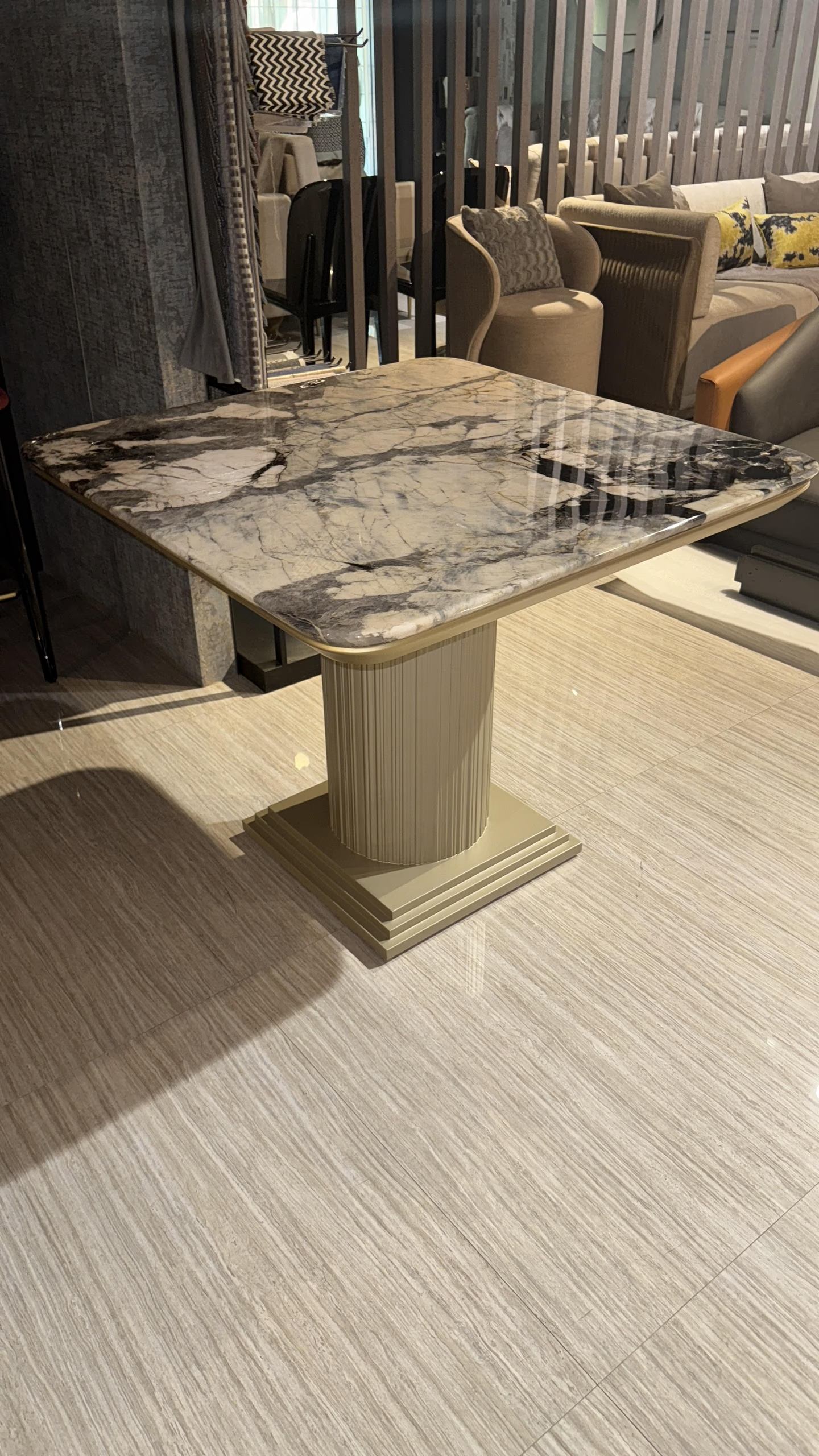
The top gets the eyes, but the base does the work. It holds the weight, sets the style, and decides how many people can really sit down. There are three common base types, and the right one depends on your top and your seat count.
- Four legs: the classic, strong and simple, but a leg can land where a chair wants to go, so plan the spacing.
- Pedestal or two-plinth base: leaves the ends open, so you can pull up extra chairs; ideal for a heavy stone or marble top.
- Trestle base: two solid supports joined by a beam; steady and handsome under a long wooden top.
Metal adds another layer of choice. A slim brass base under a stone or wood top looks light and rich at once, and it is a signature we return to often. Brass needs a little care to keep its glow, which we cover in the brass in luxury furniture guide. The finish on the top matters too: a matte, hand-rubbed finish feels calm and hides marks, while a high polish reads formal and bright.
Not sure what size or top your room can take? Send us your space and we will send back a drawing and honest ₹ and $ ranges, with no pressure.
Send us your space →How much a custom dining table costs in India
A custom dining table in India usually costs between ₹2,50,000 ($3,000) and ₹8,00,000 ($9,600). The low end is a clean, solid-wood table for six. The high end is a large table for eight or ten in marble, rare wood, or with a hand-worked brass base. Three things move the number: the size, the top, and the base.
Size is the first lever, because a longer table uses more material and needs stronger engineering so it never sags. The top is often the biggest single cost, since marble, agate, and rare wood cost far more than a standard solid wood. The base is the third, with hand-worked metal costing more than plain legs. For a full breakdown, see how much a custom dining table costs.
Value is not the same as the lowest price. A store table built for a million homes rarely fits your room, and it wears out in a few years. A custom table, made to your space, fits to the inch and lasts for decades, so the cost per year of use is often lower, not higher.
How your custom dining table is made
It helps to know what the price and the wait are buying. A made-to-space dining table is not pulled from a shelf. It is drawn for your room, cut from chosen timber or stone, and joined by hand across several weeks. Each step has to settle before the next one starts.
- We measure your room and your clearances, then draw the table to fit the exact space.
- You choose the top, the base, and the finish, and we show real material samples in your light.
- The timber or stone is selected and cut, and the base is built and fitted by hand.
- The top is joined, sanded, and finished in coats, with drying time between each one.
- The table is checked, wrapped, delivered, and set in place in your room.
The whole path is laid out in how bespoke furniture is made, and the timeline, usually six to twelve weeks, in how long custom furniture takes. Plan early, and you skip any rush and pay the calm, normal price.
Common dining table mistakes to avoid
Most dining table regrets come from a few simple slips. You can dodge every one of them with a tape measure and a little planning before you buy.
- Buying the biggest table the room can hold, and leaving no space to pull out a chair.
- Forgetting the base: legs that land where chairs want to go, so two seats never work.
- Picking a top for the photo, not the life, like a high-polish stone in a house with young children.
- Matching the table to a showroom, not to your own floor, wall colour, and light.
- Rushing the order and paying a rush fee, when planning a few weeks early costs nothing extra.
We see these often, and we help every client steer around them. Our full list is in custom furniture mistakes to avoid, and for the room as a whole, luxury dining room design ideas shows how the table, the light, and the walls come together.
Ready to plan your dining table?
Start with the three choices in this guide: size, shape, and top. Measure your room and your clearances first. Count your seats, both for every day and for the big meal. Then pick a top that suits your light and your life, a warm wood for calm, a marble for drama, a brass base for a touch of shine.
We are a made-in-India furniture and interior house, working across India and worldwide, led by founder Nidhi Patel. Every dining table we build is drawn around your room, your light, and the way your family eats. When you are ready, send us your space and we will send back a drawing, a top you can see in your own light, and honest ₹ and $ ranges. You can also browse finished pieces in our collections.