
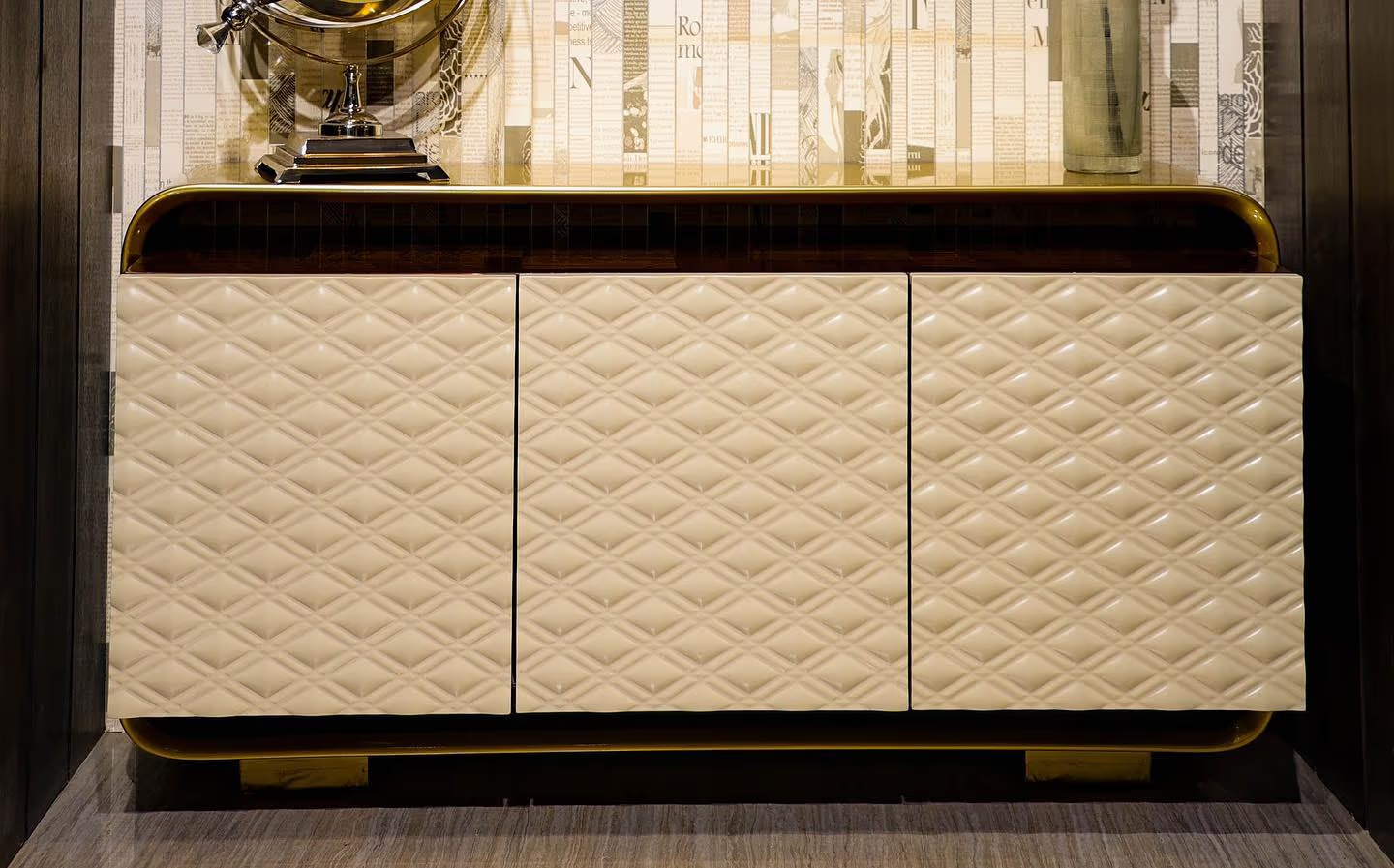
In solid wood vs veneer, choose solid wood for small, hard-worked pieces like table tops and chair legs, and choose fine veneer for large flat panels like wardrobes and headboards. Solid wood is strong but moves in heat and damp. Good veneer stays flat, shows rare grain, and is often the smarter luxury choice.
Ask most people which is better, solid wood or veneer, and they will say solid wood without a pause. It sounds honest. It sounds costly. It sounds like the safe, grown-up choice. But that quick answer is often wrong, and it can cost you a piece that cracks, warps or bows within a few short years.
The truth is calmer and more useful. Solid wood and veneer are both real wood. Neither is fake, and neither is a trick. They are two tools, and a good maker reaches for each one where it does its best work. In this guide we explain both in plain words, show you where each one wins, and make the case for when veneer is the smarter luxury choice — not the cheaper one.
What is solid wood furniture?
Solid wood furniture is made from pieces cut straight from a tree. A leg, a plank or a board is the same wood all the way through — top, middle and bottom. There is no core, no board, no other material hiding inside. What you see on the surface carries on, unbroken, through the whole piece.
This is the wood most people picture when they think of fine furniture, and its strengths are real. Solid wood is strong where a piece is gripped, sat on or leaned against. It can be sanded and re-polished many times over its life. And a small scratch or dent can often be worked out by hand, because there is solid timber all the way down. For a piece that takes weight and wear, this matters.
But solid wood has one habit you must respect: it moves. Wood is a natural thing, and it breathes with the weather. When the air is damp it swells; when the air is dry it shrinks. On a small piece this movement is tiny and safe. On a wide flat panel, it is a real risk — and that is where veneer quietly takes the lead.
What is veneer, and why quality veneer is not cheap
Veneer is a thin sheet of real wood, sliced from the very same fine trees that solid wood comes from — walnut, oak, burl and more. That thin sheet is then glued onto a strong, flat board underneath. The surface you see and touch is real wood, with real grain. Only the core is different.
Here is the point most people miss: good veneer is a luxury material, not a shortcut. Some of the most beautiful and costly furniture in the world is veneered, and for good reason. A single rare log can be sliced into many wide, matched sheets, so a whole wardrobe can wear one flowing grain that no set of solid planks could ever match. This is how rare woods like burl reach large panels at all — in solid form they would be far too costly, too rare, and too likely to crack.
Cheap veneer does exist, and it has earned veneer its bad name. A paper-thin, printed skin glued over weak board with poor glue will chip, lift and peel. But fine veneer, cut thick from real wood and bonded over a stable core with industrial glue and a proper top coat, is a different thing entirely. The word is the same. The quality is not. To keep a veneered surface looking its best for years, our guide on how to care for burl wood and veneer shows the simple steps.
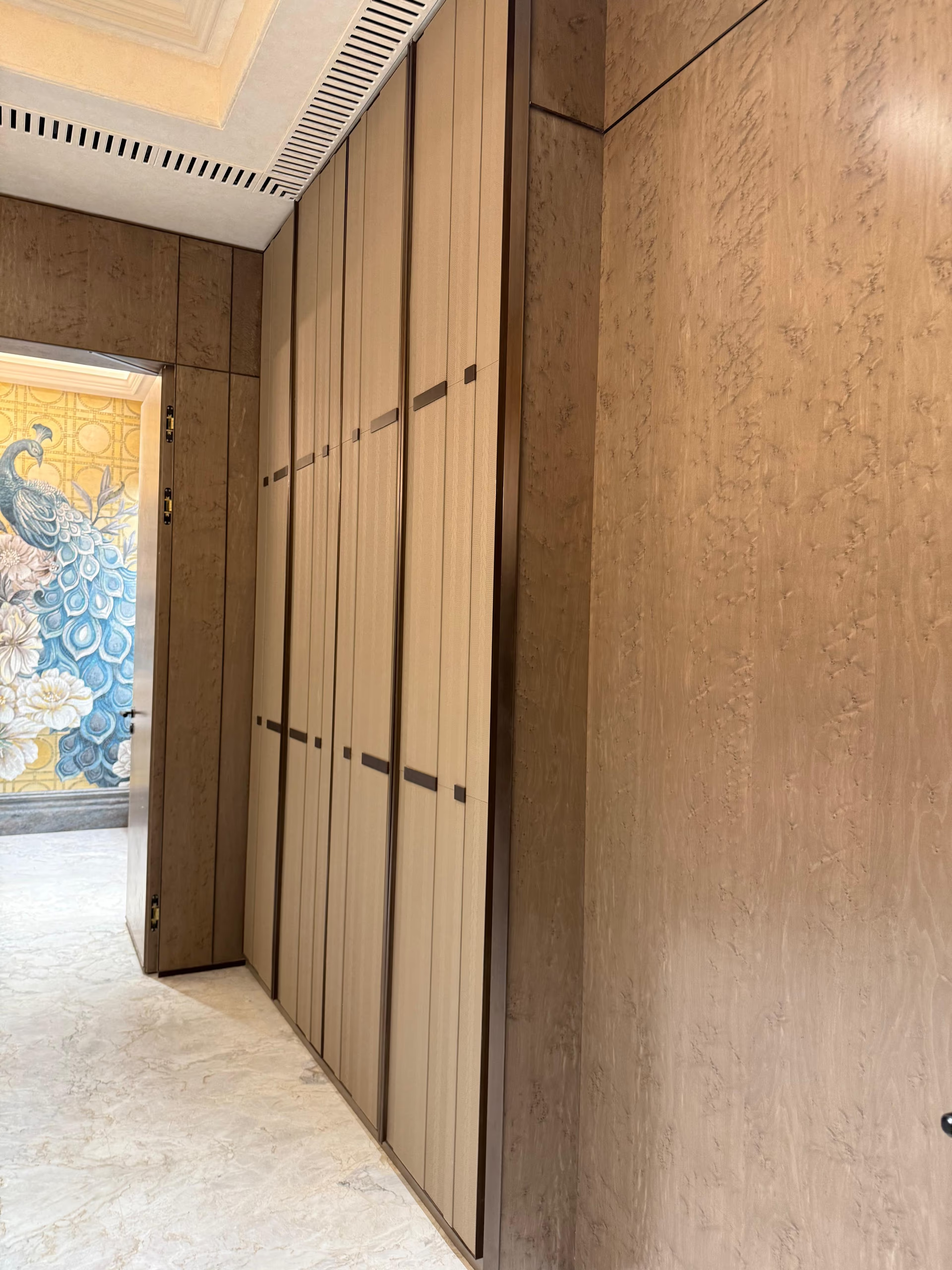
Solid wood vs engineered wood: what sits beneath good veneer?
To understand veneer, you need to know what sits underneath it. That core is usually engineered wood — a strong, flat, steady board made from real wood, built by people rather than grown in one solid piece.
Engineered wood is made by bonding layers or fibres of wood together under heat and pressure. Plywood, which is thin wood layers cross-glued for strength, and MDF, which is fine wood fibres pressed into a dense board, are the common types. The clever part is what this bonding does: because the layers pull against each other, the board stays flat and still. It does not swell and shrink the way a wide solid plank does.
This is why veneer and engineered wood are such a good pair. The engineered wood gives a flat, stable base that will not move. The fine veneer gives a real-wood face that is beautiful to see and touch. Together they make a large panel that stays true for decades. Engineered wood is not the same as veneer — one is the steady core, the other is the real-wood skin — but in the best pieces they work as one.
Solid wood vs veneer: the key differences
Here is the plain comparison, side by side, so you can see where each one wins before you choose.
| What matters | Solid wood | Fine veneer |
|---|---|---|
| What it is | Timber, the same wood all the way through. | A thin sheet of real wood over a strong core. |
| Surface | Real wood grain. | Real wood grain, from the same fine trees. |
| On large flat panels | Can swell, warp and crack over time. | Stays flat and true for decades. |
| Rare grains like burl | Very costly and prone to cracking. | Used freely, in wide matched sheets. |
| Strength under weight | Excellent for legs, frames and tops. | Best on panels, not on load-bearing legs. |
| Deep scratches | Can often be sanded and re-polished. | Hard to sand out; care and sealing matter. |
| Cost | Higher for wide, rare woods. | Brings rare woods within reach on big panels. |
Read down the table and a pattern shows itself. Solid wood wins on small, hard-worked parts. Fine veneer wins on large flat panels and on rare grain. Neither is better overall. Each is better for a job. The skill is knowing which job is in front of you.
Solid wood and veneer are both real wood. The only mistake is using the wrong one in the wrong place.
When veneer is the smarter luxury choice
This is where the quick answer fails most homes. On large flat surfaces, fine veneer is not the budget option — it is the better one. A wide solid board fights the weather every day. It swells in the damp and shrinks in the dry, and over the years that pull can bow a door, split a panel or spring a joint. Veneer over engineered wood simply does not move that way. It stays flat.
So the pieces where veneer shines are the big, flat, seen-every-day ones:
- Wardrobe doors and cabinet fronts. Tall, wide panels that must stay flat and shut cleanly for years — walk-in wardrobes are a classic case.
- Bed headboards. A broad, calm surface where one flowing grain becomes the quiet centre of the room.
- The sides and tops of large cabinets and consoles. Wide faces where solid planks would show joins and risk movement.
- Feature wall panels and full wall units. Big areas that must read as one grain, wall to wall, with no gaps.
On all of these, veneer gives you two things solid wood cannot: a surface that stays flat for decades, and access to rare, matched grains that would be far too costly or too fragile in solid form. That is not settling for less. That is choosing the material that does the job better. It is the same thinking behind our made-to-space furniture — the right material in the right place, built for your exact wall.
Not sure which surfaces in your home want solid wood and which want fine veneer? Send us a photo of the space and we will show you the right material for each piece before anything is built.
Send us your space →When solid wood is the right choice
Veneer is not the answer for everything, and a good maker will tell you plainly where solid wood earns its place. Solid wood is the right pick wherever a piece is gripped, carries weight, or takes daily knocks — the parts that must be strong all the way through.
- Table and chair legs. They are pushed, pulled and leaned on every day, so they need solid strength through and through.
- Small and medium table tops. A narrow top moves very little, so solid wood gives lasting warmth with low risk.
- Chair and sofa frames. The hidden bones of a seat must hold firm for decades, and solid timber holds best.
- Edges and hand-worked details. Carved trims and rounded edges that may be knocked can be sanded and repaired in solid wood.
On a custom dining table, for example, a good maker will often set a solid wood edge and solid legs against a wide, stable core — solid strength where hands and weight land, stability where a wide surface must stay flat. That is not a compromise. That is craft.
How veneer furniture quality is really judged
Since good and cheap veneer share a name, you need to know what tells them apart. Veneer furniture quality is not about the word on the label — it is about three things you can ask any maker to explain.
- The core board. Ask what sits under the veneer. A strong plywood or a dense, quality engineered board holds screws, stays flat and lasts. Weak, crumbly board is where cheap furniture fails.
- The glue and the bond. Fine veneer is pressed on with industrial glue under heat, so it never lifts or bubbles. Poor veneer is stuck on thin and lets go at the edges within a few years.
- The finish on top. A proper sealed top coat protects the real wood from damp, marks and light scratches. This is what lets a veneered surface last for decades with only simple care.
Get these three right and veneer will outlast a wide solid panel in the same spot. Get them wrong and no material can save the piece. This is why who builds your furniture matters as much as what it is made from. To see how each surface is chosen, cut and sealed by hand, read how bespoke furniture is made, step by step and how we choose materials for each client.
How to choose between solid wood and veneer
You do not need to be a carpenter to make this call. You need to look at one piece at a time and ask two simple questions.
- Is this part gripped or does it carry weight? Legs, frames and small tops that take daily force want solid wood. Choose strength where hands and weight land.
- Is this a large flat panel? Wide doors, headboards and cabinet sides want fine veneer over a stable core, so they stay flat and can wear rare grain.
Most good pieces are a mix, and that is exactly how it should be. A wardrobe might have a solid wood frame and fine veneer doors. A dining table might have solid legs and a stable, veneered or solid top, depending on its width. The wrong question is “solid or veneer?” for the whole piece. The right question is “which one, where?” — asked part by part.
This is also why a real maker beats a shop shelf. A factory picks one material for a whole run to keep the price down. A bespoke maker picks the right material for each part of your piece. If you are weighing that choice more broadly, our guide on bespoke vs ready-made furniture walks through fit, cost and how long each one lasts.
How Designatore mixes solid wood and veneer by hand
In our own workshop, we do not choose solid wood or veneer for a whole piece and move on. We choose part by part, so each surface gets the material that suits it best. It is slower, and it is the reason our pieces stay true for years.
- We study the piece. We map which parts take weight, which parts are gripped, and which parts are large flat panels that must stay flat.
- We place solid wood where strength lives. Legs, frames and hand-worked edges are cut from solid timber that can be sanded and repaired for life.
- We place fine veneer where grain and flatness matter. Wide doors, headboards and cabinet faces wear matched veneer over a stable core.
- We bond and seal for the long run. Industrial glue, a strong core and a sealed top coat mean the surface lasts, not just looks good on day one.
- We build it in India, by hand. One team, one standard, delivered across India and worldwide.
Because one team draws, builds and signs every piece, there is one clear name behind the material choices and the finish. You can see completed work in the Designatore collection, and read how the house was built around this care by founder Nidhi Patel.
The bottom line on solid wood vs veneer
Solid wood is not automatically better, and veneer is not automatically cheaper. They are two real-wood materials, each with a job it does best. Solid wood is right for legs, frames and small tops that take weight and wear. Fine veneer is right for large flat panels and rare grain, where it stays flat for decades and looks richer than solid planks ever could.
The finest furniture uses both, placed by a skilled hand. So the real question is not which material to fear, but who you trust to choose them. If you have a piece in mind and want the right material in the right place, the first step is simple: send us your space, and we will design furniture built to fit it — and to last.