
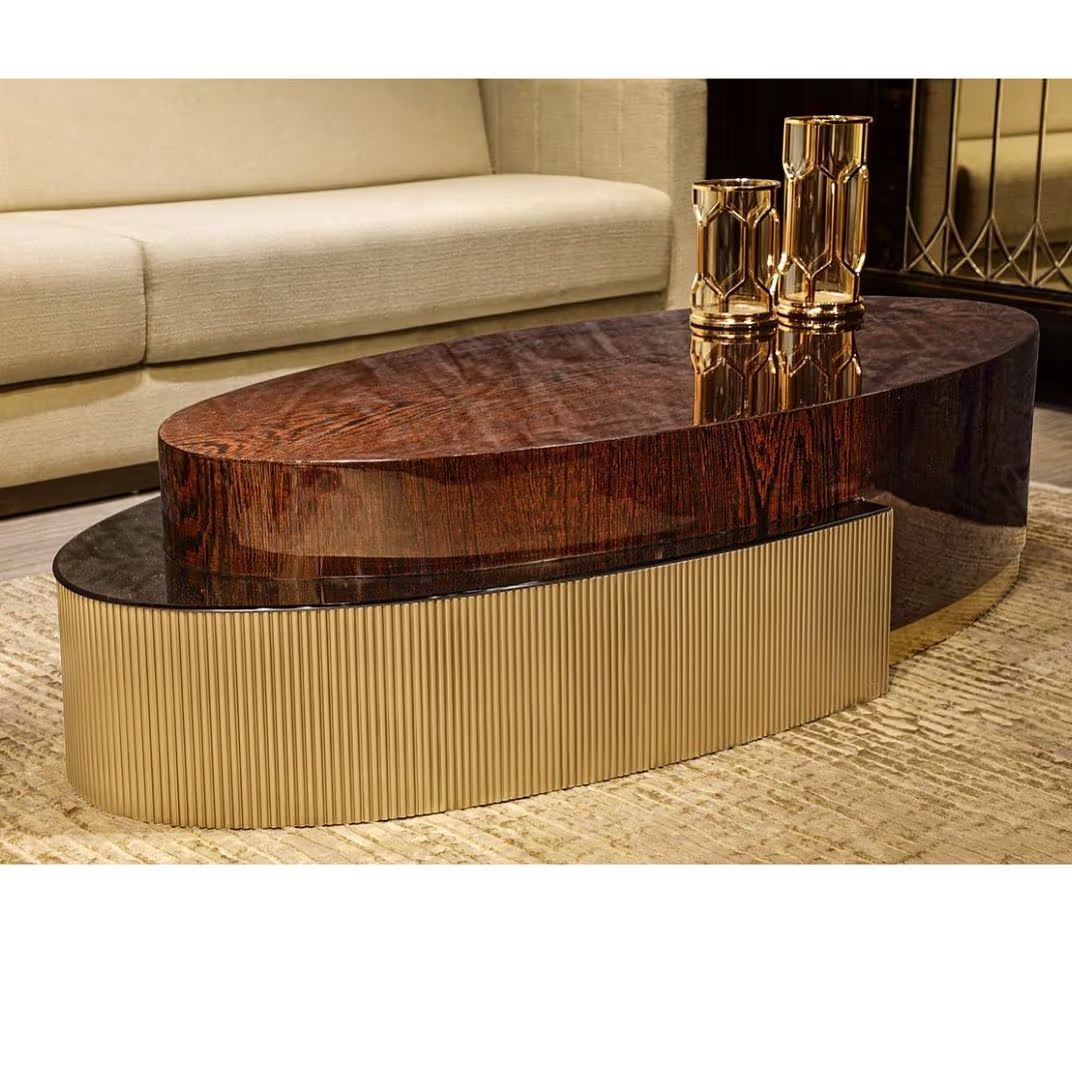
Burl wood care comes down to three habits: keep the piece out of direct sun, hold the room’s humidity steady, and dust with a soft dry cloth. Sun fades and cracks the swirl. Damp air swells the wood and lifts veneer. Do these small things and burl wood or veneer furniture stays rich for a lifetime.
Burl wood is one of the most beautiful surfaces you can own. The swirling grain forms once, over many years, inside a growth on a tree. No two pieces look the same. That is why a burl table or cabinet feels special the moment you see it. It is also why it deserves a little care.
The good news: caring for it is easy. You do not need a shelf of products or a whole afternoon. You need a soft cloth, a few simple habits, and one clear rule to remember. This guide walks you through all of it in plain steps, whether you own a small side table or a full burl wood dining table.
Why sun and humidity are the real enemies of burl wood
Wood is a living material, even after it becomes furniture. It reacts to the room around it. Two things affect it most: light and moisture. Get these two right and almost everything else takes care of itself.
Direct sunlight is the first enemy. Strong sun fades the deep colour of the burl and flattens its glow. Over months, it can also dry the surface until fine cracks appear. The change is slow, so you may not notice until the damage is done. This is true for all fine wood, but the rich tones of burl show fading faster.
Humidity is the second enemy, and it matters a lot in India. Wood breathes in moisture when the air is damp and lets it out when the air is dry. During the monsoon it swells. In a dry, air-conditioned room it shrinks. This constant push and pull is what loosens joints, lifts veneer, and opens small gaps. You can read more in our guide to protecting luxury furniture in humid weather.
You do not need a machine or a meter to manage this. The aim is simply to keep your room comfortable and steady. A room that feels pleasant to you feels right to the wood too. Big, sudden swings are the real problem, not the weather itself. If your home is cool and even most of the year, your burl wood is already in a happy place.
Steady light and steady air keep burl wood calm, rich, and whole.
Where to place burl wood and veneer furniture
Good placement is the easiest care step of all. Get the spot right once, and you prevent most problems before they start.
- Keep the piece out of the direct beam of sunlight. A little distance from the window, a sheer curtain, or a light film on the glass all help.
- Do not place it right next to a heat source, like a radiator, a warm appliance, or a stove. Heat dries wood fast.
- Keep it away from air-conditioner vents that blow straight onto the surface. A constant cold, dry draft is hard on the finish.
- Avoid damp corners and outside walls that sweat in the monsoon. Good airflow around the piece keeps it dry and even.
- Use felt pads under lamps and heavy objects so nothing scratches or dents the surface.
If a piece must sit near a window, turn it now and then so the whole surface ages at the same pace. This keeps the colour even across the top and stops one side from fading faster than the other.
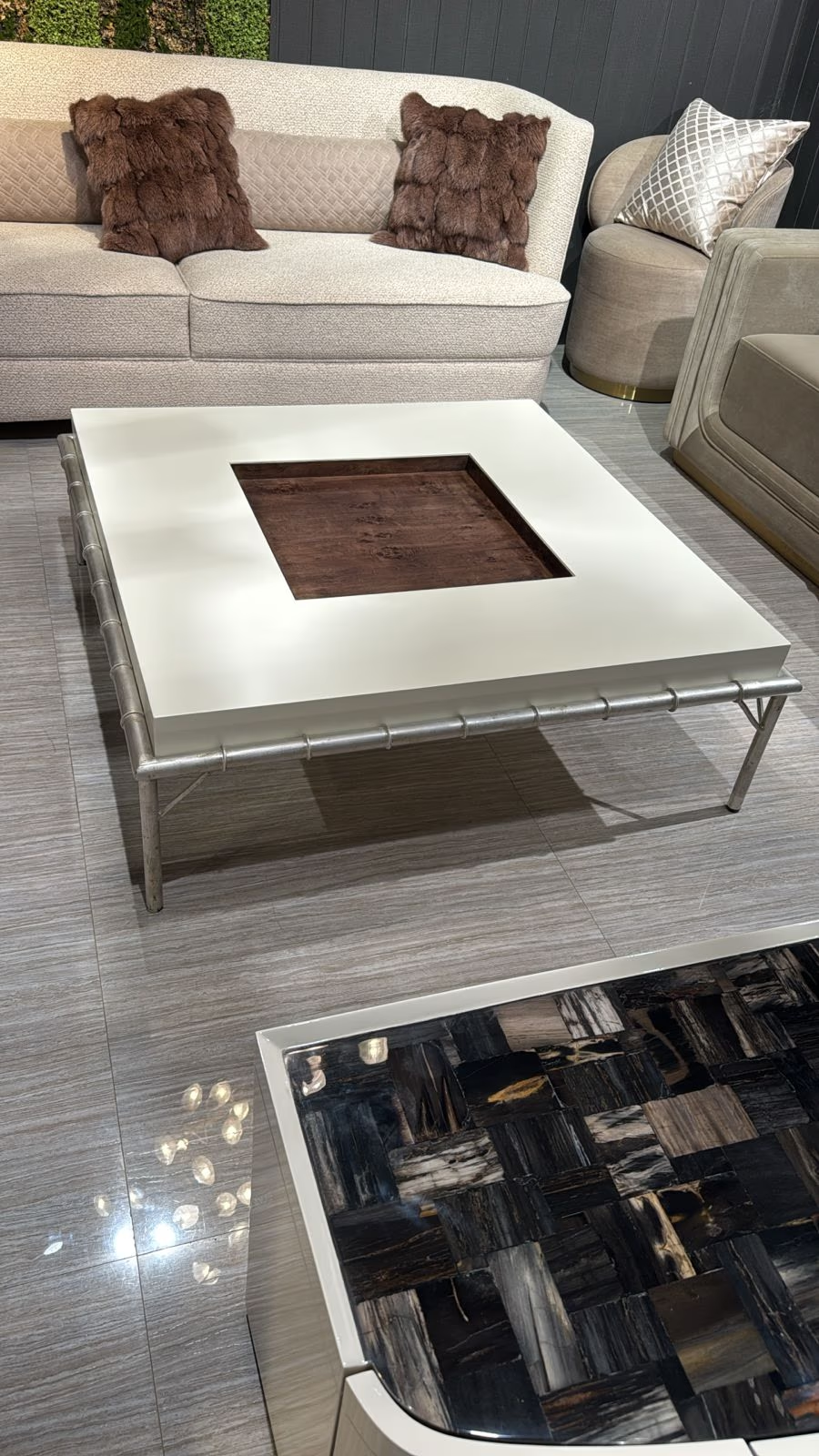
How to clean burl wood the right way
Cleaning burl wood is gentle work. The aim is to lift dust and marks without stripping the finish that protects the wood underneath. Here is the simple routine.
- Dust often with a soft, dry, lint-free cloth. Microfibre is ideal. Wipe along the direction of the grain, not in circles.
- For a deeper clean, lightly dampen the cloth with plain water. It should feel barely wet, not dripping.
- Wipe the surface gently, following the grain, then dry it right away with a second clean cloth.
- Never let water sit on the surface. Standing water is the one thing that harms both burl and veneer most.
- Skip all-purpose sprays, glass cleaners, ammonia, and harsh chemicals. They dull the finish and can leave marks.
That is the whole method. Most days, a quick dust is all you need. A damp-cloth clean once a week or so keeps a well-used table looking fresh. The plainer you keep it, the safer it is.
One more word on cloths. Choose soft cotton or microfibre and keep it clean. A gritty or dirty cloth drags fine grit across the finish and leaves tiny scratches you only notice later, in the right light. Shake or wash your cloth before you start. It is a small habit that protects the shine of the burl every single time you wipe it down.
Want a burl piece built around your exact room, with a finish made to last in your climate?
Send us your space →Veneer furniture care: the one extra rule
Much of the most beautiful burl in the world is used as veneer. That means a thin, carefully chosen sheet of real burl is laid over a strong, stable base. This is not a shortcut. It is how the finest makers show off rare grain and keep the piece stable in changing weather. To understand the difference, see our guide on solid wood versus veneer.
Veneer furniture care follows all the same habits as solid wood: no direct sun, steady humidity, gentle dusting, and quick spill wiping. There is just one extra rule to hold in your mind.
For veneer, the golden rule is simple: never leave water standing.
Because the top layer is thin, water that sits on it can seep to the edges or the glue line and lift the veneer over time. So wipe every spill the second it happens. Never leave a wet glass, a dripping vase, or a damp cloth resting on the surface. Do this one thing well and fine veneer will serve you for a lifetime, exactly like solid wood.
Solid burl wood care vs veneer care at a glance
Both surfaces want the same calm home. The table below shows where they match and where veneer asks for that little bit of extra care.
| Care point | Solid burl wood | Burl veneer |
|---|---|---|
| Direct sunlight | Keep out of the beam | Keep out of the beam |
| Humidity | Keep steady all year | Keep steady all year |
| Daily dusting | Soft dry cloth, with the grain | Soft dry cloth, with the grain |
| Water and spills | Wipe soon, never soak | Wipe at once, never let it stand |
| Waxing | Twice a year | Twice a year, light coat |
| Deep repair | Sanded and refinished | Best done by a trained restorer |
As you can see, the daily habits are the same. The main difference shows up only in a deep repair, where veneer needs a skilled hand rather than heavy sanding.
How to feed and protect the finish
The finish on your furniture is its raincoat. It keeps moisture out and the shine in. Feeding it a little, once in a while, keeps that raincoat working. This is the heart of long-term wood furniture care.
- Wax twice a year. Use a small amount of good paste wax or a wax made for fine furniture. Buff it in with a soft cloth, then wipe off the excess.
- Less is more. A thin coat protects better than a thick one and never goes sticky.
- Avoid silicone sprays and oil polishes. They build up, attract dust, and can cloud the surface over time.
- Use coasters, placemats, and runners under anything hot, wet, or heavy. This is the simplest guard against rings and marks.
- Between waxings, plain dusting is all you need to keep the surface bright.
If you are ever unsure which product suits your piece, ask us first. The right wax depends on the finish we used, and we are happy to tell you exactly what to buy. Good furniture is a long relationship, and we treat it that way. Many of our clients also read our note on luxury furniture as a long-term investment to see why this small effort pays off.
Fixing common marks on burl wood
Even with good care, life happens. A warm cup leaves a ring. A vase drips. Most marks are easy to handle if you act early and stay gentle.
White rings and cloudy marks
A white ring is usually moisture trapped in the finish, not damage to the wood itself. Lay a clean dry cloth over it and warm it gently, with a hairdryer on low or a warm iron pressed briefly over the cloth. Work slowly and check often. The mark often lifts on its own.
Dark marks and deep scratches
A dark mark means water has reached the wood, and a deep scratch has cut through the finish. These need more skill, especially on veneer. Do not sand or soak them yourself. Talk to us or a trained furniture restorer, so the repair matches the rest of the piece and the rare grain stays intact.
Small scratches and dull patches
Light scratches often disappear under a fresh coat of wax, buffed in well. A dull patch usually just needs a clean and a light wax to bring the glow back. Start soft and simple every time. You can always do more later, but you cannot undo harsh treatment.
A simple burl wood care routine to remember
You do not need to keep a chart on the wall. The whole plan fits into a few easy habits, spread across the day, the week, and the year. Follow this rhythm and your burl or veneer piece will look after itself.
- Every day: wipe spills the moment they happen, and use coasters and mats under drinks, hot dishes, and heavy objects.
- Every week: give the surface a soft, dry dust along the grain, and a light damp-cloth clean if it sees heavy use.
- Every season: check that the piece is still out of direct sun and away from vents, and turn it if one side gets more light.
- Twice a year: feed the finish with a thin, even coat of good furniture wax and buff it to a soft glow.
- When in doubt: stop, start gentle, and ask us before trying anything stronger on a mark.
That short list is really all there is to good wood furniture care. It costs you a few minutes here and there, and it keeps a piece looking new for decades. Fine burl only grows more beautiful with age when it is looked after, which is exactly why we build furniture to be kept, not replaced.
Care built in from the start
The easiest furniture to care for is furniture made well in the first place. When burl is chosen, dried, and finished with real skill, it stands up to heat and damp far better than a mass-made piece. That is the whole idea behind made-to-space furniture: each piece is built for your room, your light, and your weather.
At Designatore, every burl and veneer piece is finished by hand in our own atelier in India, and shipped across India and worldwide. We pick grain that suits your space, seal it to last, and tell you exactly how to keep it beautiful. If you would like a piece made this way, send us your space and we will design around it. You can also learn how we choose materials for each client.
Care for the rest of your home too. See our guides on caring for marble furniture, velvet and leather, and brass and metal finishes. A little attention, given often, keeps every fine piece looking its best for years.