
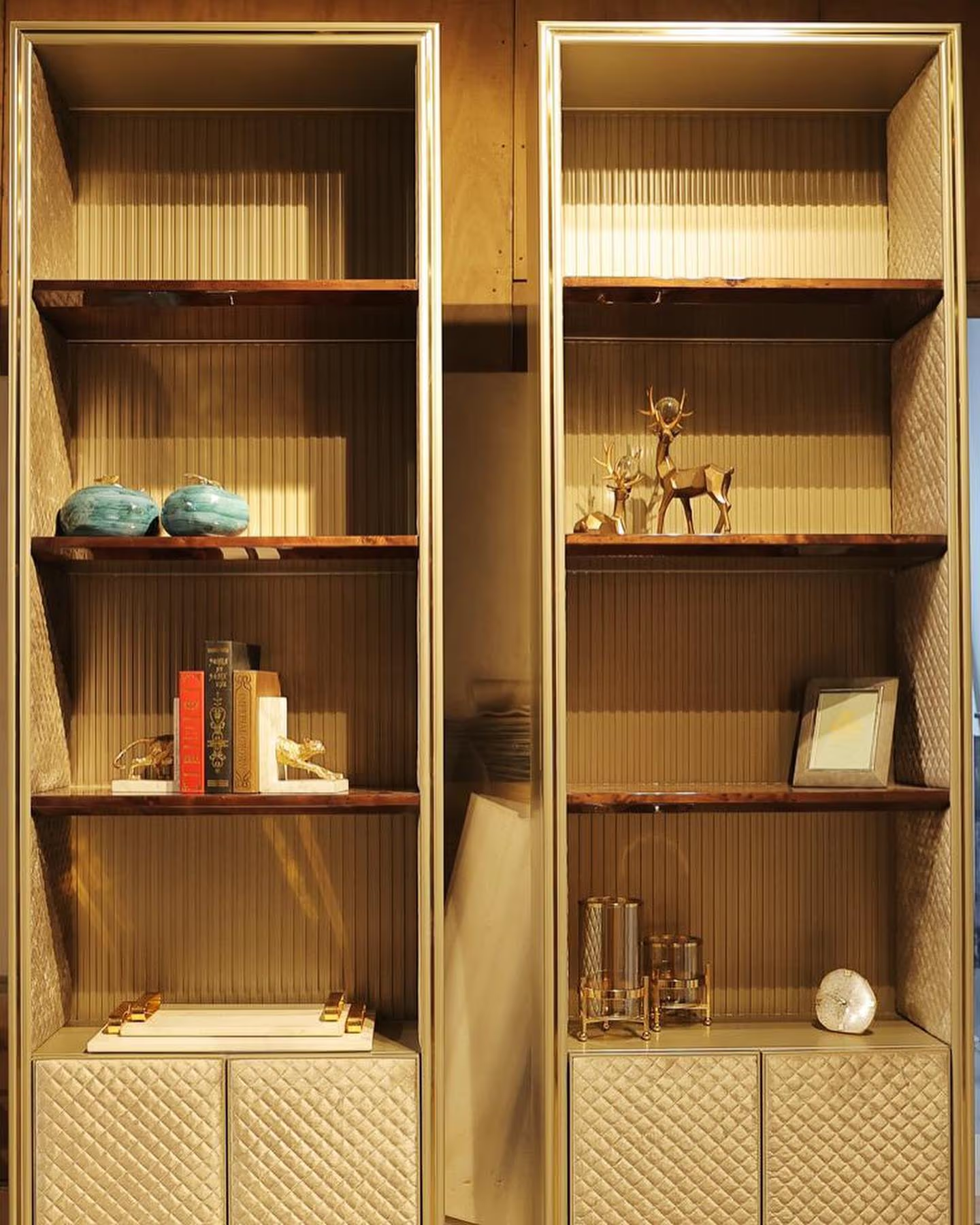
Furniture for odd-shaped rooms is furniture drawn and built to fit one exact space — its curved walls, pillars, slopes and nooks — instead of a straight, boxy shape a shop sells. Made-to-space furniture measures the real room first, then turns each odd angle into a place that finally works, looks calm and feels planned.
Most homes have at least one room that fights you. A wall that curves. A pillar in the wrong place. A ceiling that slopes down to almost nothing. A corner that is too tight for a shop sofa but too big to leave bare. You push a ready-made piece into it, and there is always a gap, a bump, or a dead patch of floor you walk around every day.
This is the problem standard furniture fails to solve. Shop furniture is built for a flat, square, imaginary room. Your room is real, and real rooms are rarely square. Made-to-space furniture starts from the opposite side. It looks at the odd shape first and treats it as the plan, not the problem.
The result is a room that feels quiet and finished. No gaps to explain. No piece that almost works. When furniture follows the true lines of a space, the whole room settles down and your eye has nowhere awkward to land. That calm is the real luxury — not the price tag, but the feeling that every part of the room was meant to be there.
Why furniture for odd-shaped rooms is so hard to buy
Walk into any store and every piece has one thing in common: straight lines and square corners. That is fine for a plain box room. But the moment your wall bends, slopes or steps around a pillar, those straight pieces stop working. Here is what usually goes wrong:
- A sofa back sits flat against a curved wall, so a long gap opens up behind it and dust collects there.
- A wardrobe hits a sloped ceiling and you lose the top third — or it will not stand up at all.
- A pillar or beam cuts a room in two, and no single shop piece bridges it.
- A corner is left with a sad triangle of empty floor because no chair fills it right.
- A small room gets crowded because oversized shop pieces block the little floor you have.
The honest fix is not to hunt for a cleverer shop piece. It is to stop buying a fixed shape and start with your room’s real shape. That is the whole idea behind made-to-space versus modular furniture.
An odd room is not a mistake to hide. It is a shape worth building for.
Corner furniture that fills the space, not just the gap
Corners are the most wasted part of most homes. A store corner sofa is one fixed size, so it either floats away from the walls or bumps into a door. Corner furniture built to your exact angle does the opposite — it sits flush on both walls and uses every inch behind it.
A made-to-space corner can become a wrap-around seat with hidden storage under the cushions, a slim shelf tower that climbs the join of two walls, or a curved reading nook that follows the room instead of blocking it. The corner stops being leftover space and becomes the best seat in the house.
Corners are also where you can add real storage without the room feeling heavy. Because the piece hugs two walls at once, it holds a lot while taking almost no floor. In a dining room, a fitted corner unit can hold your best plates and glass. In a bedroom, it can be a dressing seat with drawers below. Same odd corner, put to work.
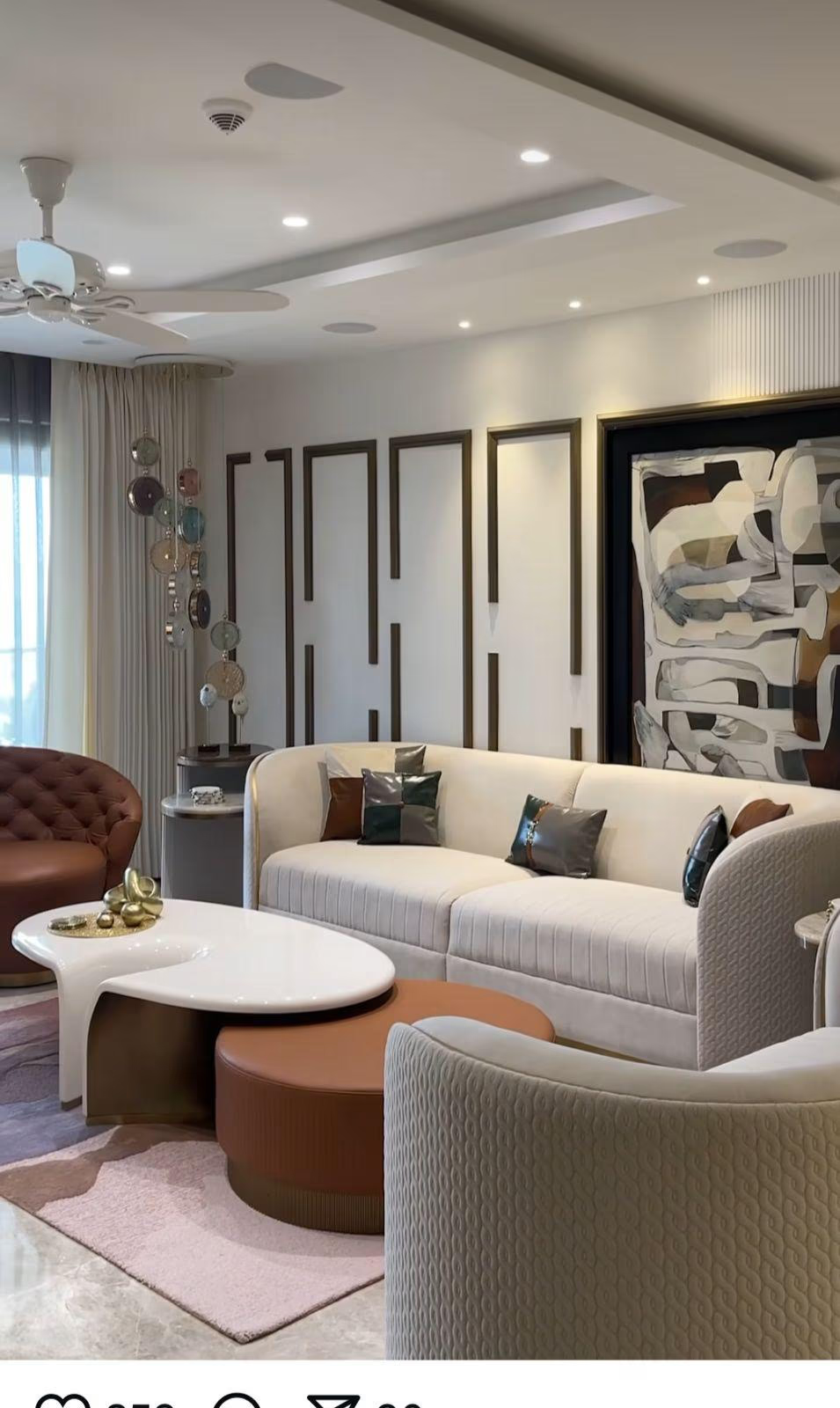
Sloped ceiling furniture that uses the low wall
Attic rooms, top floors and homes under a roofline all share one headache: a ceiling that slopes down to a short, awkward wall. Most people leave that low strip empty because nothing tall fits. That is often a third of the room, sitting unused.
Sloped ceiling furniture is drawn to that exact slope. A run of drawers, a low bookshelf, a desk or a bed base rises only as high as the ceiling allows at each point, then stops. The line of the furniture matches the line of the roof. Suddenly the low wall does real work — storage, a seat, a dressing bench — and the room feels finished instead of cut off.
- We measure the ceiling height at several points along the slope, not just one.
- We draw the piece to follow that fall, so the top edge tracks the roofline.
- We put the deepest storage where the ceiling is highest and shallow storage where it is low.
- We hand-build and fit it, so it reads as part of the wall, not a box pushed against it.
Have a curved wall, a pillar or a low sloped ceiling that nothing fits? Send us your space and we will show you what is possible.
Send us your space →Pillars, beams and nooks: turn the block into a feature
A pillar in the middle of a room, or a beam that drops down from the ceiling, feels like a mistake you have to live with. Most people just walk around it. But a block like this is a gift for made-to-space design, because we can build it into the plan instead of pretending it is not there.
A pillar can be wrapped in a round seat, so it becomes a place to sit and not a thing to dodge. A beam can be matched by a run of wood below it, so the two lines rhyme and the room looks planned. A deep nook — the odd recess so many homes have — can hold fitted shelves, a bar, a home office, or a bed set neatly into the wall.
- A pillar becomes a round bench, a display column, or the base of a dining table.
- A dropped beam is echoed by a fitted sideboard or shelf below, so the room reads as one design.
- A shallow nook turns into a slim home office or a display wall.
- A deep alcove becomes a fitted wardrobe, a bar, or a window seat.
- An odd recess by the front door becomes a foyer bench with hidden shoe storage.
The lesson is simple. The odd feature stops being the thing you hide and becomes the best-looking, most useful part of the room. That is only possible when the piece is drawn for that exact block, which no shop can do.
Furniture for small rooms: build to the walls, keep the floor open
Small rooms feel small when big shop pieces eat the floor. The trick with furniture for small rooms is to move the weight to the walls and keep the middle clear. Fitted pieces run along the edges, so your eye travels across open floor and the room reads as bigger than it is.
Made-to-space also lets one piece do two or three jobs, which matters most when space is tight. A window bench that is also a shoe drawer. A bed with a headboard that holds books and lights. A slim console that hides a full home office. You own fewer things, and each one earns its place. If you want the room-by-room method, read how we design furniture around your room.
Small odd rooms that made-to-space fixes best
Some rooms are both small and odd, and those are the hardest of all to buy for. A narrow study under the stairs. A box bedroom with a chimney breast that steals a corner. A tight home bar tucked below a slope. A pooja room that needs a mandir sized to the exact wall. Each one is too specific for a shop, and each one is a natural fit for made-to-space furniture drawn to the millimetre.
Shop furniture vs made-to-space furniture for odd rooms
Here is the plain difference when the room is not square.
| The odd feature | What shop furniture does | What made-to-space does |
|---|---|---|
| Curved wall | Sits flat, leaves a gap behind | Follows the curve, sits flush |
| Sloped ceiling | Hits the roof or loses the top | Rises to the exact slope, then stops |
| Pillar or beam | Blocks it or ignores it | Wraps it or builds it into the design |
| Tight corner | Floats or bumps a door | Fills the angle, adds hidden storage |
| Small room | Oversized, crowds the floor | Sized to the wall, keeps floor open |
This is why an awkward room is exactly where custom pays off most. On a plain square wall the gap between shop and bespoke is small. On a curved or sloped wall it is the difference between a room that works and one you keep apologising for.
How we build furniture for your odd-shaped room
The process is calm and clear. You are never asked to guess a size or hope a piece fits. Founder Nidhi Patel and the team work from your real room, and you approve every drawing before anything is built.
- We measure the real room. Every wall, angle, pillar, window and ceiling height — the true shape, not a rough guess.
- We draw to that shape. Each piece is designed for your space, so curves, slopes and nooks are planned in from the start.
- You approve the design. You see it before we make it, so there are no surprises on install day.
- We hand-build it in India. Made by our own atelier, using materials chosen for your room and your climate.
- We fit it. The finished piece goes in flush, as if the room was drawn around it.
This is the same made-to-space craft trusted for the homes of well-known Indian families — Amitabh Bachchan among them — and made available to you whether your home is across India or worldwide. The odd shape is not a limit. It is the reason to build.
Materials matter more in an odd room than most people expect. A curved back or a sloped top needs wood and finish that can be shaped without cracking, and stone that is cut to follow the line. We choose each material for your room, your use and your weather — solid wood where strength counts, veneer where a wide curve needs to stay stable, brass and stone where you want the eye to rest. If you live somewhere hot or humid, we pick pieces that hold up, as we explain in best wood for furniture in India’s climate.
Mistakes to avoid with an odd-shaped room
Before you spend on any room that fights you, keep these simple rules in mind. They save money and stop the room feeling busy.
- Do not buy a shop piece hoping it will “nearly fit” — nearly is what leaves the gap you hate.
- Do not fill an odd wall with lots of small loose pieces; one fitted piece looks calmer and holds more.
- Do not ignore the low or slanted wall — that is often your best hidden storage.
- Do not guess the sizes; a room drawn on real measurements is the only plan that works.
- Do not chase a trend for an odd room, as we explain in why we skip trends — build it once, build it right.
For a fuller list across every kind of room, see custom furniture mistakes to avoid. The theme is always the same: an odd room rewards planning and punishes guessing.
What it costs — and why it saves money
Made-to-space furniture costs more up front than a shop piece — that is honest. But in an odd room it often saves money over time. You stop buying pieces that do not fit and get thrown out. You use space you were wasting, so you need fewer things. And a hand-built piece lasts for decades, not a few years.
As a rough guide, a fitted corner or sloped-wall piece can start around ₹1,50,000 ($1,800) and rise with size, wood and stone. For real numbers by piece and room, read our made-to-space furniture price guide or see is bespoke furniture worth the money.
Not sure your room even needs it? These 7 signs you need made-to-space furniture make it clear fast. And when you are ready, browse our collections or tell us about your space and we will take it from there.
Every odd wall, pillar and nook can become a place that works. Show us your room and we will design furniture that fits it exactly.
Start your made-to-space design →