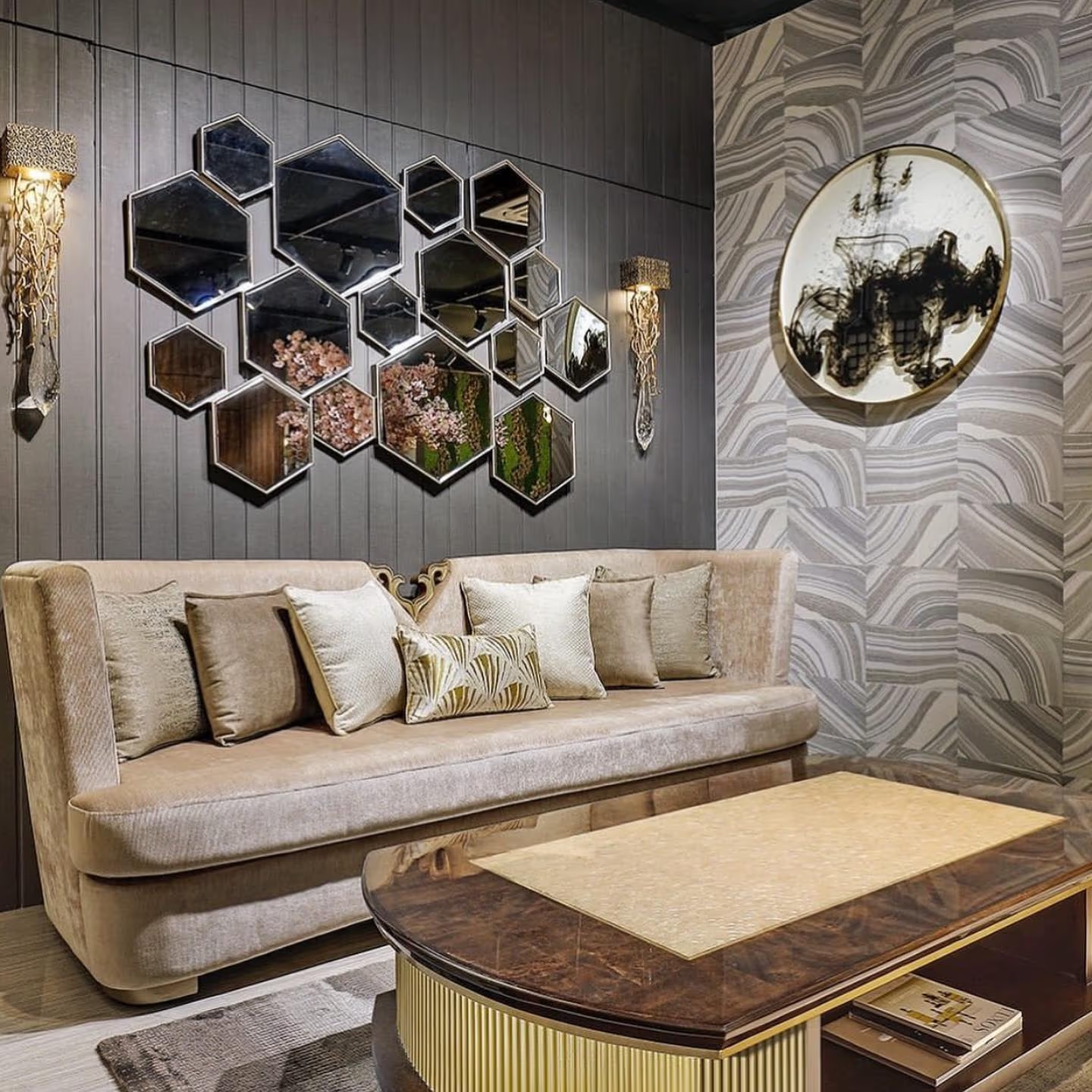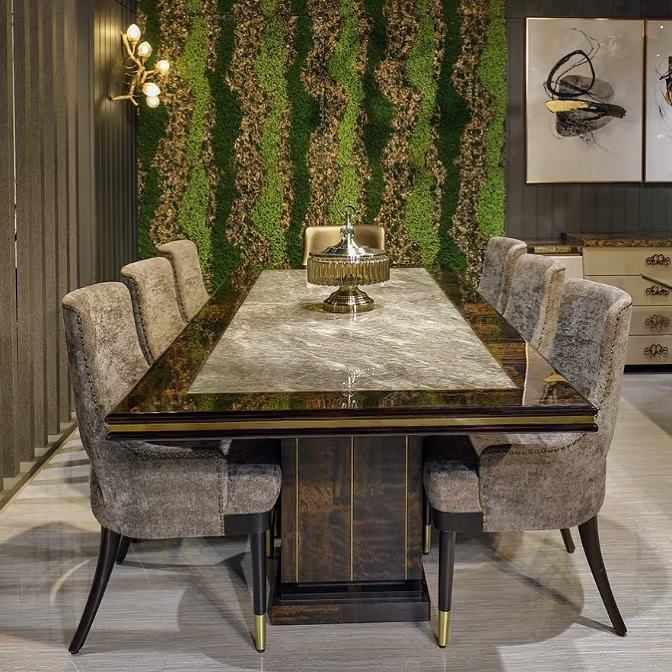

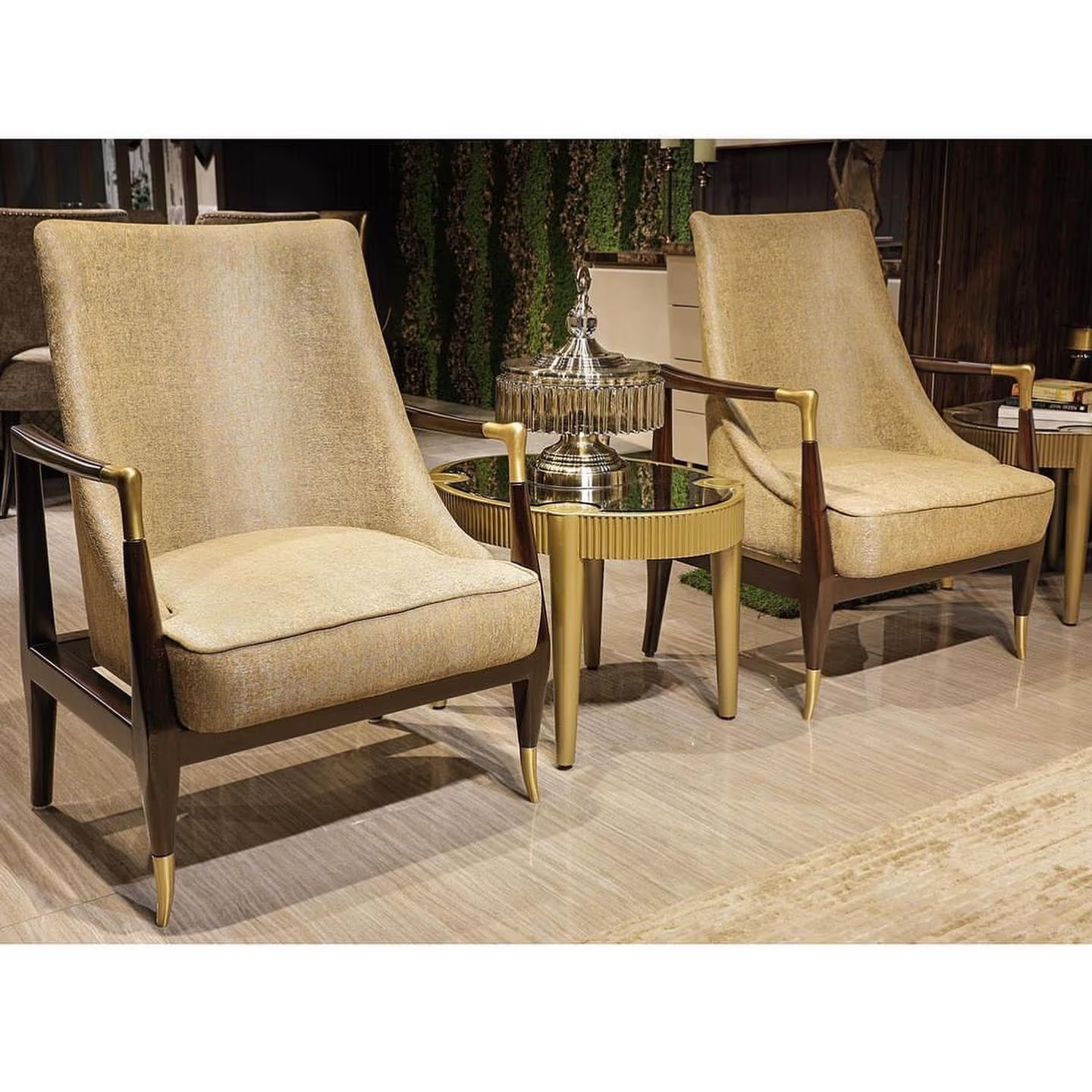
The biggest custom furniture mistakes are ordering before you measure the room, choosing price over materials, skipping a written design and clear quote, and rushing the maker. Each one wastes money and gives you a piece that does not fit or last. Avoid them and your custom furniture will fit right, feel right, and last for decades.
Custom furniture is a big spend and a long promise. When it goes right, you get a piece made for your room that fits to the inch and lasts for decades. When it goes wrong, you get a costly piece that does not fit, does not last, and cannot be sent back. The good news is that most problems come from a short list of mistakes — and every one of them is easy to avoid once you know it.
This guide walks you through the seven mistakes we see most often, in plain words. It works whether you are buying your first sofa or furnishing a whole home. The aim is simple: protect your money, and help you spot a maker who truly knows the craft. Get these right and your custom furniture buying goes from a worry to a joy.
The most common custom furniture mistakes at a glance
Before we go deep, here is the short list. Most costly mistakes fall into one of these seven traps. If you only remember this box, you will already avoid the worst of them.
- Ordering before the room is measured on site.
- Choosing on price alone and ignoring materials.
- Skipping a written design and a clear, itemised quote.
- Forgetting how you really live in the room.
- Rushing the maker and squeezing the timeline.
- Picking the wrong wood or finish for your climate.
- Hiring on the lowest quote instead of real proof.
Mistake 1: Ordering custom furniture before you measure the room
This is the number one mistake, and the most painful. People pick a size from a screen or a showroom, not the size their own wall can take. The piece then arrives too big for the space, too small against a tall ceiling, or so wide it will not turn through the front door. With ready-made you can return it. With custom, you cannot.
A photo is not enough on its own. A photo cannot show a floor that slopes, a pipe boxed into a corner, a wall that is not quite straight, or a window sill that eats into the space. That is why a proper maker measures on site, or asks you for exact numbers, before a single line is drawn. To see how this is done well, read how we design furniture around your room.
- Measure the wall length, the ceiling height and any window or door in the way.
- Measure the path in — the door width, the lift, the stairs and any tight turn.
- Note anything fixed you cannot move, like a switchboard, a pipe or a beam.
- Share these numbers, and photos, before you approve any size.
Mistake 2: Choosing custom furniture on price over materials
The second mistake is judging a piece by its final price alone. Two quotes can look close on paper and be worlds apart inside. The parts you cannot see — the frame, the fill, the joins — are where a cheap piece hides its savings, and where it will fail you in a few years.
A low quote often means an engineered board frame instead of solid wood, thin foam that flattens fast, or a printed veneer skin over filler. It looks fine on day one and tired by year three. Before you compare price, ask one plain question: what is solid, and what is not? Our guide on solid wood vs veneer shows you exactly what to look for.
| The mistake | What it costs you | The simple fix |
|---|---|---|
| Order before measuring | A piece that will not fit or turn the door. | Measure the wall and the path in first. |
| Buy on price alone | Board and foam that wear out in years. | Ask what is solid wood and what is veneer. |
| No written design or quote | Surprise bills and a piece unlike the plan. | Get the design and price in writing. |
| Ignore how you live | A pretty piece that does not suit real life. | Design around your daily habits. |
| Rush the maker | Weak joins and a rushed, patchy finish. | Agree a fair timeline in writing. |
| Wrong wood for climate | Cracks, swelling and warping over time. | Pick wood made for your weather. |
Read the middle column and you can see the real price of a mistake. It is rarely paid on day one. It is paid two or three years later, when the piece you bought to last has to be repaired or thrown away. Good materials cost more up front and far less over the life of the piece. For the full picture on value, see is bespoke furniture worth the money.
The cheapest quote is often the most expensive piece once you count the years it fails to last.
Mistake 3: Skipping a written design and a clear quote
The third mistake is trusting a handshake and a rough idea. If the design lives only in a chat message or someone’s head, you have no way to check the piece that arrives against the piece you agreed. This is where surprise bills and “that is not what I pictured” problems come from.
Before you pay in full, you should hold two things in writing. First, a clear design — a drawing or a real picture of the piece, with the size, the wood, the stone, the metal and the fabric named. Second, an itemised quote that lists what each part costs, not one single number with nothing behind it. If a maker will not put these on paper, treat that as a warning sign.
- Ask for a drawing or a rendered picture of your exact piece.
- Get the size, wood, stone, metal and fabric written down by name.
- Ask for an itemised quote, so you can see what each part costs.
- Confirm what is included — delivery, fitting and any finish — before you pay.
Mistake 4: Ignoring how you really live in the room
The fourth mistake is designing for a photo, not for your life. A piece can look beautiful and still be wrong for you. A pale silk sofa in a home with small children and a dog. A dining table with sharp metal corners at toddler height. A low bench that your parents cannot rise from with ease. Beauty that fights your daily life is not luxury — it is a daily annoyance.
The best custom furniture is quietly made around your habits. That is the heart of made-to-space furniture: a piece shaped not only to your walls, but to the way you truly live in the room. So tell your maker the real things — who uses the room, how often, with what, and what you struggle with today. Small honest details lead to a piece that feels made for you, because it is.
Not sure how to explain your room or your habits? Just send us a photo of the space and tell us how you use it. We will design the fit around your real life, before anything is built.
Send us your space →Mistake 5: Rushing the maker and the timeline
The fifth mistake is pushing for speed at any cost. Good custom furniture cannot be truly rushed. Solid joinery needs time to be cut and fitted by hand. Polish and paint need time to cure so the finish is deep and even. Upholstery needs time to be stretched and stitched clean. Squeeze all of this into a few days and you get weak joins, a thin finish and a piece that ages badly.
Most custom pieces take a few weeks to a few months, depending on the wood, the finish and the size. That is normal and it is worth it — you wait once, then keep the piece for decades. Ask for the timeline in writing before you order, and be careful of any maker who promises a whole home in days. To set the right hopes, read how long does custom furniture take to make and see how bespoke furniture is made, step by step.

Mistake 6: Choosing the wrong wood or finish for your climate
The sixth mistake is picking a wood or finish that cannot cope with your weather. Wood is a natural thing. It moves a little as the air turns damp or dry. In a humid coast or a place with hot, wet months, the wrong timber can swell, crack or warp over the years. A piece that looked perfect in a cool showroom can suffer in a real home.
The fix is not to fear wood — it is to choose the right wood, well seasoned, with the right finish and joinery for where you live. A maker who knows your climate builds this in from the start. If you buy in India or ship overseas, our guide to the best wood for furniture in India’s climate explains which timbers hold up and why, in plain terms.
Mistake 7: Hiring on the lowest quote, not on real proof
The last mistake ties the others together. When people hire the cheapest maker they can find, they often meet every trap above at once — no site visit, board instead of timber, no written design, a rushed job and the wrong wood. A low price with nothing behind it is not a saving. It is a risk you pay for later.
Real expertise shows itself in proof, not promises. Before you commit your money, ask to see finished pieces, real client homes and the workshop where the work is done. Look for solid wood you can touch, joinery you can see, and one clear name responsible for the result. You can see completed work in the Designatore collection, and read how the house was built around this craft by founder Nidhi Patel.
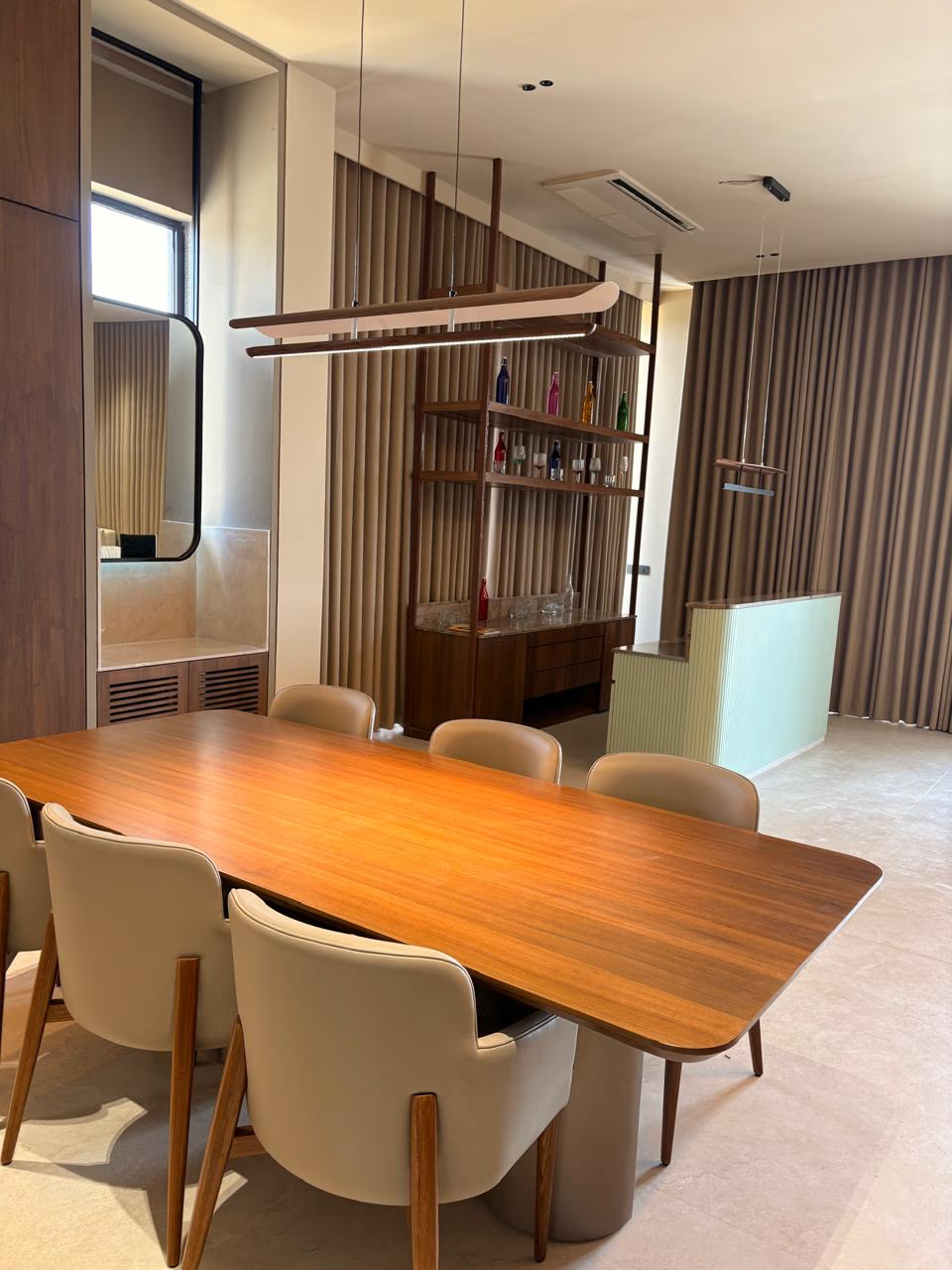
Made in India and delivered across India and worldwide, our own work carries one signature and one point of responsibility, from the first drawing to the final polish. That is the difference between a piece you hope will be fine and a piece you know will last.
How to avoid custom furniture mistakes: a simple checklist
You do not need to be an expert to buy well. You need to ask the right questions in the right order. Run through these bespoke furniture tips before you place any order, and you will sidestep almost every trap in this guide.
- Measure first. Wall, ceiling, windows, and the full path from door to spot.
- Ask what is solid. Which parts are real wood and stone, and which are veneer.
- Get it in writing. A clear design and an itemised quote before you pay in full.
- Share your life. Who uses the room, how, and what you struggle with today.
- Agree a fair timeline. In writing, with no promise that sounds too fast to be true.
- Match the climate. Wood and finish chosen for your weather, not just the look.
- Check the proof. Finished work, real homes and one clear name behind the result.
Print this, save it, or keep it open while you talk to any maker. If a maker answers all seven with ease and in writing, you are in safe hands. If they dodge two or three, walk away. This is a piece you will live with for decades, and a few careful questions now save a costly regret later.
The bottom line on custom furniture mistakes
Nearly every custom furniture regret traces back to the same handful of mistakes: ordering before measuring, buying on price over materials, skipping the written design, forgetting real life, rushing the maker, choosing the wrong wood, and hiring on the lowest quote. None of them are hard to avoid. They just need a little patience and the right questions before you commit.
Do that, and custom furniture becomes exactly what it should be — a piece made for your room, your life and your climate, built once and kept for decades. If you are ready to start the careful way, send us your space and we will design a piece around your real room, and show you the fit before anything is built.