
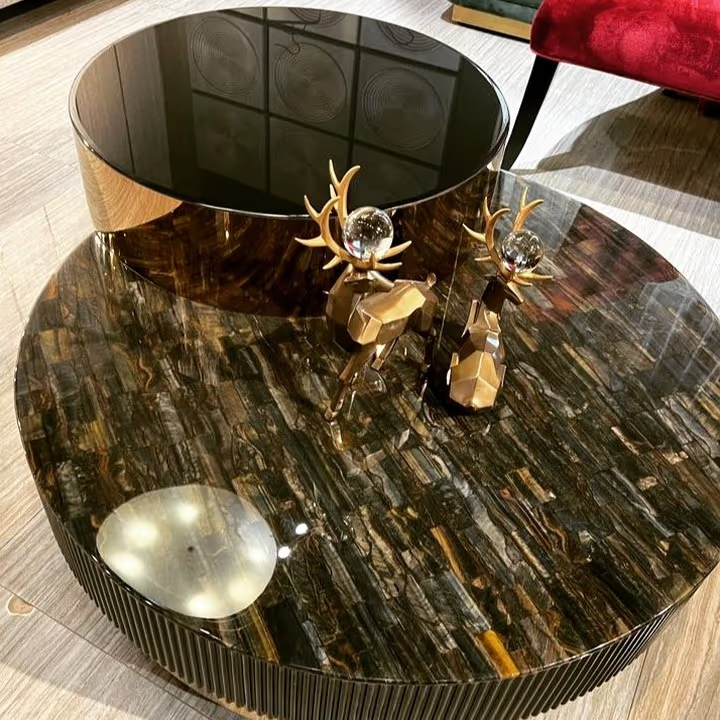
Bespoke furniture price factors come down to six things: the materials, the size, the amount of handwork, the finish, the design time, and the delivery and fit. Rare stone, solid wood and slow hand joinery move the price the most. When you know where the money goes, no quote feels like a mystery.
A bespoke quote can look like one big number. It is not. It is many small, honest costs added up. We make made-to-space furniture — pieces cut to fit your exact room, in India and worldwide — so we would rather show you the parts than hide them. When you can see where each rupee goes, you can trust the total.
This guide opens up the price. We walk through the six things that drive it, in the order they matter. By the end you will be able to read any quote, ours or anyone else’s, and know what you are paying for. That is the point of custom furniture cost breakdown — no mystery, just clear reasons.
What are the main bespoke furniture price factors?
Think of the price as a stack. You start with a base, then add a layer for each choice you make. A plain choice keeps the layer thin. A rare choice makes it thick. Here are the six bespoke furniture price factors, in the order they usually move the number.
- Materials. The wood, stone, metal and cloth. This is the biggest single part of the price.
- Size. A bigger piece uses more material and more hours. Size lifts every other cost with it.
- Handwork. Joinery, carving, inlay and shaping done by hand. Slow, skilled and hard to fake.
- Finish. The polish, colour and coats. A deep hand-rubbed finish is pure time.
- Design time. The drawing, planning and one-off engineering for your exact room.
- Delivery and fit. Careful transport and clean installation in your home.
Keep this stack in mind for the rest of the guide. When a quote feels high, it is almost always the stone, the wood or the handwork — not a hidden mark-up. Let us take each one in turn.
Materials: where most of the money goes
Materials are the largest part of the price, often 40 to 55 percent of the total. This is real, natural stuff — not thin board with a printed skin. Solid wood, natural stone, true metal and fine cloth all cost real money, and the rare ones cost far more. This is the honest heart of any bespoke piece.
Wood is the clearest example. A fine local hardwood is friendly on the budget and still lasts for decades. Rare burl or figured timber can cost several times more, because it is hard to find and slow to work. If you want to see how the two compare, read Solid Wood vs Veneer and our note on the best wood for furniture in India’s climate.
Stone is the other big mover. A marble or agate top adds real weight to the price, and a rare, book-matched slab adds the most, because the two halves must be cut from the same block to mirror the pattern. Metal, like solid brass, and fine cloth, like velvet or full-grain leather, add their own layers. You can go deeper in our marble furniture guide and our brass in luxury furniture guide.
Cloth is the quiet fourth material, and it moves the price more than people expect. A fine velvet, a wool bouclé or a full-grain leather costs far more than a plain fabric, and a large sofa drinks up a lot of it. The cloth also sets how a piece feels to sit on and how well it wears over the years. Our guide to velvet, bouclé and leather shows how each one behaves and what it costs.
One last point on materials: rare does not always mean better for you. A fine local hardwood can outlast an imported one in India’s heat and damp, and it costs less to bring in. A good atelier will steer you to the material that fits your home and your budget, not just the priciest name on the shelf. See how we choose materials for each client.
Size and the hours it takes
Size does two things to the price at once. First, a bigger piece simply uses more material — more wood, a larger stone top, more cloth. Second, it takes more hours to build, join and finish. A ten-seat dining table is not a little more than a four-seat one. It is a lot more, on both counts.
This is why size quietly lifts every other factor. More surface means more finishing time. More weight can mean stronger joinery and special transport. If you are pricing a big table, our guide to the cost of a custom dining table shows exactly how each extra seat changes the number.
You are not paying for wood alone. You are paying for a piece that fits only your home.
Handwork and joinery: the slow, skilled part
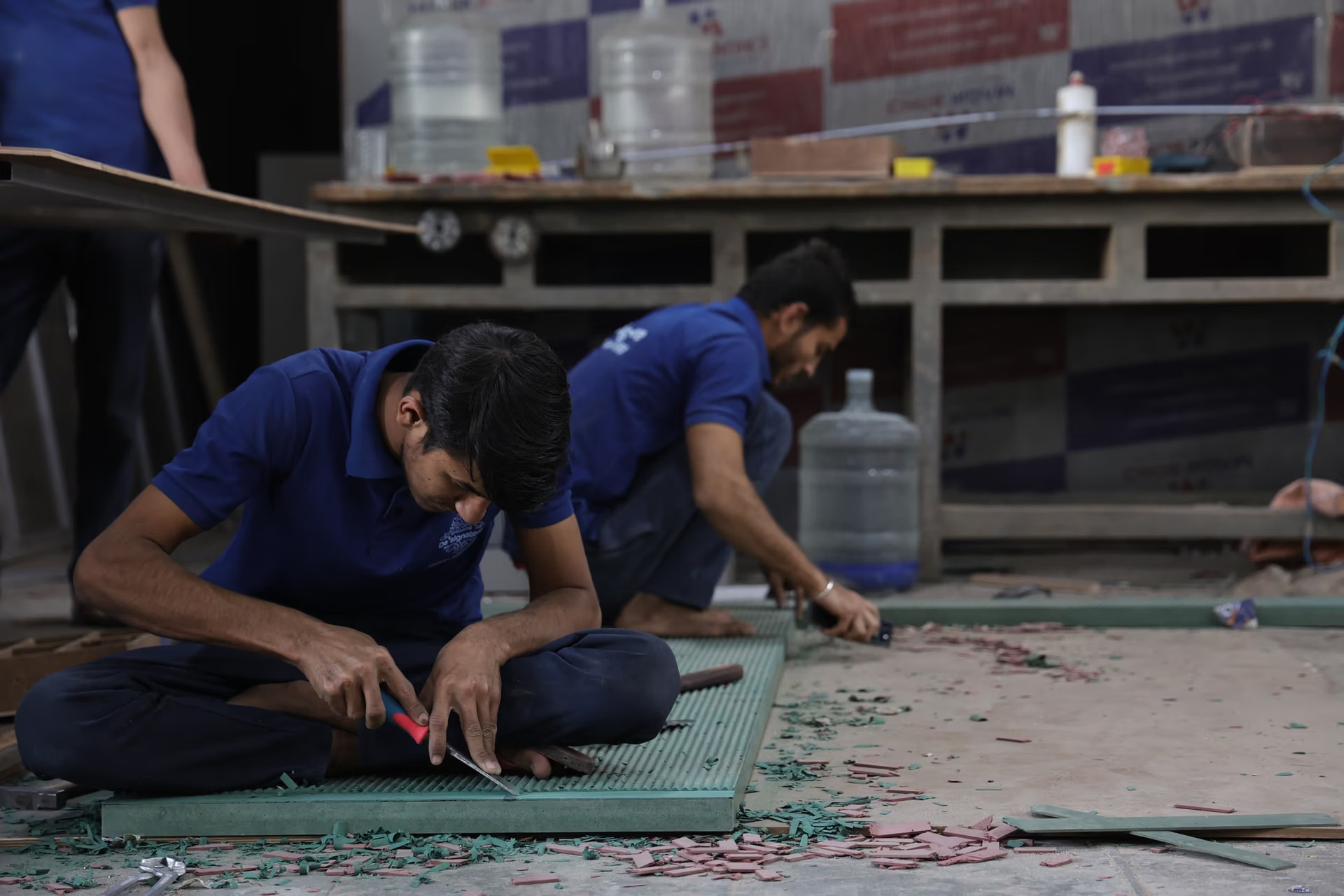
After material, handwork is the next biggest share of the price. This is the part a machine cannot rush. Hand-cut joints, carved edges, brass inlay and shaped legs all take a skilled maker real time. There is no factory line making a thousand of the same unit, so every hour is spent on your piece alone.
Handwork is also what makes a bespoke piece last. A hand-cut joint holds for decades; a stapled corner does not. You are paying for a maker who has spent years learning the craft. To see how this looks on the floor, read How Bespoke Furniture Is Made and step inside our atelier.
The more carving, inlay and detail a piece has, the more the handwork layer grows. This is good news if you want to save. A cleaner, simpler shape keeps this layer thin while still using real material and true craft. Detail is a choice, not a must.
There is a hidden cost here too: the years of training behind the hands. A maker who cuts a clean dovetail or sets brass into wood by eye did not learn it in a month. That skill is rare, and it is a real part of what you pay for. It is also why two quotes for the “same” piece can differ — one is priced for a machine line, the other for a craftsperson.
Finish, design time and delivery
Finish: many coats, many hours
The finish is the colour, sheen and feel of the surface. A clean matt coat is quick. A deep, hand-rubbed polish is slow, because each layer must dry and be sanded before the next goes on. That patience is what gives fine furniture its calm, even glow. The finish can add a real share to the price, and it is a share you can see and touch every day.
Design time: drawing a one-off
Before a single cut is made, your piece must be designed. We measure your room, draw the piece, solve the engineering and pick materials with you. For a store piece, this cost was paid once and split across thousands of units. For a bespoke piece, it is spent on you alone. See how it works in How We Design Furniture Around Your Room.
Delivery and fit: the last careful step
The last layer is getting the piece to you in perfect shape and setting it right. A heavy stone top or a fitted wardrobe needs careful transport and a clean, skilled install. A fair quote names this cost upfront, so nothing appears at the end. For pieces going abroad, our global interiors for NRI homeowners note covers how we ship worldwide.
A custom furniture cost breakdown, part by part
Here is a rough guide to how the price splits on a typical bespoke piece. These shares shift with each job — a stone centrepiece leans heavier on materials, a carved piece leans heavier on handwork — but the shape is a useful map for reading any quote.
| Cost part | Rough share of price | What it pays for |
|---|---|---|
| Materials | 40 – 55% | Wood, stone, metal, cloth, hardware |
| Handwork and joinery | 15 – 25% | Skilled hands, cutting, carving, inlay |
| Finish | 8 – 15% | Polish, colour, many coats and drying |
| Design and engineering | 5 – 12% | Measuring, drawing, one-off planning |
| Delivery and install | 5 – 10% | Careful transport and clean fitting |
Read this next to a real quote and it starts to make sense. If materials are a big slice, ask what wood and stone you are getting. If handwork is high, it is likely a carved or inlaid piece. A vague quote that will not split like this is a warning sign — it often hides add-ons for later.
Send us your space and get a clear, all-in quote with every cost named upfront.
Start your bespoke piece →Why bespoke costs more than store-bought
Now the stack explains the big question. Why bespoke costs more is simple once you see the parts. A showroom piece was made a thousand times, so its design, tooling and setup were split across all those units. Your piece is made once, for one room, so those costs sit on it alone. That is the whole difference in one line.
There is also what is inside. Cheap furniture often uses thin board with a printed skin. It looks fine for a year, then it sags and chips. A bespoke piece from a real atelier uses solid wood or true veneer over a strong core, joined by hand. It is built to last decades, not seasons. For the full case, read Why Bespoke Costs More Than Store-Bought and Bespoke vs Ready-Made Furniture.
So the higher number is not a mark-up for a name. It is real material, skilled hands and time. You pay more once, instead of paying a little many times as cheap pieces fail and get thrown out. Over the years, the bespoke piece is often the cheaper path — a point we make in full in Luxury Furniture as a Long-Term Investment.
How to read a bespoke quote with confidence
You now have the tools. When a bespoke quote lands in front of you, run it through the six factors and the cost breakdown above. A fair quote will map cleanly onto them. A vague one will not. Here is a short way to check.
- Name the materials. Which wood, which stone, which metal and cloth? Rare or common? This is your biggest cost, so it should be spelled out.
- Check the size and detail. A bigger, more carved piece should cost more. If it does not, ask what has been cut.
- Look for the finish and design line. These are real work. A quote that skips them may be skipping the work too.
- Confirm delivery and install. These should be named upfront, not sprung on you at the end.
- Ask how you pay. Good bespoke work is paid in simple stages, tied to real progress, never all at once.
One more tip: know the traps before you sign. Our guide to custom furniture mistakes to avoid covers the small errors that cost real money later. A little care at the quote stage saves a lot of stress after.
Ready to see your own number? Every quote begins with your room, not a catalogue. Send us the space and the feeling you want, and we build the piece — and the price — around it. Start at customization, or browse our collections to see what made-to-space work looks like in finished homes. If you want the full cost picture first, read How Much Does Custom Furniture Cost?.