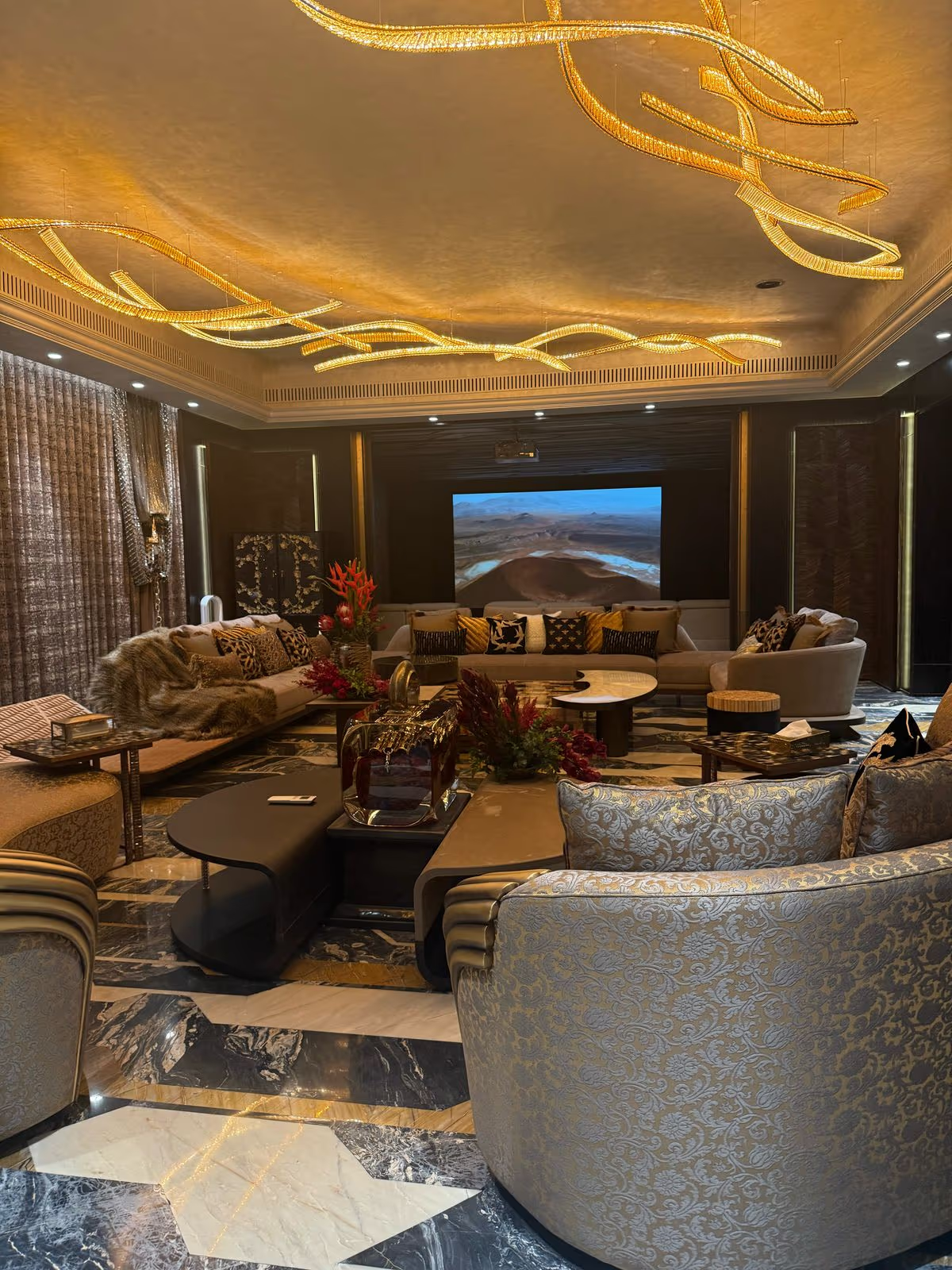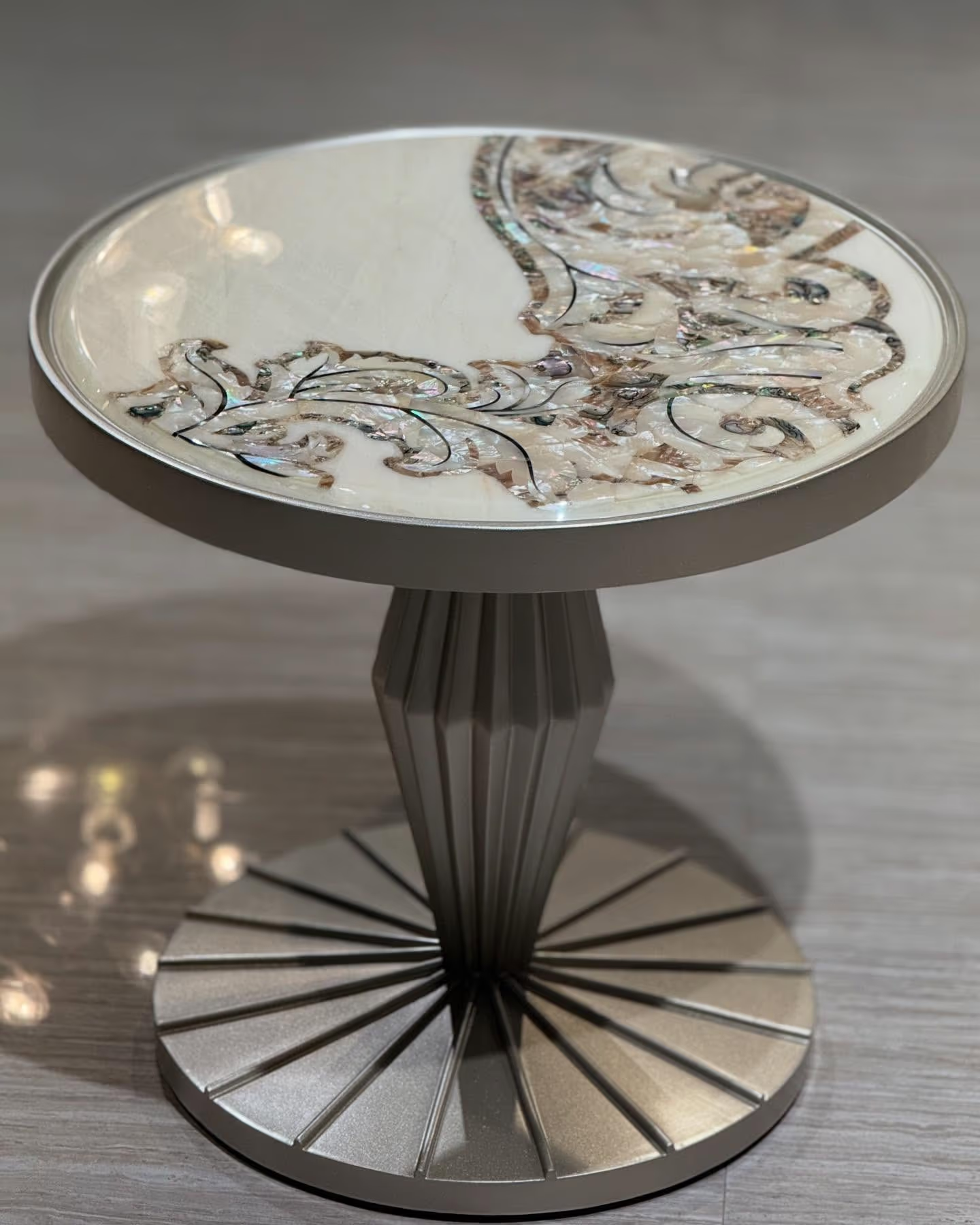

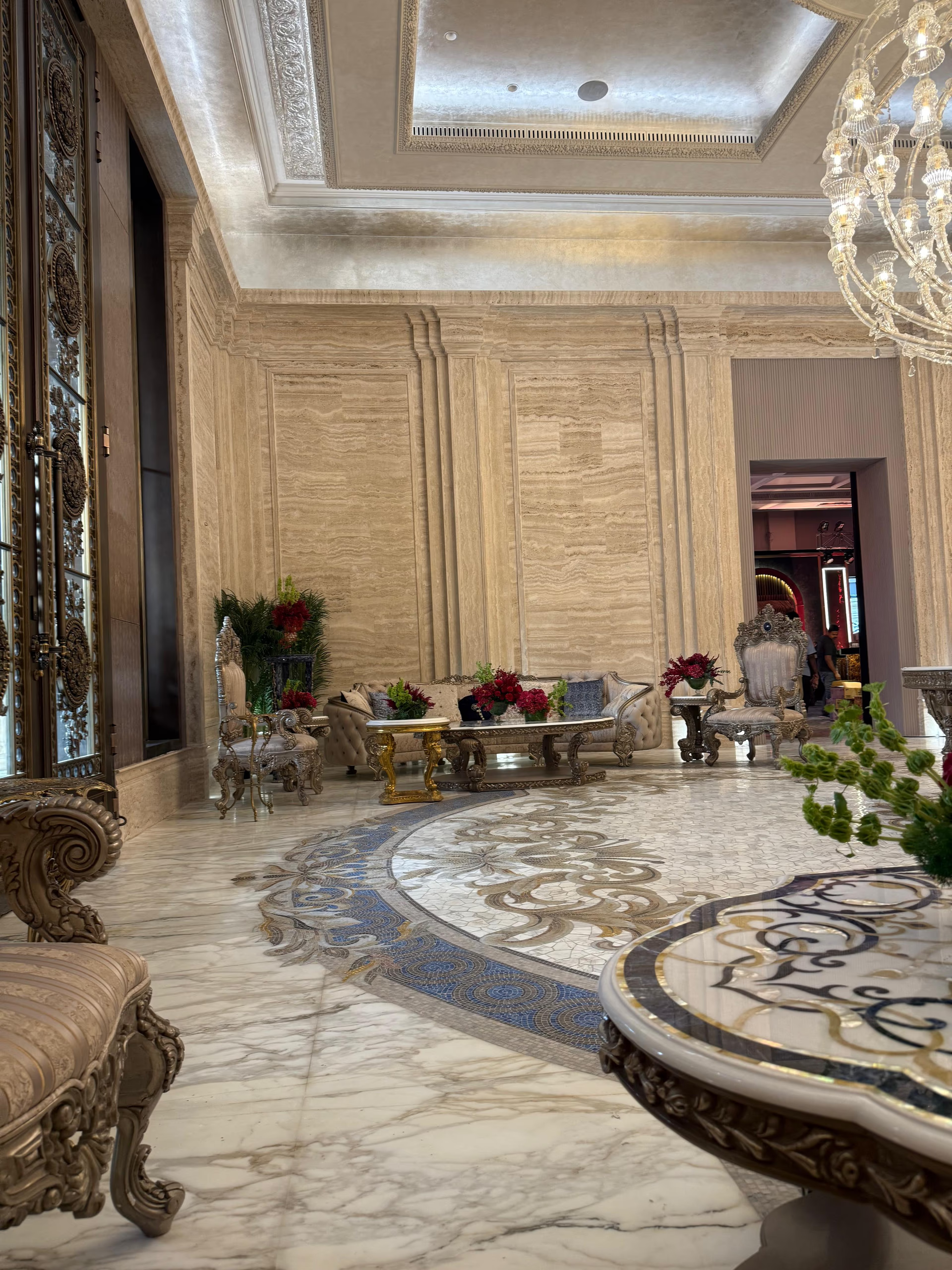
You can commission furniture in India from anywhere in the world. You approve the drawing, the slab and the hide in writing before anything is cut. Delivery anywhere in mainland India is free. Delivery outside India is worldwide, with export packing and documents handled by us, and quoted with the furniture so you see the landed number first.
You are 8,000 km away, about to spend serious money on furniture you cannot touch. That is the real problem, and it has nothing to do with taste. You know what you want. What you do not know is who checks it, what happens if the stone is wrong, and whether it will turn your staircase when it arrives.
Here are those questions, one at a time, with the mechanism instead of a promise. Where the number depends on your country, we say who to ask.
Bespoke Furniture for NRI Homes: Two Very Different Jobs
Indian families abroad come to us with two briefs. Mixing them up is the first mistake.
- Furnishing a home abroad — Dubai, London, Toronto, New Jersey, Singapore, Melbourne, Nairobi — with Indian craft you cannot buy locally at any sensible price: hand carving, mother-of-pearl inlay, semi-precious stone, real hardwood, solid brass. The furniture has to leave India.
- Furnishing a home in India — a family house, a new apartment, your parents' flat — when you cannot be there to supervise. Nothing crosses a border, and delivery to any mainland pincode is free.
The making is identical. The logistics and the cost are not. A whole India interior — walls, lighting, joinery — is a different subject, covered in NRI interior design in India. This page is the furniture, and the road to a house anywhere on the map.
How to Approve Materials When You Live 8,000 km Away
The honest part first. A screen lies about colour. Your phone, your laptop and our camera each shift the same walnut warmer or greyer, and no calibration fixes that across two continents. So we show you the actual material, never a catalogue swatch of the type of material.
- Stone is sold by the slab, not the square foot. Onyx, agate, marble and petrified wood come out of a block, and the second slab of that block can look nothing like the first. Vein-matched tops mean buying the block. We film your slab, wet and dry, with a scale rule in frame.
- Onyx and agate are translucent, usually backlit and resin-backed for strength. Lit from behind they read as a different stone, so we film both ways.
- Veneer is a leaf. Burl and ebony leaves are laid up in sequence. We photograph the actual bundle and show the layout before it goes on the panel.
- Leather is an animal. A hide runs roughly 45–55 sq ft and carries natural range marks. Not faults — but meet them before delivery day.
- Velvet has a nap direction, cut one way across a whole suite. Cut two ways and two sofas in one room read as two colours.
Then we courier physical samples to you — a stone offcut, a veneer leaf, a leather and fabric card, a polish panel in your sheen. A sample in your hand, under your own ceiling light, at 9pm in your own room, is the only reliable reference there is. How we choose between materials is set out in how we choose materials and the materials library.
Before finishing, we send a video walk of the piece on the factory floor: a slow circuit, close on the joints and the edge profile, every door and drawer opened. Changes are cheap at that moment and expensive after polish. And the rule under all of it — nothing is cut before you approve, in writing, on a dated drawing.
| Stage | What you send us | What we send you |
|---|---|---|
| Brief | Room photographs, floor plan or CAD (DWG, PDF, SKP), ceiling height, destination city | A written scope and a first design direction |
| Design | Your comments, in writing | A general arrangement drawing — plan, elevation and section, every dimension in mm |
| Materials | Your choice, confirmed in writing | Video of the actual slab, veneer bundle and hides, plus couriered physical samples |
| Sign-off | Your approval — nothing is cut before this | Final drawing set and a colour-material-finish schedule |
| Build | Nothing. This is the quiet part | Progress photographs from the joinery, polish and upholstery floors |
| Before finishing | Any last change, while it is still cheap | A video walk around the finished piece on the factory floor |
| Quality control | Nothing | QC photographs checked against the approved drawing |
| Packing | Delivery address, or port and clearing agent | Crate photographs, packing list and dimensions |
| Delivery | Nothing inside India. Your clearing agent's details for export | Free mainland India delivery, or export packing and documents |
Who Checks the Piece Before It Ships
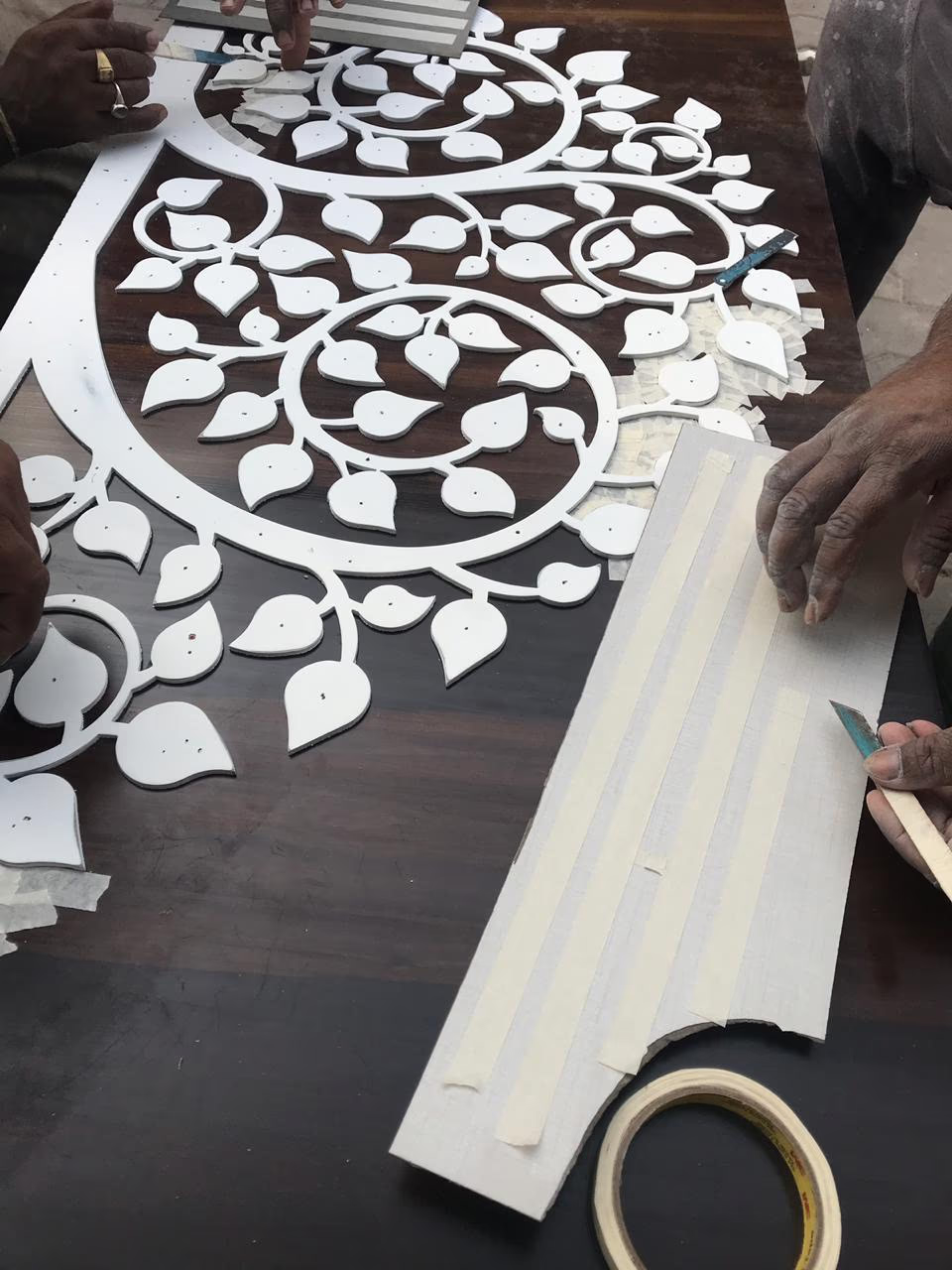
Quality control checks the piece against the drawing, not against somebody's taste. QC asks one question: does what stands on the floor match what you approved? It is department 08 of our ten, and it sits before Assembly & Packaging on purpose. A piece that fails goes back to the floor, not into a crate.
- Dimensions against the approved drawing, in millimetres — overall size, seat height, top thickness, plinth height. A carcass drawn at 600mm deep is measured, not assumed.
- Square and level — diagonals compared corner to corner, so a cabinet does not rock on a flat floor.
- Gaps and reveals — door and drawer gaps even along their length, because an eye reads an uneven shadow line first.
- Movement — every drawer pulled to full travel, every door swung, every lock keyed.
- Panel balance — a face veneer must have a backing veneer or the panel cups. Checked before finishing, while it can still be fixed.
- Finish, stone and upholstery — sheen against the approved polish panel and the RAL or NCS reference; inlay seated flat with closed joints; nap consistent across the suite.
You get the QC photographs. If something is wrong later, that record and your dated approvals are the fix: everyone can see what was agreed, made and packed, instead of arguing from memory across a time zone. You also have a named person on the project, not a shared inbox.
Tell us the destination climate before the drawing is signed. That one sentence saves more furniture than any crate ever will.
Is Delivery Free in India? Yes. Outside India It Is Worldwide, But Priced
Delivery anywhere in mainland India is free. Every mainland state and union territory, every pincode, at any order value. No minimum, no remote-area fee, no fuel surcharge. Free covers the crate, the road freight to the door, transit cover for the full value of the piece, the e-way bill and all paperwork, and the GST on all of it. There is no delivery line on the invoice. The one exception: cargo to the Andaman & Nicobar Islands and Lakshadweep sails and is billed at actual cost, with nothing added. Full policy on the delivery page.
Delivery outside India is worldwide, but priced, not free. We handle export packing and documents. Freight, duty and clearing depend on your destination port, so we quote the furniture and the freight together — you see the landed number before you commit, not after the crate is built.
| What it covers | Mainland India | Outside India |
|---|---|---|
| Delivery cost | Free, at every order value | Quoted per project, together with the furniture |
| Minimum order | None | None, but one shipment is cheaper per piece |
| Crate and packing | Included | Export packing, included in the quote |
| Transit cover | Full value of the piece, included | Quoted with the freight |
| Paperwork | E-way bill and all documents, included | Export documents prepared by us |
| Freight | Road, to your door, paid by us | Sea or air, priced by destination port |
| Customs duty | None. It never crosses a border | Paid by you, at your country's Chapter 94 rate |
| Customs clearing | None | Your local clearing agent, at your port |
| Final-mile delivery | To your door | From the port, arranged at the destination |
| The exception | Andaman & Nicobar and Lakshadweep sail, billed at actual cost | Rates depend on the port and change, so they are quoted, never published |
Tell us the delivery city or port and we quote the furniture and the freight together, so you see the landed number before you commit.
See the delivery policy →Who Pays Import Duty on Furniture Shipped From India
You do, in your own country, at your own country's rate. We will not invent that number, and be careful of anyone who does. Here is how to find it instead.
- Know your HS chapter. Furniture is HS Chapter 94 — 9401 for seats, 9403 for other furniture, 9404 for mattress goods. The first six digits are the same worldwide; the rest are your country's own.
- Read your country's tariff. Every customs authority publishes its schedule for those headings. India's own import stack on Chapter 94 is public, for example: 20% Basic Customs Duty plus 5% Agri-Infra Cess, with 18% IGST on top. Yours is published the same way.
- Have a local clearing agent confirm it before you order. They quote against your real port, your real code and the rules on the day. A broker's written confirmation beats any article, including this one.
- Ask about the extras — destination VAT or sales tax, terminal handling, customs examination, timber-treatment inspection where it applies, storage, and the road leg to your house.
Do that once, early, and the fear goes. It becomes a number you add to the quote. The same maths in the other direction is worked line by line in China vs India: the real cost of furniture.
One Container, or Piece by Piece?
This is the biggest lever on your landed cost, and you pull it at the start. Freight has fixed costs that repeat with every shipment: documents, customs entry, the clearing agent, terminal handling, the road leg. Ship five times and you pay them five times.
- LCL — less than container load. Your crates share a box with other cargo. Fine for one or two pieces. Billed on volume, it waits for consolidation at both ends and is handled more times — the part that matters for carved and inlaid work.
- FCL — a full container. A 20ft box holds roughly 33 cubic metres, a 40ft roughly 67, a 40ft high-cube nearer 76. Your crates are the only thing inside, and the door is sealed at our factory.
- Consolidating a whole home. Hold everything at the factory until the last piece clears QC, then ship the lot. Cheaper per piece, and it all lands on one day in one condition.
One commission is also designed as one: the same walnut, the same polish sheen, the same brass tone in every room. That is the case in furnishing a whole home in one look. One container is the logistics of the same idea.

Will It Survive Sea Freight and a New Climate?
Two questions live inside that one. The journey is a packing problem. The destination is a wood problem, and the more serious of the two.
The journey: export packing is not domestic crating
A crate for an Indian road trip survives a few days and a lorry suspension. A crate for the sea spends weeks inside a steel box that heats by day, cools by night, sweats condensation on the inside of its own roof, and is craned and stacked at both ports.
- Solid-wood export crates move under ISPM 15, the international rule on wood packaging: heat-treated or fumigated, and stamped. Plywood and engineered board are exempt. Your clearing agent confirms what your port expects.
- Moisture barriers and desiccant inside the crate, because container sweat is real and it lands on the highest surface first.
- Corner and edge protection on carved and inlaid work, foam blocking so nothing shifts, glass and mirror faced and crated separately.
- Loose parts — legs, backs, shelves, fixings — bagged, labelled and packed against the piece they belong to, on a packing list that names each one.
The destination: wood moves, and it moves across the grain
Wood takes up and gives off moisture from the air around it for its whole life. It swells and shrinks across the grain, barely along it. Nothing stops that; good making allows for it. Our timber is released for interior work at 8–12% moisture content, right for India, where humidity swings roughly 30% to 85% RH across the year. Now think about where your piece is going.
- Toronto, London, New Jersey in winter. Central heating dries indoor air far below anything an Indian interior sees. Wood gives up moisture and shrinks. Panels pull, solid tops open at the joint, a tight-fitted door grows a gap.
- Dubai, Singapore, Nairobi. Warm and humid, with air conditioning cycling on and off. Wood takes moisture up and swells, and a drawer that ran sweetly in a dry workshop begins to bind.
- A house empty half the year. No heating, no cooling, no window opened. The swing is wider than in a lived-in home, and it is the hardest condition of all.
The answers are not exotic, but they change the drawing, so they must be settled before it is signed: timber seasoned to the destination, not to Vadodara; balanced panels, so a face veneer always has a backer; solid tops built as narrower boards, not one wide slab; frame-and-panel doors where the panel floats free in its groove. So name the destination city in your first message. The material side is in the best wood for furniture in India's climate — the same physics, in reverse.
Will It Fit? Measure the Route, Not Just the Room
Access is the most common expensive mistake in this trade, and worse from abroad, because you cannot walk the route with a tape while we talk. The room is almost never the problem. The way in is. A 3.6m dining top can sit happily in the room and still be stopped by a service lift, a half-landing turn on a London staircase or a narrow New Jersey front door. A 600mm wardrobe carcass can be perfect and still fail to turn a 1.2m corridor corner.
So send us the route, in millimetres, with photographs.
- The front door — the clear opening with the door open, not the frame size — and every inner door on the way.
- The lift: car width, depth and height, and the door opening, usually the tighter of the two. Note the load limit.
- The staircase: width, the turn at the landing, headroom under the flight above, and whether the handrail comes off.
- The corridor width, and the width at any corner, which is what really decides whether a long piece turns.
- Any low beam, meter box, radiator or sprinkler head on the path, plus the building rules: service lift only, delivery hours, notice required, crane or window lift permitted at all.
Then we design around it: knock-down frames that travel flat and bolt together in the room; segmented tops joined with a concealed spline, so a top that cannot enter a lift arrives in two halves and reads as one; wardrobes broken into modules that clear the tightest point. Say the route early and it is a design decision. Say it late and it is a piece standing in your car park.

Talking to the Factory Across Time Zones
The distance that worries people is not kilometres. It is hours. The factory runs 10am to 7pm IST, Monday to Saturday, Sunday by appointment. From Dubai that is the same working day; London, Nairobi and Singapore overlap widely. North America is the real gap — our day ends around breakfast in New Jersey or Toronto.
So we work asynchronously and put things in writing. WhatsApp on both factory numbers — +91 94260 73781 for the studio and new commissions, +91 90990 14328 for works, trade and delivery. Email [email protected]. Photographs and video land while you sleep and wait for you when you wake.
There is also a shortcut people forget. Your family in India can come to the factory for you. Village Bil, Vadodara — 80,000 sq ft, ten departments, 130+ people, visitors welcome. A parent or cousin in Ahmedabad can walk the floor, put a hand on the stone, see the polish in daylight and video-call you from beside your own piece. See what they would walk through on the factory page, or arrange it through contact.
Furnishing a Home in India While You Live Abroad
The second case is simpler than people expect, because the hard parts of the first do not exist. No container, no duty, no clearing agent, no port. A son in Chicago can furnish his parents' flat in Coimbatore and never see a freight bill: delivery is free to any mainland pincode, Surat or Srinagar. The crate, transit cover, the e-way bill and the GST are ours.
Everything else runs as it does for a buyer sitting in the room — drawings to approve, samples couriered, progress photographs, a video walk before finishing, QC against the drawing. For an India project we courier the samples to the Indian address, so your mother sees the fabric before you do.
Three practical notes. Put one person in India on delivery day, even a neighbour: someone has to open a door and sign. Send photographs of the rooms as they are today, not as they were before the renovation. And if the house sits empty between visits, say so — a closed house swings wider in humidity than a lived-in one.
Why Indian Craft Is Worth Commissioning At All
None of this logistics is worth your time unless the furniture is. The work is done by hand, by people who have done only this for decades, in a country where that skill still exists in depth. Hand carving cut with chisels, not routed. Mother-of-pearl and semi-precious stone inlay — onyx, agate, marble, selenite, petrified wood, tiger's eye — cut piece by piece and set into the panel. Real hardwoods, burl and ebony veneers, high-gloss lacquer built in coats and cut back by hand. Solid brass, heavy leather, velvet, bouclé, suede, cane, glass and mirror.
Priced abroad, that combination of hand-work and material is either unavailable or sits at the very top of the market. Commissioned in India, it is drawn for your room, in your size, in one factory where design, CNC, joinery, veneering, polish, upholstery, QC and packing sit under one roof. Nidhi Patel has been designing and building this work for 30+ years, and we have been Designatore since 2018. See it up close on the craft page.
Send your room photographs, your sizes and your destination city. Nothing is cut until you approve the drawing.
Start a commission →Send photographs of the room, a plan or CAD file if you have one, and the city the furniture is going to. Begin at customization, check the numbers on the delivery page, or message either factory number and we will pick it up in your morning. If the project is the whole India home rather than the furniture in it, read NRI interior design in India first.