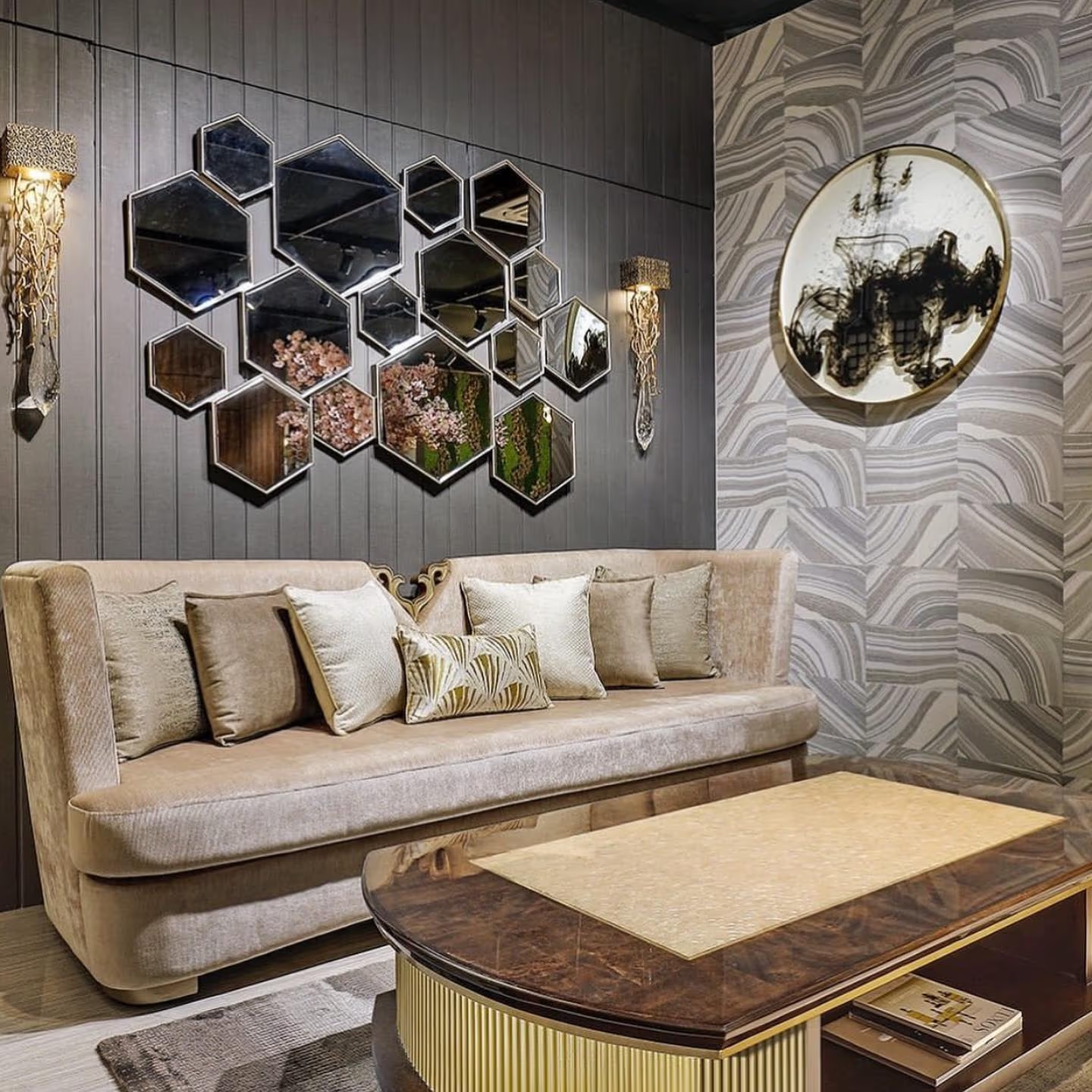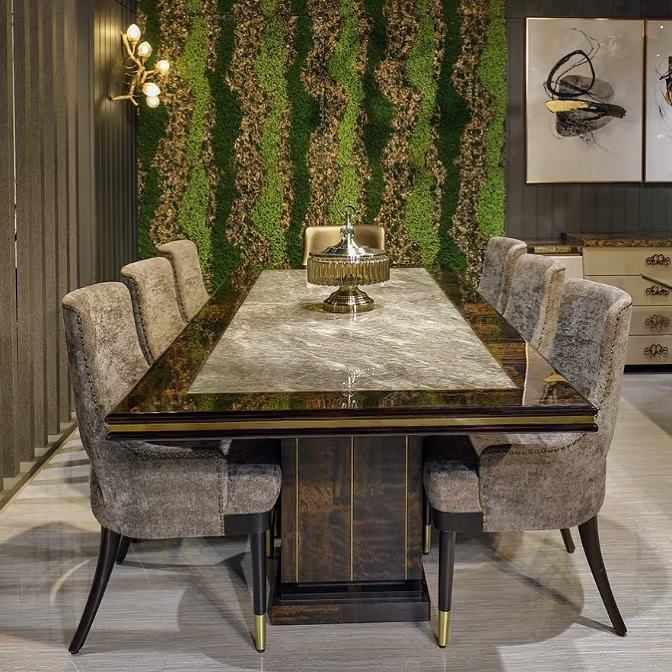

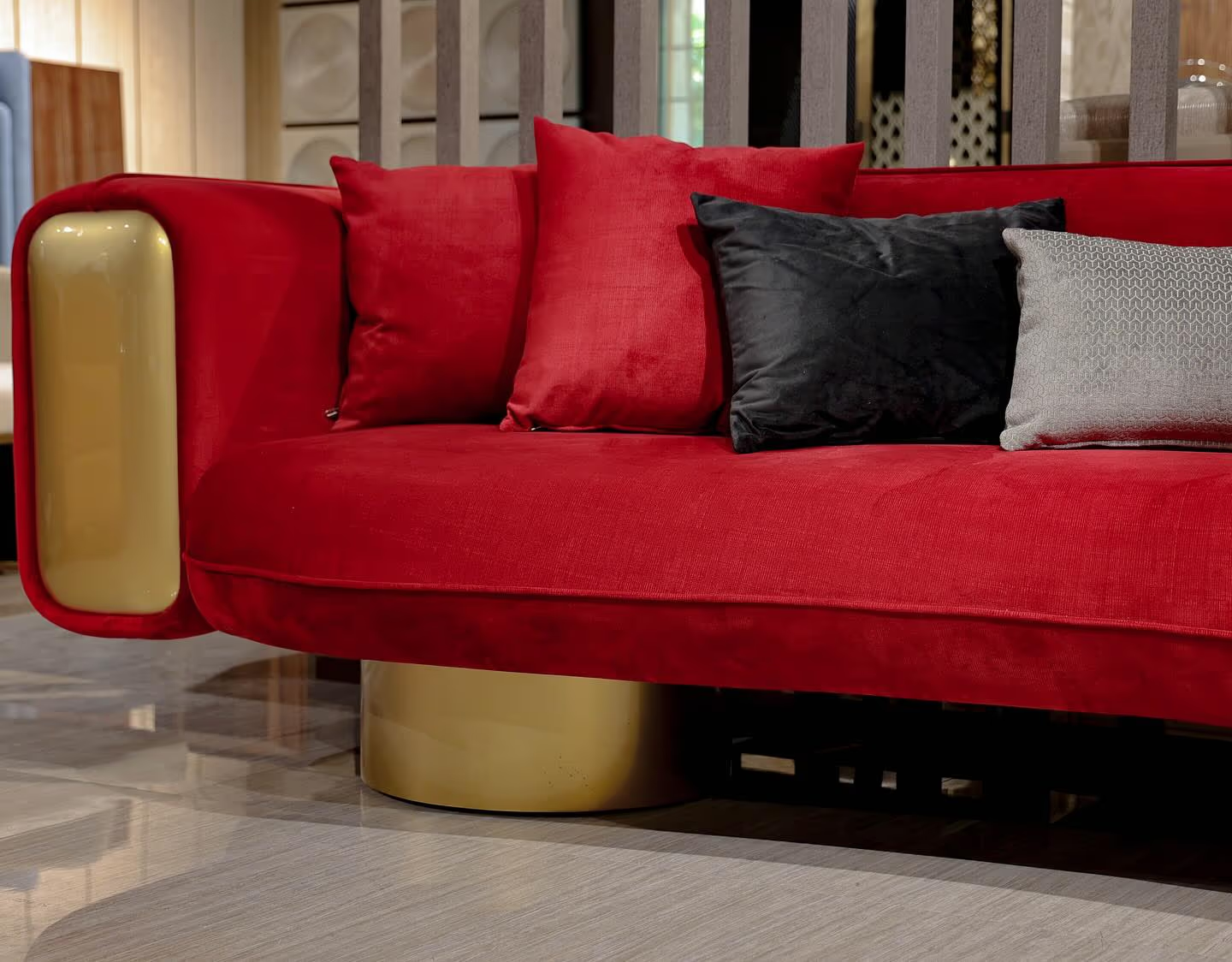
To choose a custom sofa for your living room, you decide four things: the right size for your space, a fabric that fits your life, a filling that stays firm, and a hardwood frame that lasts. Get these four right and your sofa lasts thirty years, not three. This guide walks you through each one.
A sofa is the piece your family uses most. You sit on it every day. Guests see it first. So it is worth getting right. The good news is that choosing well is not hard once you know what to look at. You do not need to be an expert. You just need to check four things, in the right order.
Those four things are size, fabric, filling, and frame. They are the whole game. A sofa can look lovely in a photo and still be the wrong size for your wall, or soften into a sad shape in two years. This guide walks you through each one in plain words, so you can order a custom sofa living room piece with a clear head and no regret.
We build made-to-space furniture, which means every sofa is drawn for one exact room. So we see, every week, what makes a sofa last and what makes it fail. Below is what we tell our own clients.
What to look for in a custom sofa for your living room
Most people choose a sofa by looks alone. They see a shape they like and they buy it. Then, a year later, the seat sags, the wall feels crowded, or the fabric looks tired. The look was fine. The four things under the look were not.
So flip the order. Start with the parts you cannot see, the frame and the filling, because they decide how long the sofa lasts. Then choose the fabric, because that decides how it wears. And size the whole thing to your room from the very first drawing. When you buy a bespoke sofa, you get to set all four on purpose, instead of hoping a shelf piece happens to be right.
A sofa lives or dies on the parts you cannot see.
Start with size: measure your living room first
Size is the one mistake you cannot fix later. A beautiful sofa that is too big will block a path or swallow a small room. One that is too small will float in a large room and feel lost. This is the number one reason standard furniture fails in luxury homes: it is built to a shelf size, not to your wall.
Here is how to get it right. Measure the wall the sofa will sit against. Then plan the space around it, not just the sofa itself.
- Measure the full wall width, then leave a little breathing room at each end so the sofa does not look wedged in.
- Leave about 45 to 50 cm between the sofa and the centre table, so people can walk and stretch their legs.
- Check the path. You should be able to walk past the sofa and open every nearby door without turning sideways.
- Think about depth. A deep seat is lovely for lounging; a shallower seat suits a smaller room and sitting upright.
- Measure your doorway and lift too, or ask for a sofa built to come apart, so it can actually reach the room.
This is where a custom sofa quietly wins. A store sofa comes in two or three fixed sizes. A custom made sofa in India is drawn to your exact wall, down to the centimetre. If your room is long and narrow, or has an odd corner, the sofa is shaped to suit it. Nothing is left to luck. For more on shaping pieces to tricky rooms, see our guide on furniture for odd-shaped rooms.
Choose the right sofa fabric for your life
Fabric is the part you touch every day, and the part that shows wear first. So choose it for your real life, not just for the photo. A home with young children and a home for two calm adults do not need the same cloth.
The three fabrics people ask about most are leather, velvet, and bouclé. Each has a place. Here is a simple way to compare them, and you can read the full story in our guide on velvet, bouclé and leather upholstery.
| Fabric | Feels like | Best for |
|---|---|---|
| Leather | Cool, smooth, ages with a soft patina | Busy homes, kids, pets; wipes clean easily |
| Velvet | Warm, rich, deep colour | Formal rooms; a statement piece with more care |
| Bouclé | Soft, nubby, modern | Calm, low-traffic rooms; marks faster |
| Performance weave | Tight, hard-wearing, plain | Family rooms that must handle daily use |
A few plain rules help. If you have kids or pets, lean towards leather or a tight performance weave, both shrug off spills. If the room is more for show than for daily piling-on, velvet gives you that rich, quiet-luxury feel. Whatever you pick, ask how the fabric is cleaned before you buy, and keep our velvet and leather care guide handy for later.
One more gift of going custom: on a bespoke sofa, the cover can often be rebuilt years down the line. When the fabric finally tires, you keep the good frame and filling and dress it in something fresh. That is not possible with most store sofas, which are sealed shut and thrown out whole.
Filling: what keeps a sofa firm for years
Sit on a cheap sofa after two years and you feel it: the seat has gone soft and low, and you sink into a dip. That is the filling giving up. It is the most hidden of the four things, and one of the most important.
The core of a good seat is high-density foam. It holds its shape for years and springs back every time you stand. Cheap sofas use low-density foam to save money; it feels fine in the showroom and then softens fast at home. Around that firm core, a good sofa adds a soft top layer, often feather or fine fibre, so it feels welcoming without going flat.
- High-density foam core: the firmness that lasts. Ask for the density number, not just the word “firm”.
- Feather or fibre wrap: the soft, plush feel on top of the firm core.
- Webbing or springs underneath: good support that stops the seat sagging in the middle.
- Set your own firmness: on a custom sofa you choose soft, medium, or firm, seat by seat.
This is a real edge of buying custom. You are not stuck with one factory setting. If you like a firm seat that sits you up, you say so. If you want a deep, sink-in lounge, you can have that too. The filling is built to your body and your habit, not to an average stranger’s.
Not sure what size or seat feel suits your room? Send us your space and we will send back a simple, honest plan.
Send us your space →The frame is everything: why a hardwood frame wins
If size is the thing you cannot fix, the frame is the thing you cannot see, and it matters most of all. The frame is the skeleton of the sofa. Everything else, the filling, the fabric, the shape, sits on top of it. A weak frame ruins a good sofa, no matter how nice the cloth.
A strong frame is made of kiln-dried hardwood. Kiln-dried means the wood has had its moisture drawn out in a slow oven, so it will not warp, twist, or crack later in a humid Indian summer. The joints are cut and fitted, often glued and dowelled, not just stapled together. A frame like this stays silent and solid for decades.
A cheap frame is a different story. It uses soft, wet wood, particle board, or thin metal brackets held with staples. It feels fine on day one. Then the joints loosen, the sofa starts to creak, and one arm goes wobbly. You cannot see any of this from the showroom floor, which is exactly why so many people get caught. To understand how a frame is built to last, read how bespoke furniture is made.
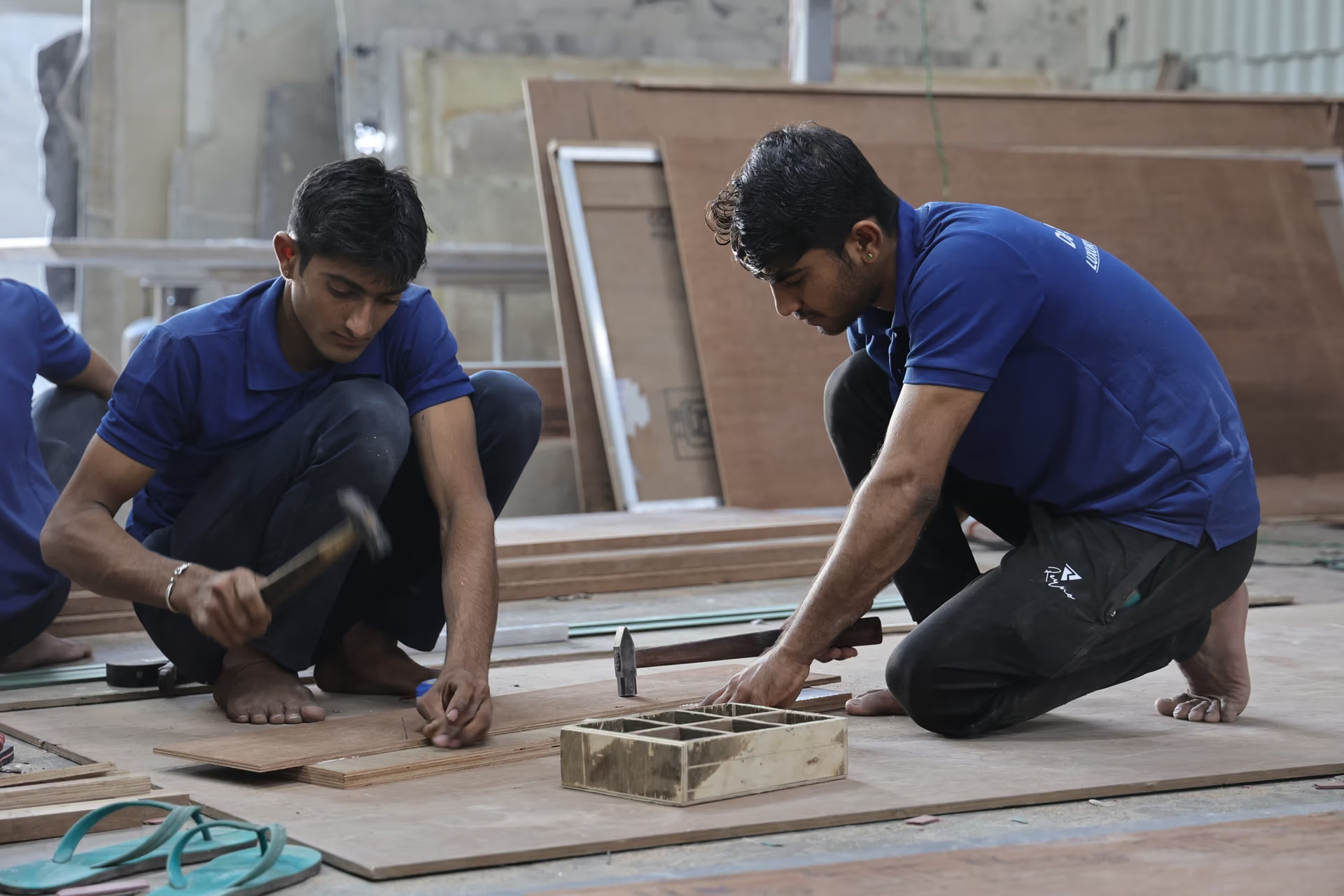
The fabric is what you fall in love with. The frame is what keeps the promise.
Custom made sofa in India vs a store sofa
Let us put the two side by side, honestly. A store sofa might cost ₹80,000 ($960). A custom sofa built to your room might cost ₹3,00,000 ($3,600). At first glance the store piece looks like the smart buy. Look closer and it often is not.
The store sofa is made once, for millions of homes. It comes in a fixed size that may not fit your wall. Its foam softens in two or three years, its frame is stapled, and its cover is sealed shut, so when it tires you throw the whole thing away. Buy it twice and you have spent ₹1,60,000 ($1,920), and you still never had a sofa that truly fit your room.
The custom sofa fits your wall to the inch, sits on a hardwood frame, uses high-density filling, and can be re-covered when the fabric ages. Ten years on, it is still firm and handsome. Divide the price by the years you keep it and the custom sofa often costs less per year, not more. That is the real maths of a good sofa.
| What you compare | Store sofa | Custom sofa |
|---|---|---|
| Fit to your room | One of a few fixed sizes | Drawn to your exact wall |
| Frame | Often soft wood or board, stapled | Kiln-dried hardwood, jointed |
| Filling | Low-density foam, softens fast | High-density core, set to your feel |
| When fabric tires | Thrown away whole | Re-covered; frame stays |
| Life | A few years | Decades |
Sofa buying guide: mistakes to avoid
In every good sofa buying guide, the mistakes matter as much as the tips. Here are the ones we see most, and how to sidestep them. Avoid these and you are most of the way to a sofa you will love for years. For the wider list across all furniture, see our guide on custom furniture mistakes to avoid.
- Buying by looks alone. A lovely photo tells you nothing about the frame or the foam. Check all four things.
- Skipping the measure. Guessing the size is how sofas end up blocking doors or dwarfing a room.
- Ignoring the doorway. Measure how the sofa will actually get into the room, or have it built to come apart.
- Choosing the wrong fabric for your life. A pale bouclé in a home full of children is a short, sad story.
- Chasing the lowest price. A cheap sofa you replace twice costs more than one good sofa you keep.
None of these are hard to avoid. They just need a calm hour of planning before you order. When you go custom, we plan that hour with you, so the sofa is right on the first try. If you want ideas for the whole room around it, our luxury living room design ideas are a good place to start.
How long a bespoke sofa takes, and what it is worth
A custom sofa is built by hand, so it takes time. Most take about six to twelve weeks. The frame is jointed and dried, the filling is layered, and the fabric is cut and fitted with care. That is not slowness for its own sake; each step needs the one before it to settle. Our guide on how long custom furniture takes explains the timeline, so you can order at the right moment and skip any rush fee.
Is it worth the wait and the spend? For a home you plan to keep, yes. Think of a sofa the way you think of a good bed or a solid door. The price sits in front of you once. The comfort sits with you every evening for years. A store sofa you replace three times has cost you more, in money and in bother, than one fine sofa you never think about again.
We are a made-in-India furniture and interior house, working across India and worldwide, led by founder Nidhi Patel. Every sofa we build is drawn around your walls, your light, and the way your family lives. Get the four things right, size, fabric, filling, and frame, and you will not be sofa shopping again for a very long time. When you have a real room in mind, send us your space and we will send back honest sizes, seat options, and a plan.