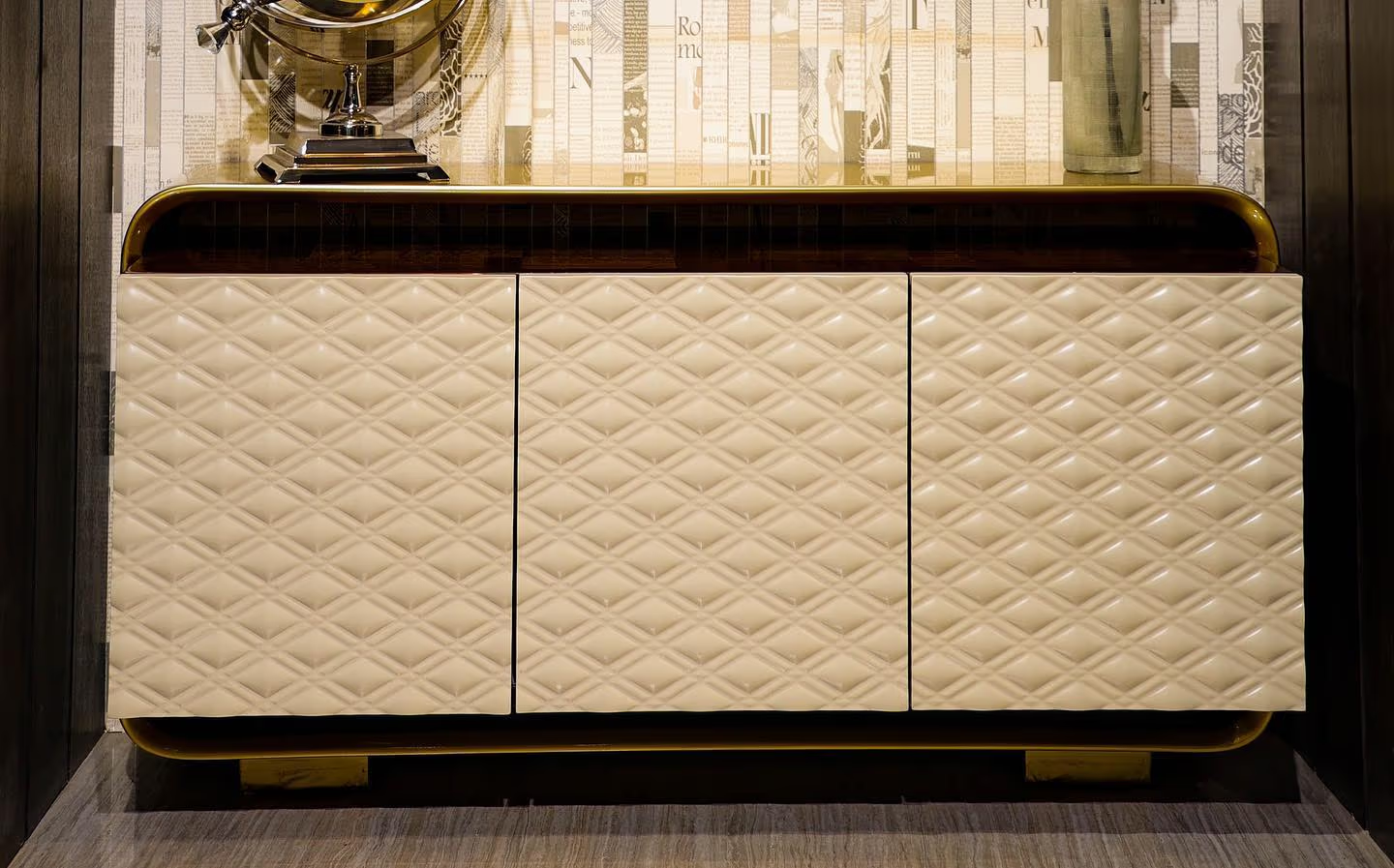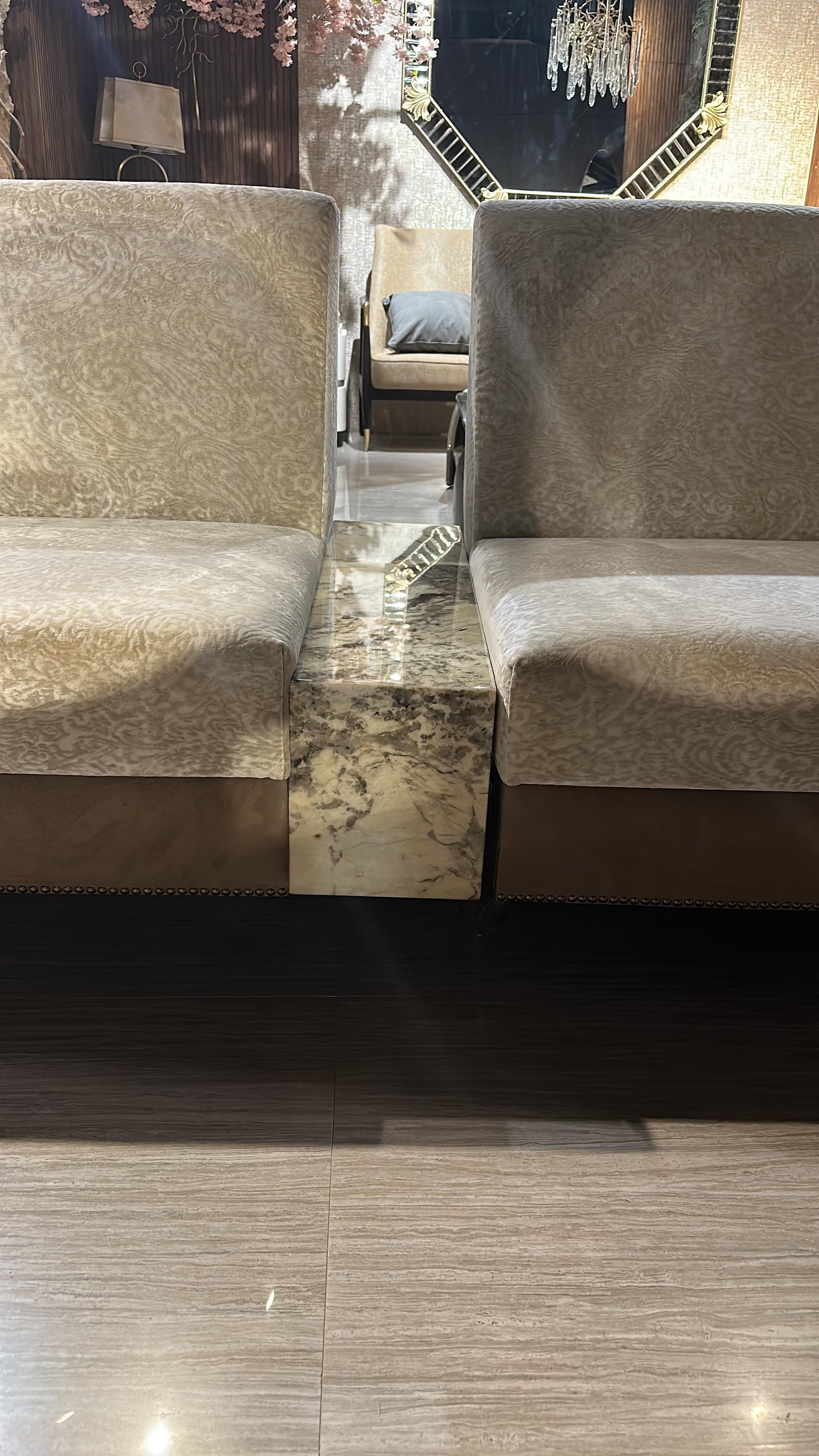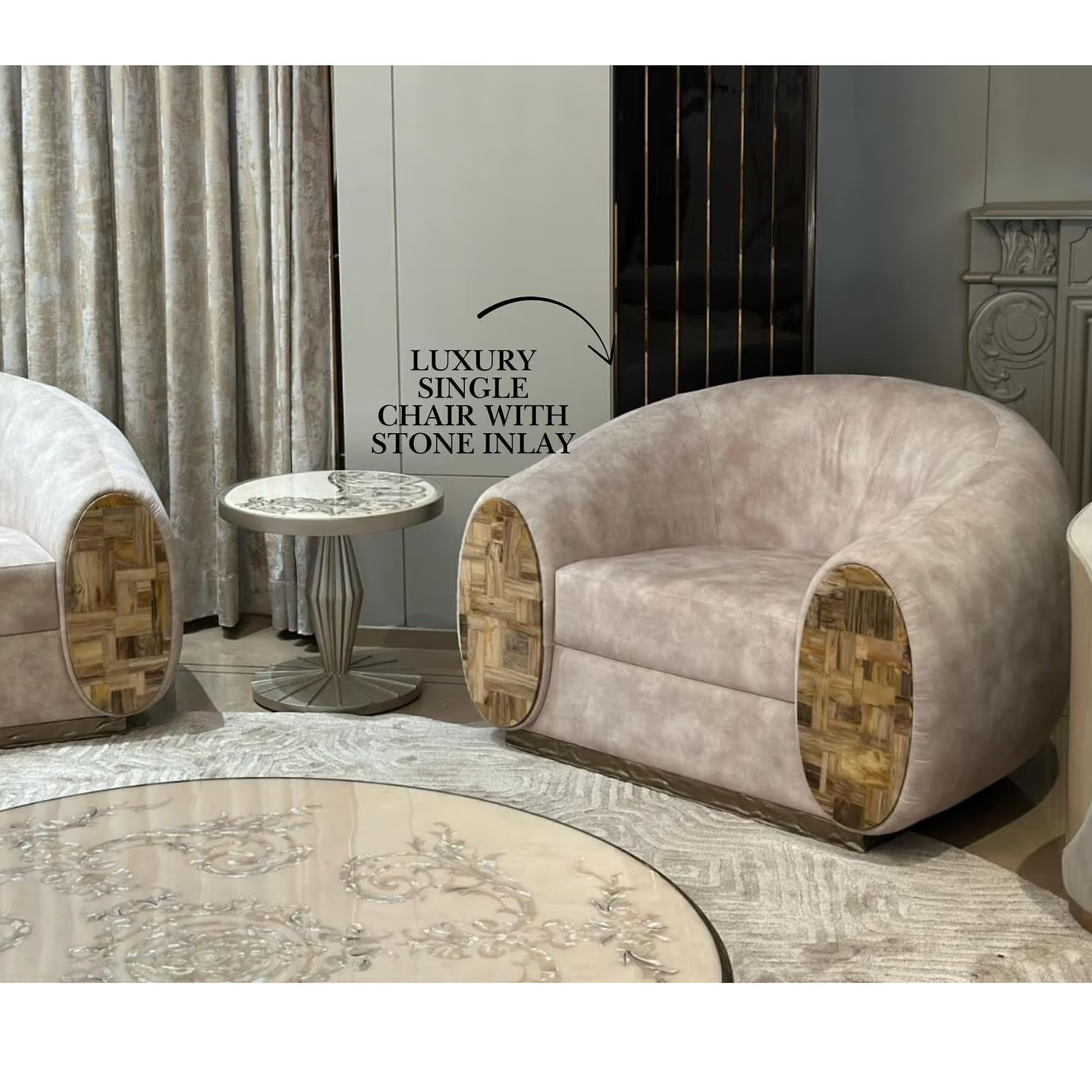

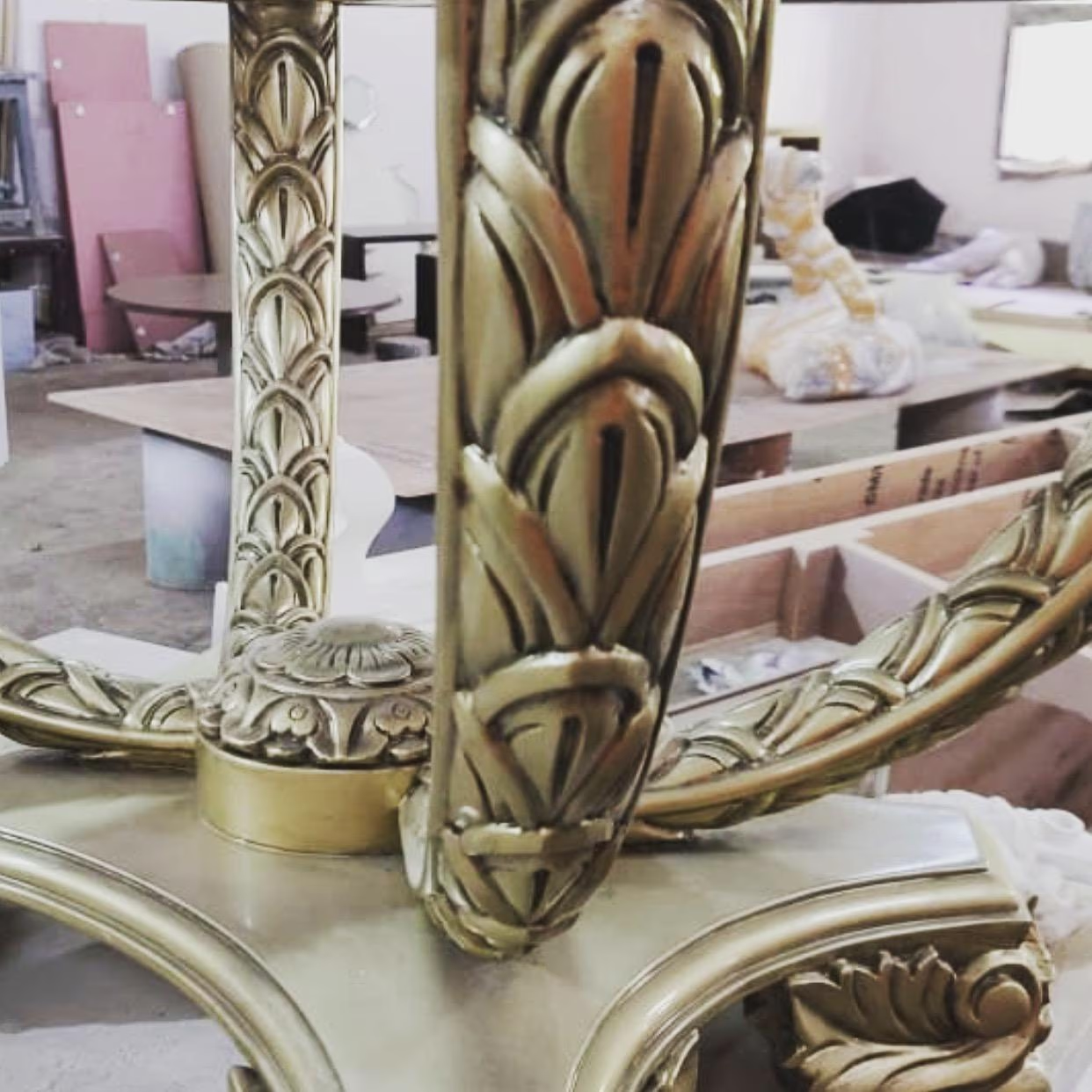
A luxury furniture warranty should be written into your quote, not printed on a card. Any serious maker covers manufacturing defects — a failed joint, a lifting finish, faulty hardware. No maker covers wear, sun fade, water, heat or acid etching. This guide shows what to ask before you order, and how to care for each material.
You are about to spend a great deal of money on furniture, and you have worked out that the interesting question is no longer what it costs. It is this: who fixes this in year six? A hand-carved bed or a stone dining top is not a purchase. It is a twenty-year relationship with the people who made it.
Most buyers only think about after-sales once something goes wrong. By then the maker who quoted the lowest number has stopped answering the phone, the polisher was a subcontractor who has moved cities, and nobody wrote down which finish was used. This guide is written to stop that happening to you — with any maker, not only with us.
What a luxury furniture warranty actually covers
Strip away the marketing and a furniture warranty covers one thing: a manufacturing defect. That means the piece left the factory wrong, and it was wrong the day it was built, even if the fault only showed itself later.
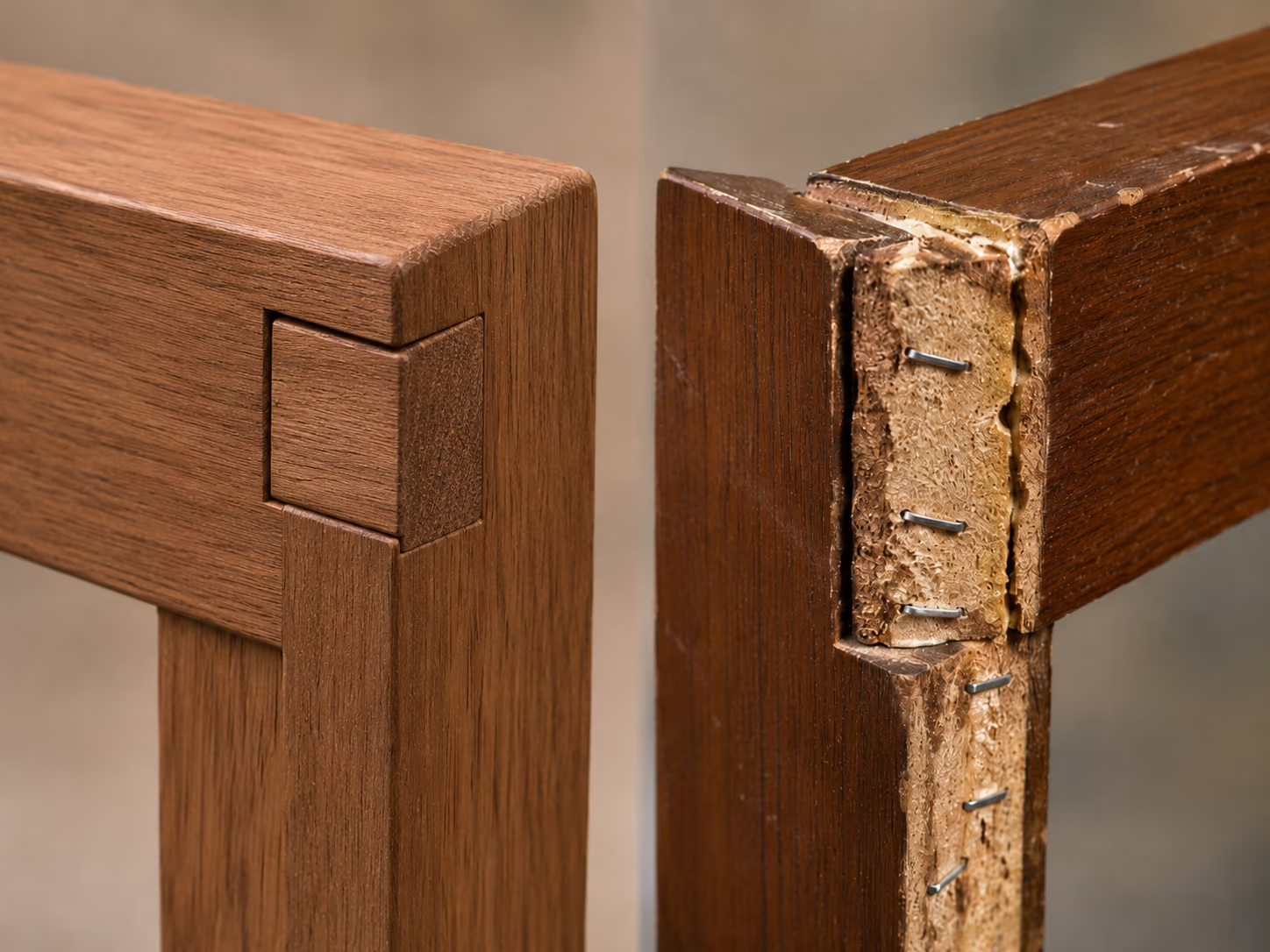
- A joint that fails. A mortise and tenon that opens, a dowel that shears, a frame that racks under normal use. If a chair frame loosens in the first season of ordinary sitting, that is a build fault.
- A finish that lifts. Lacquer that peels off a flat panel, a polish that crazes, a veneer that blisters or delaminates from the substrate because the glue line failed or the panel was built unbalanced.
- Hardware that was faulty when fitted. A soft-close runner that never closed softly, a hinge that was wrong from day one, a lock that never turned properly.
- A panel that delaminates. A face veneer laid without a backer will cup, because a panel needs balanced construction. That is a specification and build error, not something you did.
- A piece that does not match the approved drawing. Wrong size, wrong finish reference, wrong fabric, missing detail. This is the easiest claim of all, because there is a drawing to hold it against.
Notice what these have in common. Every one of them can be checked against a document — the general arrangement drawing, the shop drawing, the CMF schedule, the hardware schedule. A warranty is only as strong as the paperwork behind it. If nobody drew the piece, nobody can prove it is wrong.
What no furniture warranty covers
This is the section most makers leave vague, and it is the section that decides whether you feel cheated in year three. Here is the honest list. No serious furniture maker anywhere covers these, and you should know that before you are disappointed rather than after.
- Normal wear. A seat cushion softens. A leather arm burnishes where a hand rests. A brass foot polishes bright where a shoe touches it. That is use, and use is the point.
- The natural movement of solid wood. Wood moves across the grain, not along it. A room that runs from 30% to 85% relative humidity across an Indian year will move a solid panel by a visible amount. Good joinery is built to allow it. It is not a fault.
- Variation in natural material. Stone veining, range marks on a hide, grain and colour change across a veneer run, a shade difference between two lots of a natural fabric. These are proof the material is real.
- Fading from direct sunlight. Every dye, every wood and every leather fades on a west-facing wall under afternoon sun. No finish stops UV. Fabric on a sunlit window seat will lift in tone within a year.
- Water, heat, spills and acid. A wet glass ring on unsealed marble, a hot dish on a lacquered top, a lemon or a vinegar on stone. Etching is a chemical burn into the surface, not a scratch, and no maker can insure your kitchen against it.
- Somebody else’s transport, somebody else’s repair. If a piece is moved by a packers-and-movers crew, refinished by a local polisher, or re-upholstered by a third party, its warranty ends there. Nobody can stand behind work they did not do.
- Misuse. Standing on a console. Sitting on a drawer front. Dragging a loaded cabinet across a floor instead of lifting it. Overloading a hanging rail past what it was drawn for.
The maker who cannot be reached in year six is usually the maker who was cheapest in year one.
Defect or characteristic: the difference most buyers never learn
This is worth more to you than any warranty clause. Real materials are not printed. They carry the record of how they grew or how they formed, and that record shows.
| What you see | What it actually is | Why |
|---|---|---|
| A seam across a stone top | A characteristic | Slabs come out of a block at a fixed size. A long dining top needs a joint, cut and vein-matched by hand. |
| Vein and colour changing across two halves of the same top | A characteristic | The second slab of the same block never reads exactly like the first. Vein-matching means buying the block, not the square foot. |
| Range marks, scars and grain change on leather | A characteristic | A hide averages 45–55 sq ft and comes off an animal that lived. Perfectly clean leather is usually heavily corrected or printed. |
| Grain and figure shifting along a veneer run | A characteristic | A burl or fluted veneer is sliced from one log. Book-matched leaves change as the cut moves through the tree. |
| A slight shade difference between two lots of the same fabric | A characteristic | Natural fibres take dye differently by batch. This is why a whole suite should be cut from one roll, one nap direction. |
| Brass darkening unevenly | A characteristic if raw, a defect if lacquered | Raw brass is meant to patina. Lacquered brass should not darken — if it does, the lacquer has failed. |
| A veneer blistering or lifting off the panel | A defect | A glue-line or balance failure. A face veneer needs a backer, or the panel cups and the face lets go. |
| A joint opening in the first year | A defect | Timber that went to the joinery floor above 8–12% moisture content will shrink in a dry room and open the joint. |
Learn this table and you will be a happier owner of real materials. It also protects you the other way: when a veneer lifts or a joint opens, you will know it is not something you caused, and you will raise it with confidence.
Questions to ask before you order
This is the heart of the article. Ask these eight questions of every maker you are considering, including us. Ask them before you pay a deposit, because that is the only moment you have leverage. Write the answers down.
| Ask this | Why it matters | A bad answer sounds like |
|---|---|---|
| Are your after-sales terms written into the quote? Can I see them now? | Terms you cannot read before you pay are terms that can change after you pay. | “Don’t worry, we always look after our clients.” |
| Who made this piece — you, or a subcontractor? Who do I call if it fails? | A trader cannot repair what it did not build. You need one name, one number, one accountable party. | “We have a network of skilled partners.” |
| Can it be repaired in place, or does it have to come back to a factory? | A stone top or a fitted wardrobe is not easy to move. Some repairs must be possible on site. | “We’ll see when it happens.” |
| Do you re-polish and re-upholster your own pieces years later? | Polishing and upholstery are the two things that age first. A maker without those departments cannot renew a piece. | “We can recommend somebody.” |
| Will you hold a record of my specification — finish reference, fabric, hardware? | Without the record, a year-eight repair is a guess. The guess will show, in daylight, forever. | “It’s all in the WhatsApp chat.” |
| Is the hardware a type you can still get in five years? | A discontinued proprietary runner or a one-off hinge can strand an entire cabinet. | “It’s imported, very good quality.” |
| What is not covered, in writing? | A maker willing to write the exclusions is a maker who intends to honour the inclusions. | “Everything is covered.” |
| Who pays for transport on a warranty repair, and who pays outside warranty? | Moving a 12-seat dining top across two states is a real cost. Settle it before, not after. | Silence, or a number invented on the call. |
You will notice none of these questions is about a number of years. A long headline warranty from a maker with no polishing department is worth less than a short one from a maker who can actually put the piece right. Ask what happens, not how long.
Send us the room and the pieces. The design, the specification and the after-sales terms all come back in writing before anything is cut.
Start a commission →Why record-keeping is the real after-sales asset
Here is the part almost nobody tells buyers. The most valuable thing a furniture maker can give you after delivery is not a certificate. It is a file.
A maker who still holds your general arrangement drawing, your shop drawings, your finish reference, your fabric name and lot number, your veneer species and your hardware schedule can match a repair years later. A maker who holds none of it will mix a polish by eye, order a fabric that is close, and fit a hinge that is nearly right. In daylight, at an angle, you will see all three.
- The drawing. Plan, elevation and section, with real millimetres. Without it there is nothing to hold a repair against.
- The finish reference. A RAL or NCS number, a polish code, a sheen level. “Walnut brown” is not a reference — there are hundreds of them.
- The fabric and lot. Name, colour, roll or batch. Natural fabric changes between lots, so a repair from a different roll can read as a different colour.
- The veneer species and cut. Burl, fluted, quarter-cut, book-matched. A patch cut from the wrong log will never disappear.
- The hardware schedule. Make, model, size, quantity. This is what lets somebody order one replacement runner in year ten instead of rebuilding a drawer bank.
- Photographs of the finished piece before it was crated. The reference point for what it looked like when it left.
We keep this file for every commission, because we drew it, we cut it and our name is on it. That is a real, checkable claim, and it costs nothing to make. You can see how the drawing and specification are produced in how bespoke furniture is made.
The furniture care schedule that prevents the claim
Most after-sales problems in India are not manufacturing faults. They are humidity, sunlight and the wrong cleaning product. Here is a short, honest schedule by material. Each line links to the full care article if you want the detail.
| Material | Every week | Every month | Once a year | Never |
|---|---|---|---|---|
| Wood and veneer | Dry dust with a soft cloth, along the grain. | Wipe with a barely damp cloth, dry at once. Air closed cabinets. | Check joints and re-wax or re-coat where the polish has dulled. See burl and veneer care. | Silicone spray polish, or standing water on an edge. |
| Marble and semi-precious stone | Dust, and wipe spills off in seconds, not minutes. | Clean with a pH-neutral cleaner only. Check the seal with a water-bead test. | Re-seal. See marble care and agate and stone table care. | Lemon, vinegar, wine, bathroom cleaner. All of them etch. |
| Brass and metal | Dry dust only. | Wipe fingerprints with a soft dry cloth. Know whether yours is lacquered or raw. | Re-polish raw brass, or re-lacquer where the lacquer has broken. See brass care. | Brasso on lacquered brass. It strips the lacquer and the patina goes blotchy. |
| Leather | Dust and vacuum the crevices on a soft brush head. | Wipe with a barely damp cloth. Plump the cushions and rotate them. | Condition with a leather conditioner, twice a year in dry regions. See leather care. | Baby wipes, alcohol, or a seat in direct afternoon sun. |
| Velvet, bouclé and fabric | Vacuum on low suction, always in the direction of the nap. | Brush the pile back one way. Rotate loose cushions. | Professional dry clean of covers where the fabric allows it. See velvet cleaning. | Rubbing a spill. Blot only, or the nap crushes permanently. |
| Lacquer and high gloss | Microfibre, dry, light pressure. | Damp microfibre and a drop of neutral soap, then buff dry. | Inspect edges and handles for micro-scratching; a gloss can be cut and re-polished. | Paper towel, ammonia glass cleaner, or a gritty cloth. All scratch gloss. |
| Mirror and glass | Dry microfibre. | Spray the cloth, never the panel — cleaner running into a mirror edge attacks the silvering. | Check the mirror backing and any antique-finish panels for black edge spotting. | Spraying directly onto a mirror set in a wood frame. |
Then there are the four Indian problems, which apply to every material on that list.
- Humidity swing. Roughly 30% to 85% relative humidity across a year. Run the air conditioner or a dehumidifier in the monsoon and keep the room steady. Full detail in furniture care in a humid climate.
- Monsoon mould on upholstery. Pull sofas 50–75mm off damp outside walls so air can move behind them, and air closed wardrobes weekly.
- Direct sun on a west wall. The single fastest way to fade a fabric, a leather and a polish. Sheer blinds after 3pm are cheaper than re-upholstery.
- Hard water marks. Wipe a stone or gloss surface with filtered water, not tap water, or the mineral leaves a white ring as it dries.
Repairability is specified, not hoped for
Whether a piece can be saved in year twelve is decided before anybody switches a machine on. These are specification choices, and you can make them on purpose.
| Specify this | Instead of this | What it buys you |
|---|---|---|
| A solid wood lipping on a panel edge, 6mm or more | A thin printed foil edge | The edge can be sanded back and re-polished many times. A foil edge sands straight through the print. |
| Individual seat cushions with a zip | A bonded, fixed bench seat | The filling can be replaced and the covers taken off. A bonded seat has to be cut open and rebuilt. |
| Hardware from a range that is still in production | A one-off imported fitting with no model number | One runner can be replaced in year ten. Otherwise the whole drawer bank has to be re-engineered. |
| A polish or lacquer that can be re-coated in place | A factory-cured finish that only works in a spray booth | A scuffed console can be renewed in your home instead of being crated back. |
| Solid seasoned timber at 8–12% moisture in the structure | MDF or particle board in load-bearing or wet-risk positions | Solid timber can be repaired and re-joined. Board that has swollen with water never goes back. |
| Removable stone tops on a mechanical fixing | A stone top glued down to the base | A cracked top can be lifted and replaced without destroying the base under it. |
Read that table once more and you will see the pattern. Repairability is specified, not hoped for. It is also mostly free — these choices cost little at the drawing stage and a fortune to retrofit. More on this in solid wood vs veneer and why standard furniture fails in luxury homes.
Why one roof matters after the delivery van leaves
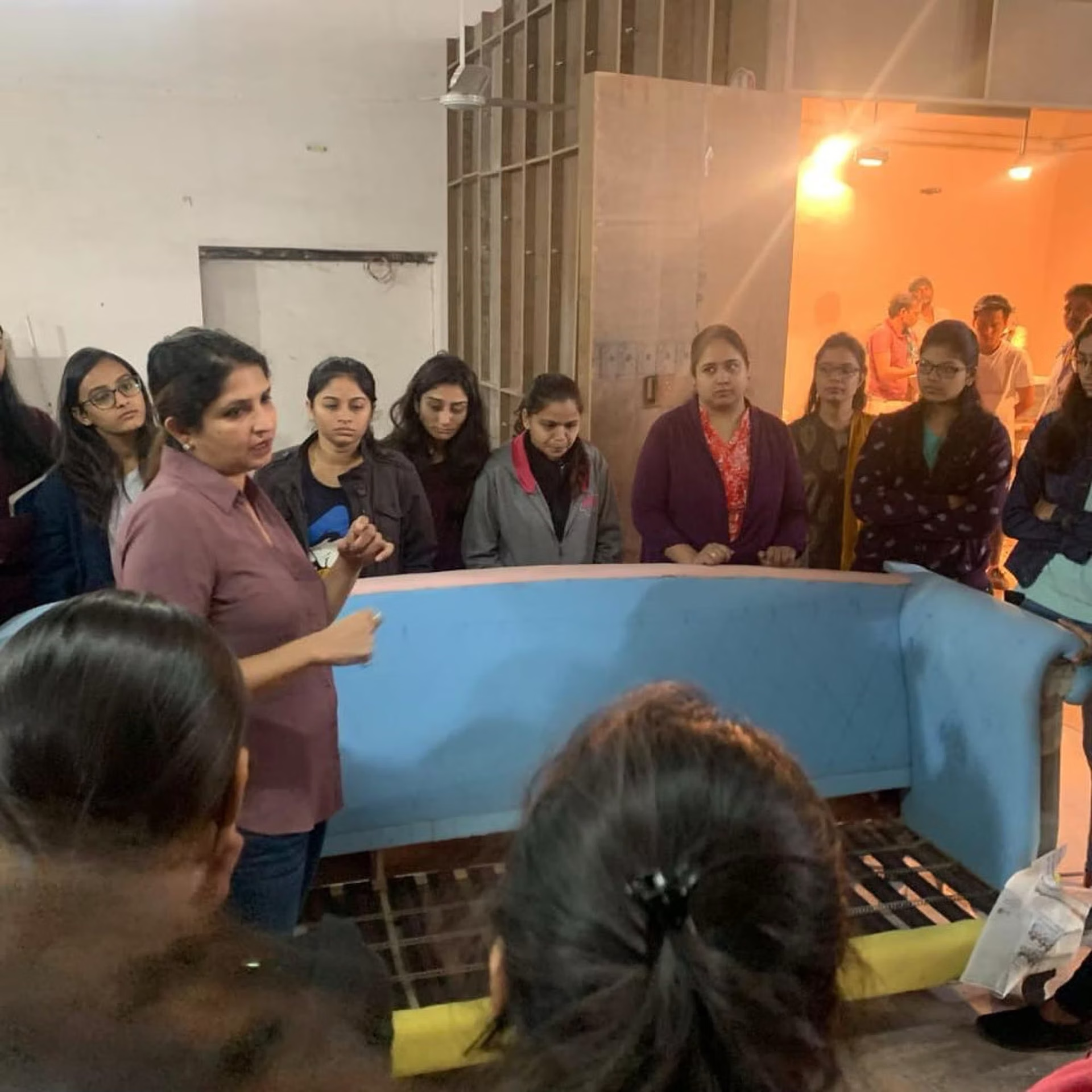
A piece of luxury furniture is rarely one trade. A carved bed is joinery, then polishing, then upholstery, then hardware. If four different vendors made those four parts, then a repair in year eight needs all four of them again — still trading, still holding the specification, still willing to work on somebody else’s job.
Designatore runs ten departments in one 80,000 sq ft factory in Village Bil, Vadodara, Gujarat, with 130+ people. For after-sales, four of them matter most: 04 Woodworking & Joinery, 06 Painting & Polishing, 07 Upholstery and 08 Quality Control. The same building that built your piece can take it back, open it up, re-polish it, re-upholster it and check it against the original drawing. That is not a promise about intent. It is a fact about the building, and you are welcome to walk through it — see the factory and how the work is done by hand.
What to do on the day it arrives
A snag raised on day one is a completely different conversation from one raised in month four. On day one the piece is untouched, the crate is still there, and nobody is arguing about what happened in between. Do this before anyone starts using the furniture.
- Photograph the crate before it is opened. If there is transport damage, the crate is the evidence. Mainland-India freight from us is insured for the full value of the goods — see delivery — but a claim needs pictures taken on the day.
- Check the piece against the approved drawing and the quote. Overall length, depth, height. Not “looks right” — measure it.
- Look at the finish under raking light. Stand to one side with light skimming across the surface. Ripples, dust nibs and polish marks that are invisible head-on show up instantly at that angle.
- Operate everything. Every drawer to its full extension, every door through its full swing, every lock, every soft-close, every lift mechanism. Twice.
- Check the inside. Shelf spacing at 300–350mm, hanging rail depth of 600mm for a wardrobe, drawer bottoms sitting properly in their grooves.
- Photograph anything questionable immediately, with something in frame for scale.
- Raise it in writing the same day, with the photographs, before the piece is used or loaded.
Then let the piece settle. Solid wood that has travelled from a Gujarat monsoon into a dry Delhi winter will adjust for a few weeks. A door that sits a hair proud in week one often sits perfectly in week six. That is the material behaving, not failing.
How Designatore sets warranty and after-sales terms
We will be plain about this, because vagueness here is how buyers get hurt. Warranty and after-sales terms are written into each project’s quote, because every piece is made to a different specification, in different materials, for a different room. A solid teak bed frame, a backlit onyx console and a channel-back velvet sofa do not age the same way, do not fail the same way, and should not be covered by one printed line.
So we do not publish a single number and hope it fits your project. We write the terms for your project, into your quote, before you pay anything. You read them, you ask about them, and you keep them. Alongside them we hold the drawings, the finish reference, the fabric and lot, and the hardware schedule — which is what makes a matching repair possible years later.
Ask us for those terms. Ask every other maker on your shortlist for theirs. Compare what is written, not what is said on a call. If a maker will not put after-sales in writing before you order, you have learned the most useful thing about them for free.
The next step is a short one. Send us the room, the pieces and the way you actually live in the space, and the drawing, the specification and the after-sales terms come back to you in writing before a single board is cut. Start at customization, walk the factory in Vadodara any working day between 10am and 7pm, or talk to us on +91 94260 73781. For client care after delivery, write to [email protected].