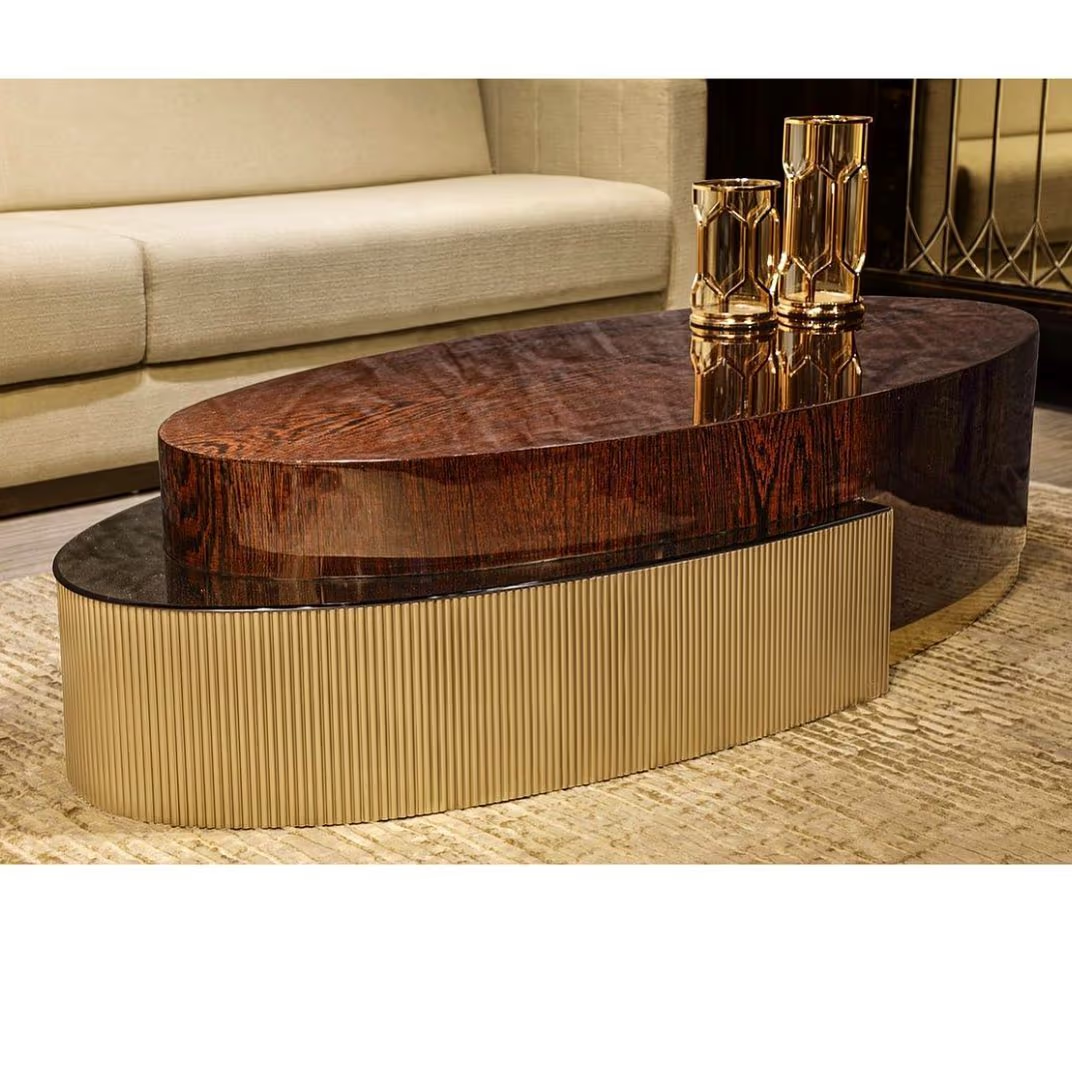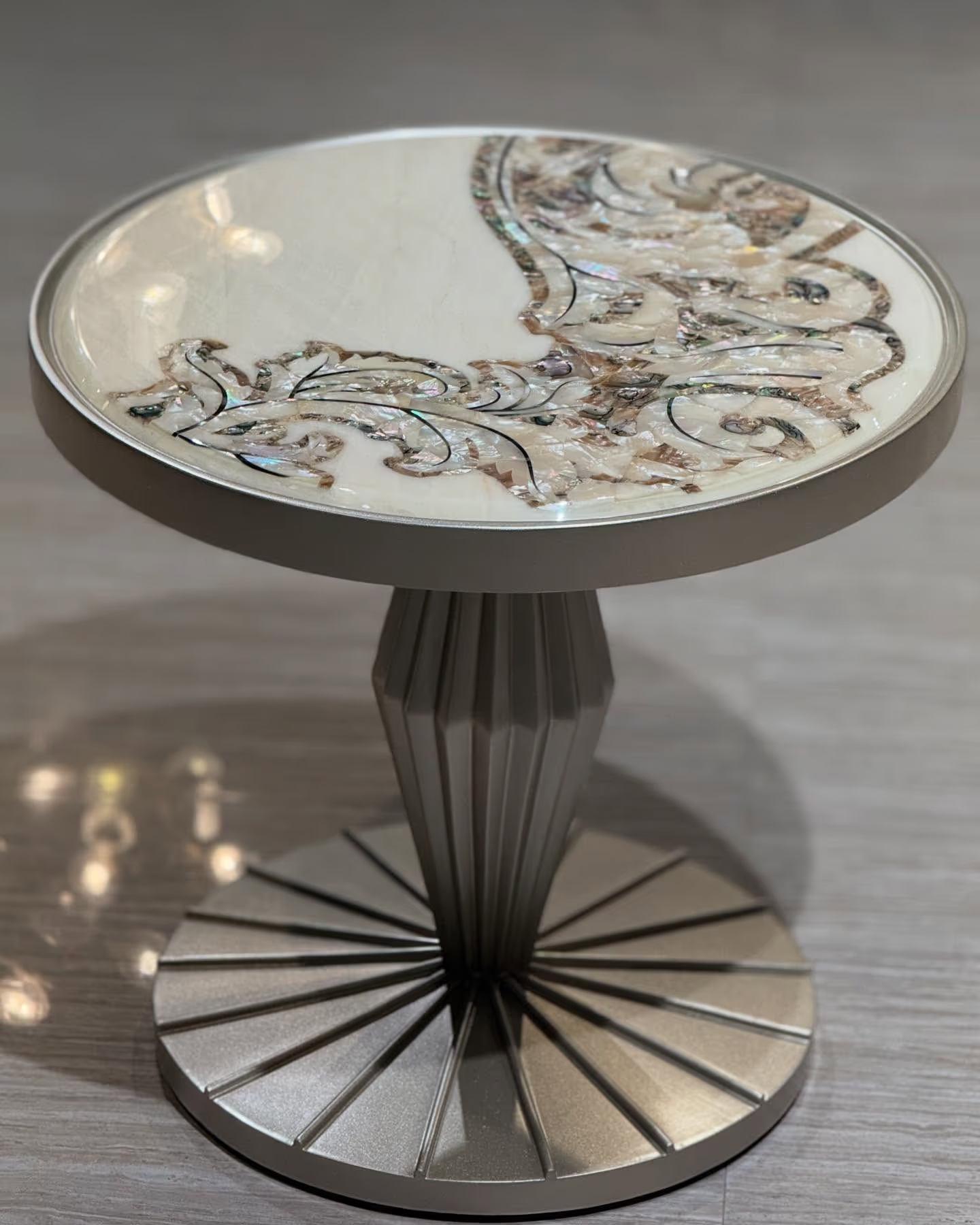

A petrified wood table is a table whose top is a slab of real wood turned to stone over millions of years. Each slab is one of a kind — no two are alike. Also called a fossil wood table, it brings ancient stone, rich colour and a surface you can never repeat into your home.
Some tables are made. This one is found. A petrified wood table starts as a tree that fell before humans walked the earth, and slowly, over millions of years, turned into solid stone. What you place in your room is not a copy of nature. It is nature — the real grain, the real rings, the real shape of an ancient tree, held forever in rock.
This guide is for you if you are drawn to that idea but want to buy with a clear head. We will explain what petrified wood really is, how a fallen tree becomes stone, why every slab is one of a kind, what a petrified wood table costs, how to spot the real thing, and how to keep it beautiful for life. Simple words, honest answers, no rush.
What is a petrified wood table?
A petrified wood table is a table with a top cut from petrified wood — real wood that has slowly turned into stone. The word “petrified” comes from an old word for stone. Long ago, a tree fell and was buried in mud, sand or ash. Air could not reach it, so it did not rot. Instead, water full of minerals seeped in, drop by drop, and left tiny grains of stone behind. Over ages, the wood was fully replaced by rock — yet the grain, the rings and even the bark can still be seen.
So a petrified wood table looks like a slice of a great tree, but it feels and lasts like stone. It is cool to the touch, heavy in the hand, and it will not swell, warp or rot the way timber can. This is why it sits in its own special place in the world of petrified wood furniture — part wood in its story, part stone in its life.
You may also hear it called a fossil wood table. That name is just as correct. A fossil is any once-living thing turned to stone, and petrified wood is exactly that. Whether the label says petrified wood table or fossil wood table, you are looking at the same rare, ancient material.
How wood turns to stone
It helps to picture how a living tree becomes the hard, glassy top on your table. The change is slow and quiet, and it needs a rare set of steps to line up just right. That rareness is a big part of why petrified wood is so prized.
- A tree falls and is buried fast. Mud, sand, or volcanic ash covers it quickly, sealing it away from air so it cannot rot.
- Mineral water seeps in. Ground water carrying dissolved minerals — mostly silica, the same stuff as quartz — slowly soaks into the wood.
- Stone fills every cell. Drop by drop, over thousands of years, the minerals settle inside the wood and harden into rock, taking the exact shape of the grain.
- The wood becomes stone. In time the original wood is fully replaced by stone, yet the pattern of the rings and grain stays perfectly copied.
- The earth lifts it back up. Millions of years later, the land shifts and wears away, and the stone tree is found again — ready to be cut, polished and given a new life.
Different minerals leave different colours. Iron can leave warm reds and rusty browns. Other traces leave creams, greys, blacks and even soft greens. This is why no two slabs share a colour, and why a petrified wood table always feels alive with earth tones. The colour was painted by chemistry, over an age no human could ever watch.
Agatized wood: when the stone turns to gem
Not all petrified wood is equal. The finest grade is called agatized wood. Here the tree did not just turn to common stone — it turned to agate, a gem-quality stone from the quartz family. Agatized wood is harder, denser and takes a deeper, glassier polish. Under light it can glow with jewel-like colour, and it often holds tiny crystal pockets where the stone grew slowly inside old cracks.
Think of it as the difference between a nice stone and a precious one. All agatized wood is petrified, but only the rarest, best-preserved petrified wood is truly agatized. For a table, this is the top tier — the pieces that stop a room. We go deeper into this gem-grade material in our guide to agate and petrified wood furniture, and if you love the pure stone look, our marble furniture guide sits right beside it.
Common wood turns to stone. The rarest wood turns to a gem you can touch.
Why every petrified wood table is one of a kind
This is the heart of it. A petrified wood table is a one-of-one. Nobody designed the pattern. No machine printed it. It is the record of a single tree that lived, fell and turned to stone in one exact place, under one exact set of minerals, over one long stretch of time that will never come again.
That means the slab you choose cannot be repeated — not by us, not by anyone. The rings, the cracks now filled with crystal, the swirl of colour, the shape of the edge: all of it belongs to your table alone. In a world where most things are made a thousand at a time, this is a rare kind of luxury. It is the same thinking behind made-to-space furniture — a piece that exists once, for one home.
It also changes how you buy. You are not picking a model from a list. You are choosing a specific slab, the way you would choose a painting. Because of that, we like clients to see the real stone — its true colour, its natural edge, the way light moves across it — before it becomes a finished piece. If you love the raw, live look of natural material, you will feel the same pull in burl wood furniture, where the grain is just as wild.
Petrified wood table vs marble and other stone tops
Petrified wood is not the only beautiful stone you can put on a table. So how does it compare with marble, agate and solid wood? Here is a plain, side-by-side look to help you choose.
| What matters | Petrified wood | Marble | Solid wood |
|---|---|---|---|
| What it is | Real wood turned to stone. | Natural stone from the earth. | Timber cut from a living tree. |
| Look | Tree rings and grain, in stone. | Soft veins and clouds. | Warm grain, still wood. |
| One of a kind | Always — no two slabs match. | Each slab differs, veins vary. | Grain varies, but repeatable in kind. |
| Hardness | Very hard, like quartz. | Softer, can scratch and etch. | Soft, can dent and mark. |
| Moves with weather | No — it is stone. | No — it is stone. | Yes — swells and shrinks. |
| Rarity | Very rare, dug from the ground. | Widely quarried. | Common to rare by species. |
Read across and the picture is clear. Marble gives soft, flowing calm. Solid wood gives warmth but moves with the seasons — our note on solid wood vs veneer explains that movement well. Petrified wood gives you both worlds at once: the grain and soul of wood, with the strength and stillness of stone. That mix is what makes it so special, and so rare.
What petrified wood furniture costs
Petrified wood is a premium material, and the price is honest about that. You are paying for something the earth spent millions of years making, then dug up, cut and polished by skilled hands. It is not made in a factory, so it will never carry a factory price.
As a fair guide, a finished petrified wood side table or small piece often starts around ₹1,50,000 (about $1,800). A dining or centre table with a larger slab can run from ₹4,00,000 (about $4,800) upward, and a big statement slab of agatized wood can pass ₹8,00,000 (about $9,600). These are guide numbers, not fixed quotes — every slab is different, so every price is too.
A few things move the price up or down:
- Size and thickness. Bigger, thicker slabs are far rarer and cost much more.
- Grade of stone. Plain petrified wood costs less than gem-grade agatized wood with crystal pockets and bright colour.
- Colour and pattern. Rich reds, deep blues and clear rings are prized over muddy, broken pieces.
- The base and the build. A hand-made metal or wood base, and a careful polish, add lasting value — this is where the price of bespoke furniture is set.
Want to know what a petrified wood table would cost for your room? Send us a photo of your space and the size you have in mind, and we will find real slabs and give you an honest price — before anything is built.
Send us your space →How to tell real petrified wood from fake
Because petrified wood is costly, some sellers pass off printed tops or cheap resin as the real thing. The good news is that real petrified wood is hard to fake once you know what to feel for. Trust your hands as much as your eyes.
- Feel the weight. Real petrified wood is stone, so it is heavy and cold to the touch. A light, warm top is not real.
- Look at the grain. Real grain flows in an uneven, natural way, with rings that wander. A pattern that repeats neatly is printed.
- Check the polish. True stone takes a deep, glassy shine and may show tiny crystal pockets. Plastic looks flat or cloudy.
- Ask for the source. A real maker can tell you where the slab came from and show you the raw stone. If nobody can, walk away.
The safest path is simple: buy from a house that sources its own slabs and can trace each one. The same care that spots a fake stone also avoids the common custom-furniture mistakes that catch first-time buyers. When the maker knows the material deeply, you are protected.
How to care for a petrified wood table
Here is the easy part. Because a petrified wood table is stone, it asks very little of you. There is no oiling, no fear of damp, no seasonal movement to watch. Keep to a few simple habits and the surface stays bright for a lifetime.
- Wipe with a soft, damp cloth, then dry it. That is the everyday clean, done in a minute.
- Use a coaster under very hot pots or wet glasses, so nothing sits and marks the sealed finish.
- Wipe spills quickly. The stone will not stain easily, but a good habit keeps the polish perfect.
- Skip harsh or acidic cleaners. Plain water, or a gentle stone-safe cleaner, is all you need.
- Refresh the seal every few years, so the top keeps its deep, glassy glow.
The one thing to respect is the edge. Stone is hard but can chip if struck sharply on a corner, so treat edges with a little care. Beyond that, a petrified wood table is one of the most carefree luxury surfaces you can own. For more on living with natural stone, see our full guide to caring for agate and stone tables.
How we make petrified wood tables at Designatore
At Designatore, a petrified wood table is never a stock item pulled off a shelf. It is built around one real slab and one real room. Because the slab exists only once, the whole piece is designed to honour it. Here is how we work, step by step.
- We source real slabs. We find and hand-pick genuine petrified and agatized wood, and share the true stone with you — its colour, edge and light.
- We choose the slab together. You pick the exact piece, the way you would choose a painting. It is yours, and only yours.
- We design the base for your space. A hand-made metal or wood base is shaped to your room, your height and your use — dining, centre or console.
- We cut, polish and seal by hand. Skilled hands bring out the deepest grain and colour, then seal the top for easy, lifelong care.
- We build it in India and deliver anywhere. One team, one standard, shipped safely across India and worldwide.
Because one house draws, sources and finishes the whole piece, there is a single clear name behind the material and the make. You can see finished work in the Designatore collection, read how we choose materials for each client, and meet the founder behind the house, Nidhi Patel.
Is a petrified wood table right for you?
A petrified wood table is for you if you want a piece with a true story — a surface no one else on earth can own, that carries the grain of an ancient tree in solid stone. It rewards you every day with rich colour and a calm, cool touch, and it asks almost nothing back. If you love the idea of a table that is found, not just made, this is your material.
If your heart is set on it, the first step is simple. Tell us your room, your size and the feeling you want, and we will find real slabs that fit. Send us your space, and we will design a petrified wood table built around one ancient piece of the earth — one of a kind, for one home, made to last for generations.