
To spot real vs dyed agate, look at the colour and the edges. Natural agate has soft, layered bands in earthy tones. Dyed agate shows loud, even colour — hot pink, deep purple or neon blue — often with a dark crack line where the dye pooled. Real stone glows; fake stone shouts.
Agate is one of the most beautiful stones you can bring into a home. A single slab can hold a whole world of rings, waves and glowing bands. But not all agate is the same. Some of it is dyed — coloured by man to look brighter — and it is sold at the same high price as the real thing. This guide shows you how to tell the two apart, so you never pay for fake agate again.
You do not need to be a gem expert. You just need to know what to look at. We work with this stone every day, and the signs are simple once you see them. Let us walk through them together, one clear step at a time.
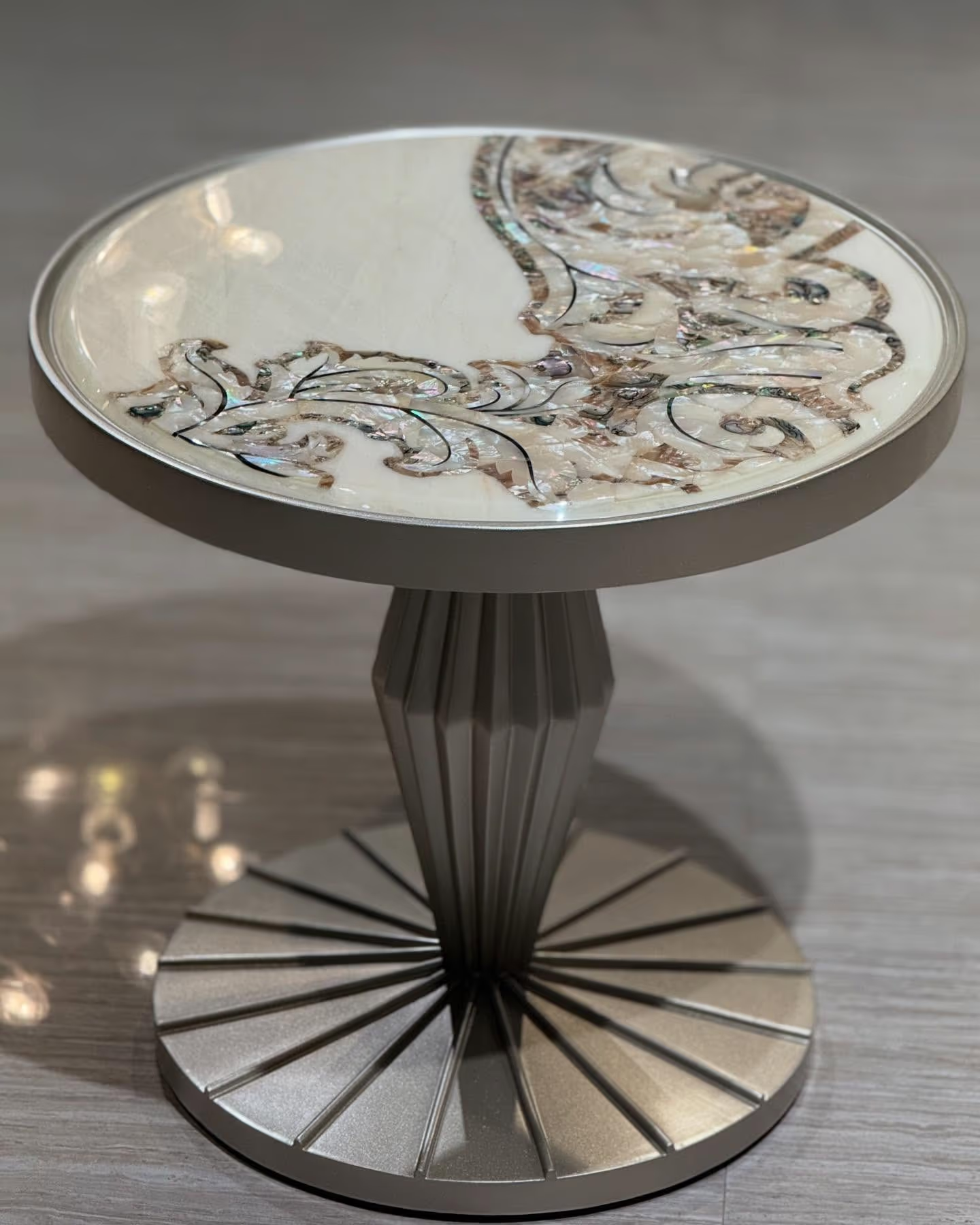
Why does this matter so much? Because agate is often the star of a room. It might be the top of a side table by your sofa, the face of a coffee table, a slice of light in a bar counter, or a glowing panel in a wall. When a piece is that important, and that costly, you deserve to know it is real. A dyed slab in the wrong spot can quietly cheapen a whole room that you spent months building.
What Is Natural Agate?
Natural agate is a stone that forms slowly inside rock over millions of years. Water carrying tiny bits of mineral drips into a hollow space, layer by layer. Each layer leaves a thin band of colour. Over time these bands build up into the ringed, glowing pattern agate is loved for. Because it grows this way, every slab is different, and the colour runs right through the stone.
The colours of real agate come from the earth. That means they are calm and earthy — cream, honey, grey, soft blue, rust, smoky brown and gentle white. Even a bold natural agate has a certain softness to it. The bands fade into each other. Nothing looks painted. To learn how we use this stone in furniture, see our guide on agate and petrified wood furniture.
Because it grows in layers, agate is also strong and dense. A good slab feels cool and heavy in the hand. It takes a fine polish that lasts. This is why it works so well for tables and tops that get daily use. Like fine marble, it is a natural stone with its own character — no two pieces will ever be the same, and that is exactly the point.
What Is Dyed Agate?
Dyed agate is real stone, but its colour is not real. A pale or plain piece of agate is soaked in coloured dye, sometimes with heat, until it takes on a bright new shade. This is done to make cheap, dull stone look rich and eye-catching. A grey slab worth little can come out as glowing purple or hot pink and sell for much more.
Dyeing stone is not new, and it is not always hidden. Some sellers are honest about it. The problem is the many who are not. They show you a loud, pretty slab and let you believe it came out of the ground that way. You pay natural agate prices for a piece that will fade and bleed over the years.
There is nothing wrong with dyed agate as a cheap, fun craft piece — a fridge magnet, a keyring, a small coaster. The trouble starts when it is sold as a fine, natural slab for a luxury home. That is where you must be sharp. The higher the price, the more important it is to check. A true agate table is a serious buy, and it should be real stone from top to bottom.
Real stone glows from within; dyed stone only shouts on the surface.
Real vs Dyed Agate: The Quick Comparison
Here is a simple table you can keep in mind when you look at any agate piece. Most fakes fail on two or three of these points at once.
| What to check | Natural agate | Dyed agate |
|---|---|---|
| Colour | Soft, earthy, mixed tones | Loud, even, one bright shade |
| Bands | Blend gently into each other | Sharp jumps, colour sits on top |
| Cracks and edges | Same colour all through | Dark dye line pooled in cracks |
| Under bright light | Warm glow with real depth | Flat colour, little depth |
| Over the years | Never fades | Fades and washes out in sun |
| Two matching slabs | Almost never the same | Easy to find, all look alike |
Five Simple Ways to Test Agate Quality
You can check most of these with your own eyes and hands, right in the showroom. No tools needed. Go through them in order.
- Look at the colour. Ask yourself: could this shade come out of the ground? Neon blue, hot pink, bright green and deep purple almost never do. Earthy tones usually do. Too bright means dyed.
- Follow the bands. In natural agate the colour bands melt into each other. In dyed agate the dye sits on top, so you often see sharp lines and colour that looks stuck on the surface.
- Check the cracks and edges. This is the best trick. Turn the slab and look into any crack or the cut edge. Dye pools in these spots and leaves a darker line. Natural stone is the same colour all the way through.
- Hold it to the light. Thin bands of real agate let a warm glow pass through, and you can see into the layers. Dyed stone often looks flat and blocks the light with no depth.
- Compare two pieces. If a seller can quickly show you two slabs that match perfectly, be careful. Real agate is never twins. Easy matching is a strong sign of dye.
Want a real agate table cut and matched by hand for your room?
Send us your space →Common Tricks Sellers Use to Hide Dyed Agate
Once you know the signs, you can also spot the tricks. Sellers who deal in fake agate lean on a few habits. Watch for these, and you will not be caught out:
- Rushing you. A pushy seller who will not let you turn the slab over or hold it to the light may be hiding a dye line.
- Bright shop lights only. Loud lighting hides the flat, dead look of dyed stone. Ask to see the piece near a window or in daylight.
- Perfect matching sets. Four side tables that all look the same are a red flag. Real agate cannot be copied like that.
- No word on the source. An honest seller can tell you where the stone came from and whether it was treated. A vague answer is a warning.
- Price that seems too good. Real agate is rare and costly to cut. A large, glowing slab at a bargain price is usually dyed or thin.
The safest path is to buy from a maker who cuts and finishes the stone in their own atelier. When the same hands pick the slab and build the table, there is nowhere for a fake to hide. This is one more reason to know how bespoke furniture is made before you buy.
Why Dyed Agate Is a Poor Buy for a Luxury Home
Dyed agate is not just less honest. It is also less lasting. Because the colour sits near the surface, it is weak against the two things every home has: sunlight and cleaning. Over a few years the bright shade goes pale and patchy. A slab you loved on day one can look tired and cheap by year five.
Natural agate does the opposite. Its colour was set when the stone formed, deep inside the rock, so it never fades. A well-cared agate table can pass down through a family and still glow. That is the whole point of buying fine stone — it should outlast trends, and outlast you. This is also why we skip trends that will not last and choose materials that hold their beauty. For long life, see how to care for agate and stone tables.
There is a money side too. Dyed agate is cheap stone dressed up. When you pay a real-agate price for it, you lose money the day you buy. Natural agate holds its worth because it is rare and real. If you care about luxury furniture as a long-term investment, the stone under the polish matters as much as the shine on top.
Think of it the way you would think of any fine thing you keep for life — a good watch, real gold, solid wood. You do not buy the copy. You buy the real one because it lasts, it feels right, and it never lets you down in front of the people you love. Agate is the same. Real stone is quiet proof of care, and people who know, always notice it.
Can Bold Colour Ever Be Natural?
Yes — sometimes. Nature does make some rich colours, like deep blue-grey, warm orange-red and even soft green. So a bold slab is not always fake. The point is not to fear colour. The point is to look closer when the colour is loud. A rich shade with soft bands, real depth and matching colour in the cracks can be natural. A flat, neon, even shade almost never is.
If you want a strong look but real stone, there is a better path than dye. We often pair natural agate with brass, dark wood or velvet to lift the drama, while keeping the stone honest. Mixing materials this way is part of our signature style. You get the bold room you dreamed of, built from things that last.
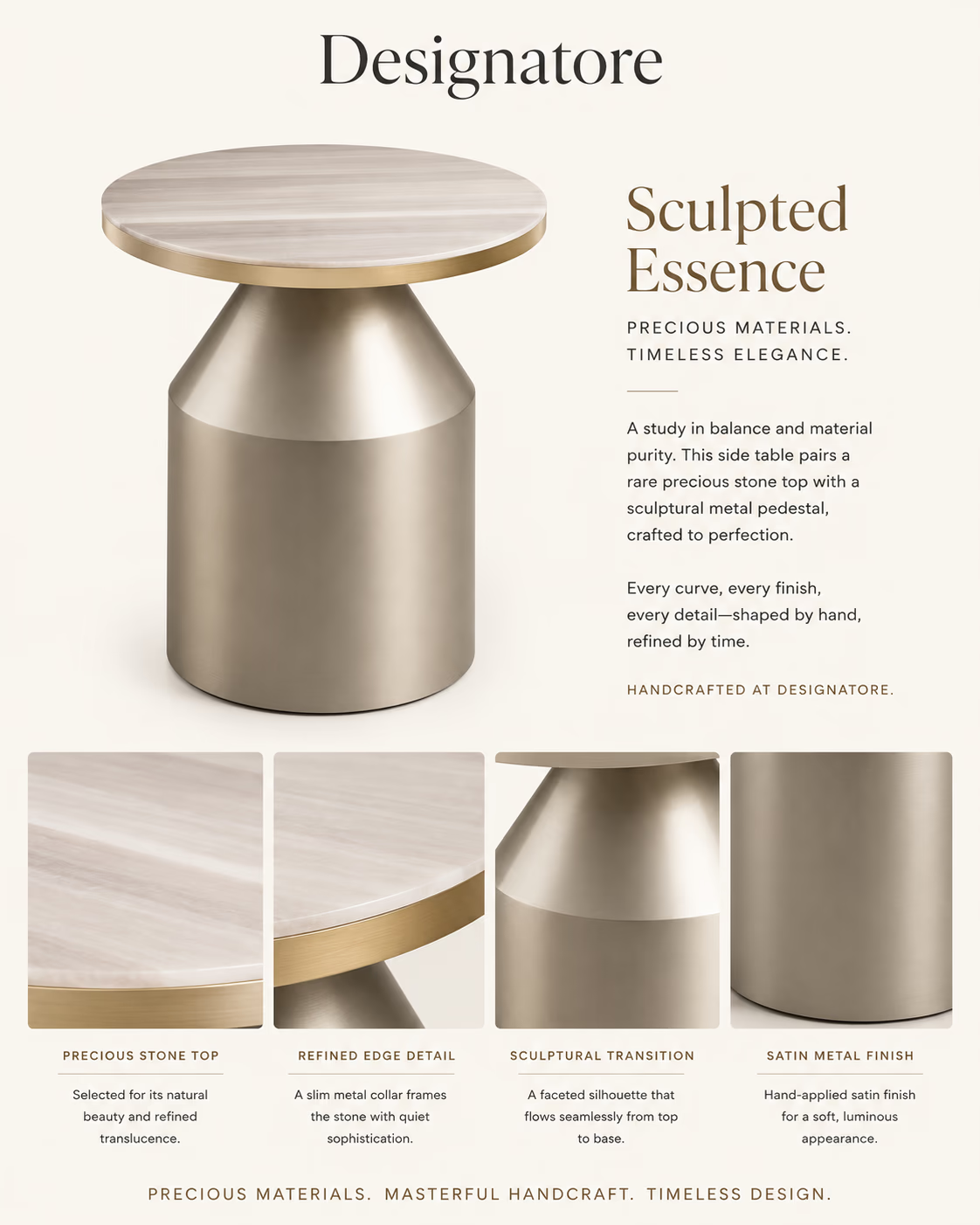
How Designatore Chooses Agate
We use natural agate only. Never dyed. When a slab comes to our atelier, we check it the same way this guide taught you, and more. We look at the bands, the glow, the edges and the strength of the stone. A pretty slab that is weak or dyed is sent back. Only real, sound stone makes it into a table.
We also tell you the truth about what you are buying. If a stone has a natural mark, a soft spot or a line, we show you and explain it. Real stone has real character, and we would rather you love the piece for what it is than sell you a story. That honesty is the heart of buying agate quality — you should always know exactly what is under the polish.
Then the real work begins. Each slab is cut, matched and polished by hand so the pattern flows the way your room needs. Because we build made-to-space furniture, the stone is chosen for your space, not pulled from a shelf. Our founder, Nidhi Patel, often picks the key slabs herself. You can read how we choose materials for each client to see the full care behind one table.
This is furniture made in India and shipped across India and worldwide. A fine agate table with us often starts near ₹1,20,000 ($1,450) and rises with size and rarity — a fair price for real stone that will outlive the trends. See our collections to feel the difference real agate makes, or send us your room and we will build around it.
Ready for a real agate piece, matched by hand to your home?
Start your made-to-space table →Buying agate should feel exciting, not risky. Now you know the signs. Look at the colour, follow the bands, check the cracks, hold it to the light, and never trust a perfect twin. Do that, and you will always know real agate from fake — and only bring the real thing home.