
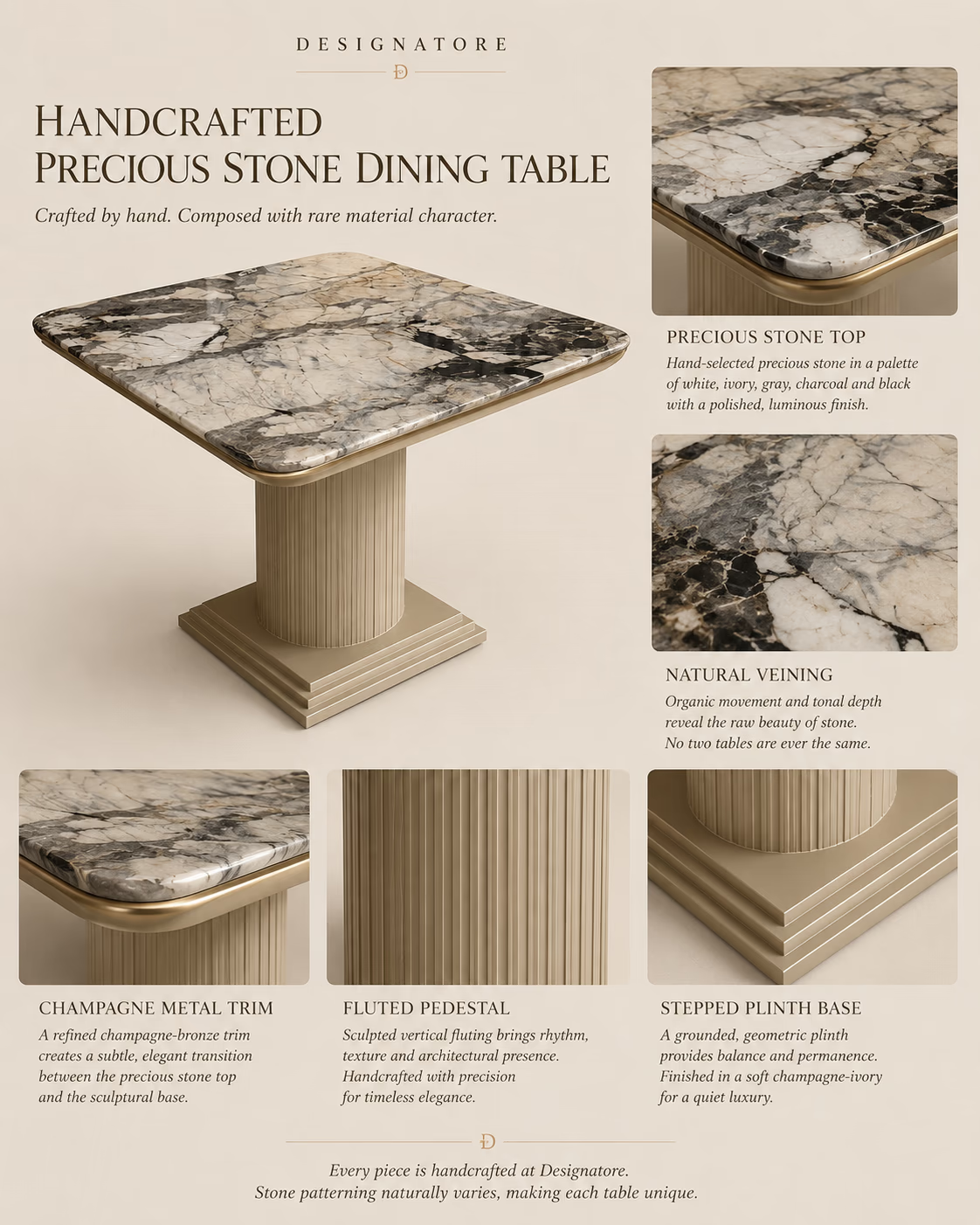
Semi-precious stone furniture uses onyx, agate, marble, mother-of-pearl and petrified wood as the face of a piece. Each stone behaves differently. Onyx is translucent and belongs on a lit vertical face, not a dining top. Marble is the workhorse, and a 20mm slab weighs about 54 kg per square metre. This guide tells you which stone belongs where.
You saw a glowing stone bar front, or a coffee table with bands of colour running through it, and you have wanted one ever since. Then the questions start. What stone was that. Will mine look like the photograph. What happens when a child sets a hot cup on it.
Here is the honest answer, stone by stone. We build these pieces in our 80,000 sq ft factory in Village Bil, Vadodara, where cutting, inlay, polishing and assembly sit under one roof. Every stone below gets the same five answers: what it is, what it looks like, what it is good for, what it demands, and what goes wrong.
What semi-precious stone furniture actually is
The name covers one idea: the face of the piece is a gemstone-family stone, not wood, glass or laminate. That stone is almost never solid all the way through. It is a slab or a slice, usually 18–20mm thick, backed for strength and carried by a structure you never see.
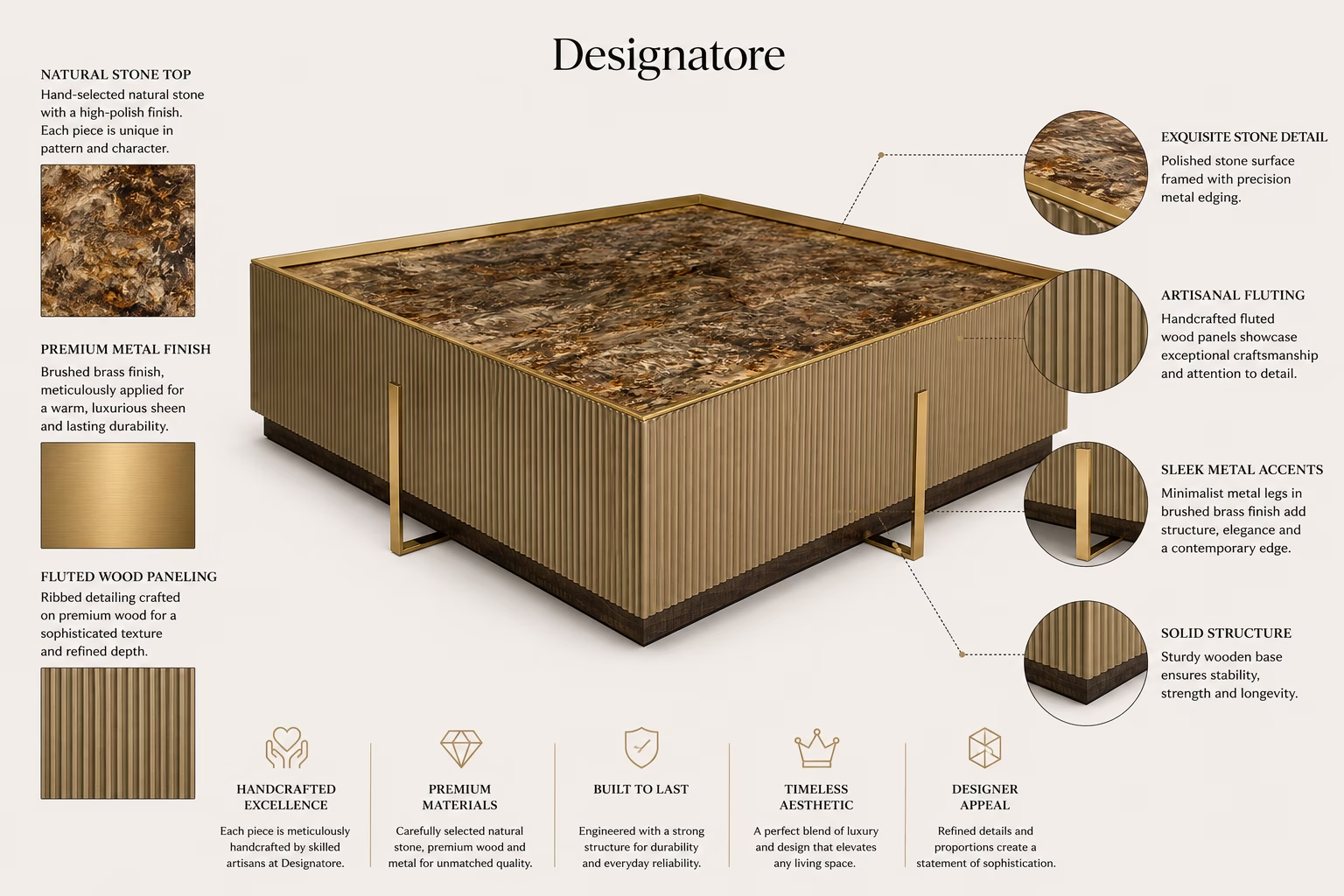
The family splits into three groups that behave nothing like each other. The hard quartz group — agate, tiger’s eye, amethyst, rock crystal and petrified wood — sits near 7 on the Mohs scale, resists scratching and shrugs off most household liquids. The soft carbonate group — marble and architectural onyx — sits near 3. It is porous, it etches with acid, and it must be sealed. Then there is shell, mother-of-pearl, which is not stone at all: it is nacre, cut and set by hand, and its price is measured in hours.
Knowing the group answers most buying questions before you ask: can it be a dining top, will it etch, can it be lit from behind. The full palette is on materials, and how we pick for a room is in how we choose materials.
| Stone | What it is | Hardness (Mohs) | Translucent | Where it belongs |
|---|---|---|---|---|
| Onyx | Banded calcite, layered in caves | About 3 — soft, porous | Yes, strongly | Backlit bar front, reception face, panel, lit shelf |
| Agate | Banded chalcedony, a form of quartz | About 7 — hard | Yes, in thin slices | Coffee, console and side tops; lit panels |
| Marble | Limestone recrystallised by heat and pressure | About 3 — soft, porous | No | Dining, coffee, console and desk tops |
| Petrified wood | Ancient wood replaced cell by cell with silica | About 7 — very hard | No | Side tables, drink tables, veneer tops |
| Mother-of-pearl | Shell nacre, hand-cut and hand-set | About 3–4 | No | Inlay on doors, tops, headboards, panels |
| Selenite | Gypsum crystal | 2 — a fingernail marks it | Yes, milky | Lit vertical panels, low-traffic drum tables |
| Tiger’s eye | Fibrous quartz with a moving sheen | About 7 — hard | No | Console tops, desk fronts, small tops |
| Amethyst | Purple quartz, usually as geode plates | About 7 — hard, but hollow-backed | Partly | Wall panels, cabinet fronts, lit backs |
| Sodalite | Deep blue rock, flecked with white | About 5.5–6 | No | Executive desk tops, console tops |
| Quartz (rock crystal) | Clear crystalline quartz, often assembled | About 7 — hard | Yes when clear | Backlit panels, small tops on a substrate |
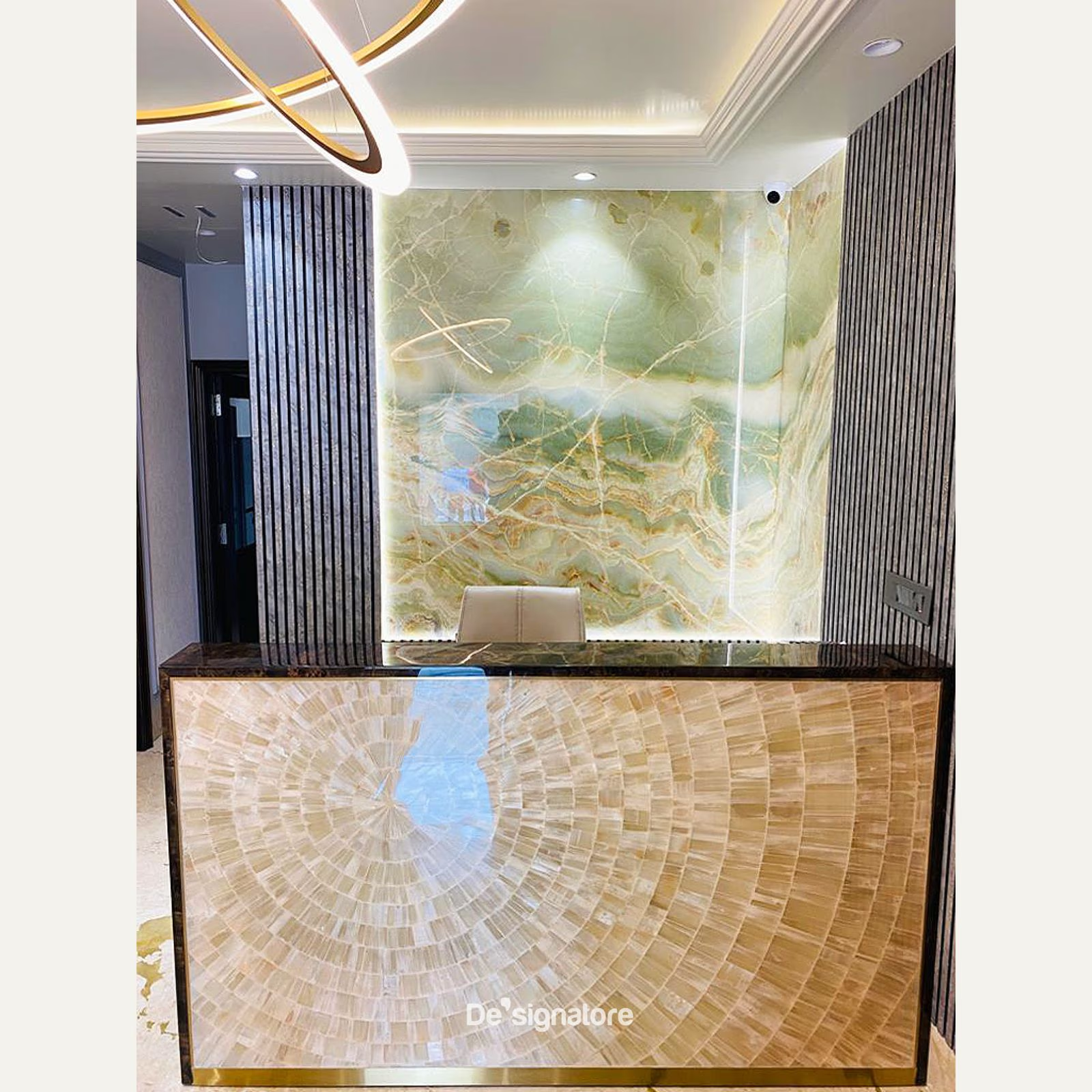
Onyx furniture: the stone that is meant to be lit
What it is. Architectural onyx is not the black gemstone of a signet ring. It is a banded calcite, laid down drip by drip in caves, and it is soft — about 3 on the Mohs scale, the same as marble. Amber, green and honey are the shades you actually see in furniture.
What it looks like. Onyx is the most translucent stone in the family. Held to light it stops being a surface and becomes a window: the bands turn to smoke and honey. Unlit, the same slab can look flat. That gap between lit and unlit onyx is the commonest surprise for a first-time buyer.
What it is good for. Vertical faces you look at and rarely touch. A bar front. A reception face. A wall panel. A backlit shelf. In each, the stone does the one thing no other material can — glow.
What it demands. A backlit onyx panel is three trades, not one. The slab is cut to 18–20mm and then resin-backed with a fibreglass mesh, or laminated to glass, because a translucent slab that thin cracks in handling. Behind it sits a shallow light box with an even LED sheet and an air gap. Skip the gap and you see hot spots and the outline of every LED through the stone. An electrician must also reach the driver in five years without dismantling the joinery.
What goes wrong. Onyx used as a hard-working tabletop: it is soft and porous, and a squeeze of lemon leaves a dull etch no polish wipes away. The other failure is planning the backlighting after the joinery is drawn. There is no depth left for a light box, so the panel ends up lit from the edge — bright at the rim, dead in the middle.
Agate furniture: slices, seams and honest colour
What it is. Agate is banded chalcedony, a quartz. It is hard, near 7 on the Mohs scale, and reaches furniture in two forms. A slice is one cross-section of a single nodule, with its natural edge and often a crystal pocket at the centre. A slab is many pieces set together into a sheet, seam by seam, and backed.
What it looks like. Rings and waves in teal, honey, rust, cream and smoky grey. On an assembled slab you will see the joins. The seams are the material, not a defect — nature does not grow agate in 2.4-metre sheets, so anything bigger than a nodule is a mosaic by definition. A maker who promises a seamless two-metre agate top has not told you what you are getting.
What it is good for. Coffee tables, console tops, side tables, bar tops and lit panels. Agate is hard enough for daily use, which onyx is not. Backlighting agate is where the stone earns its price: bands that look pretty in daylight turn to stained glass at night.
What it demands. A resin backing and mesh on thin slices, a rigid substrate under any assembled slab, and a decision at drawing stage about where the seams fall. It also demands honesty about colour. Dyed agate is real stone with colour added; the tells are a shade no geology produces and a dark dye line pooled in the cracks. We use natural agate only — the test method is in real versus dyed agate.
What goes wrong. Buying from one photograph. The second slice from the same nodule can be a different colour, and the second nodule from the same lot is a different stone. The other failure is an unsupported natural edge, which chips the first time a chair back knocks it. For the wider picture, read agate and petrified wood furniture.
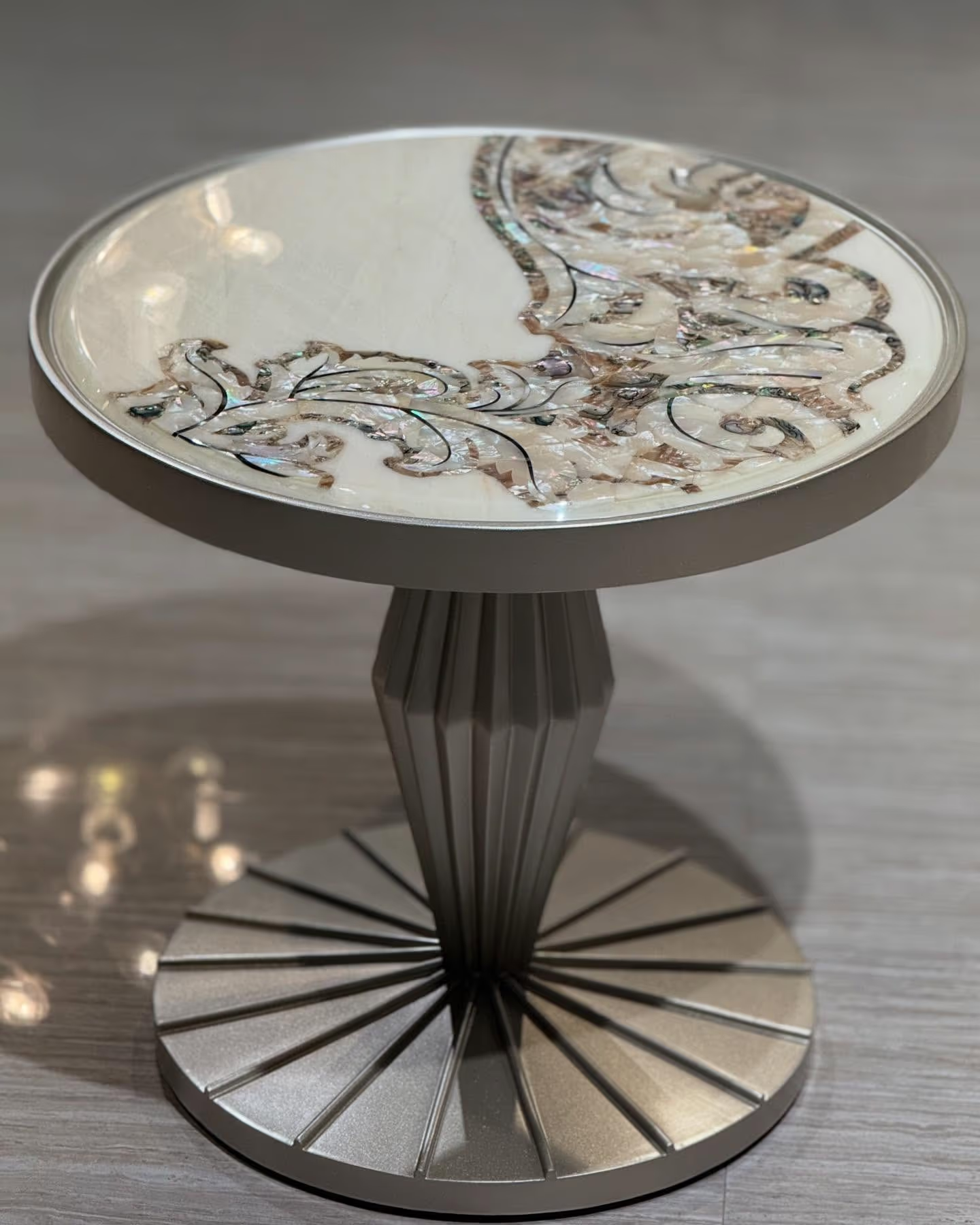
Mother-of-pearl inlay furniture: you are buying hours
What it is. Shell. Nacre, the lining of the shell, cut into small pieces and set by hand into a recess routed in wood or poured in resin, then levelled and polished flush. It is the only member of this family that is not a rock, and the only one whose price has almost nothing to do with material cost.
What it looks like. A surface that changes as you walk past it. Nacre is layered, so it throws different colours at different angles — the reason a shell door front looks alive where a printed pattern does not.
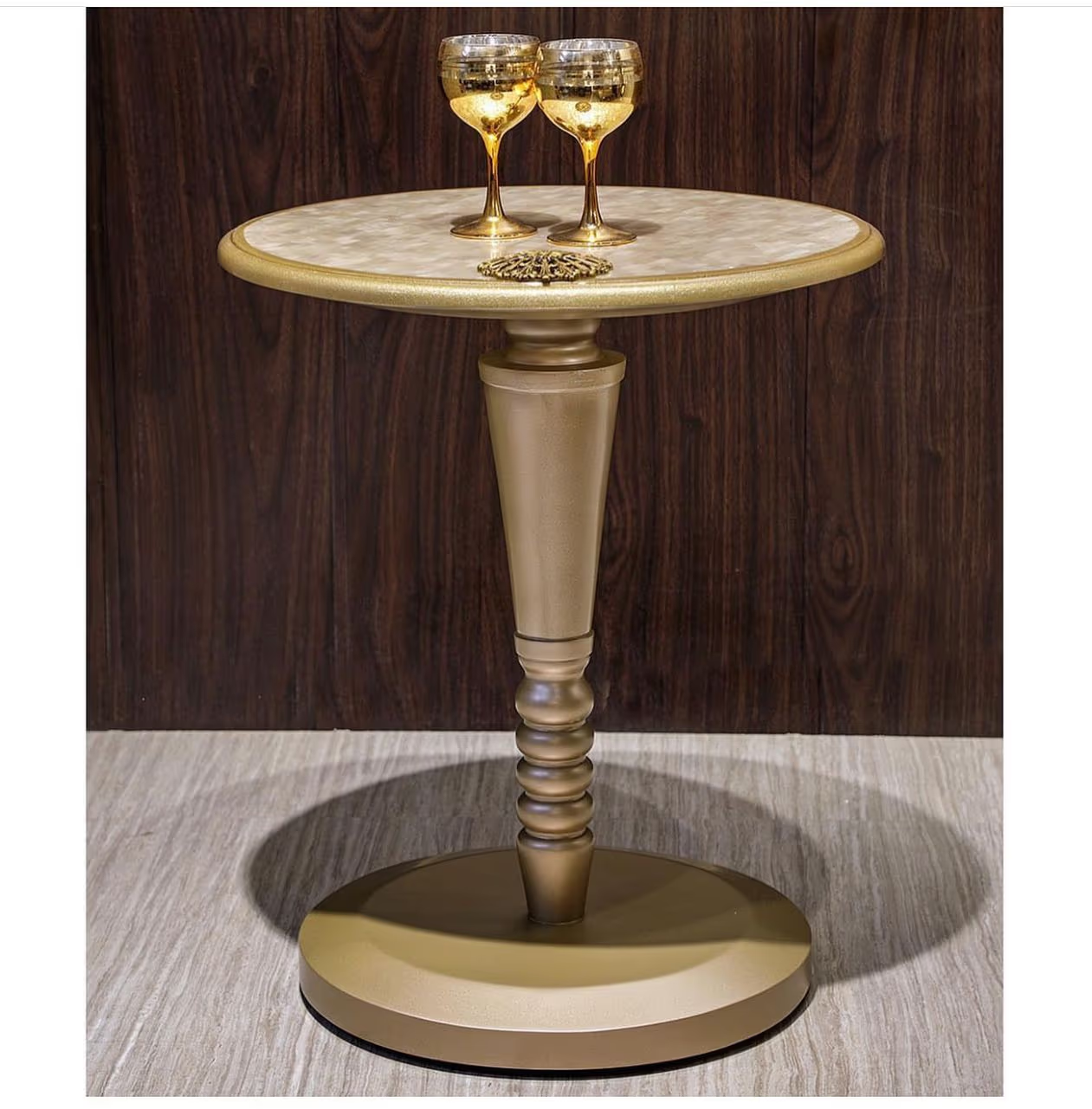
What it is good for. Centre tables, door fronts, headboards, cabinet faces, wardrobe panels, mandir panels. Anywhere the eye lingers and the hand does not scrub.
What it demands. Time, and a decision about density. A border is a single repeating run around an edge: the pattern is regular, the pieces are alike, and one pair of hands can lay it in days. A dense field across a pair of wardrobe doors is a different job — every piece is a different shape, cut to its neighbour, and the count runs into the thousands. That is weeks of work for several people, and it is why two pieces of the same size sit far apart on price. Halve the gaps in a pattern and you roughly double the piece count, and the hours with it. Ours is cut and set by hand in the workshop; you can watch it on craft.
What goes wrong. Machine-cut sheet shell sold as hand inlay — look for identical repeating pieces and a perfectly even gap, which hands do not produce. And water: nacre is bonded, so a shell panel does not belong beside a basin or anywhere it is wiped hard every day.

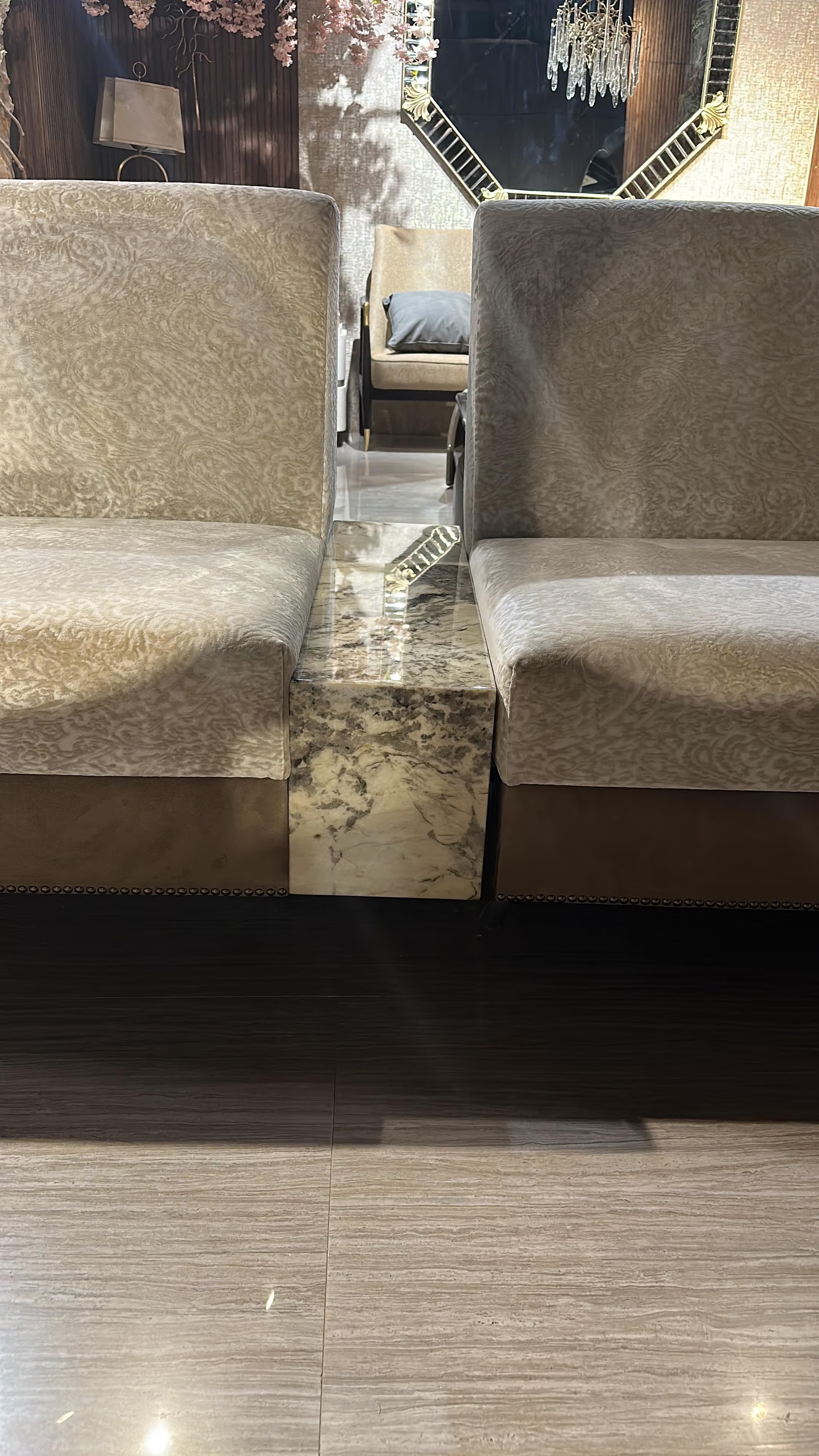
Marble: the workhorse, and what it weighs
What it is. Limestone recrystallised under heat and pressure. About 3 on the Mohs scale, porous, and the most used stone in this family for good reason: it comes in large slabs, and it takes daily life better than onyx.
What it demands. First, respect for weight. A 20mm slab runs roughly 54 kg per square metre. A 2,400 × 1,000mm dining top is therefore well over 120 kg of stone before the base exists. That number decides the base, the crew on delivery day, and whether the top turns a 900mm corridor or enters your lift at all.
Second, the finish, and it is a real trade-off with no free option. Polished marble is reflective and rich, and it shows every etch mark as a dull ring. Honed marble is matt, hides etching well, and shows every fingerprint instead. Choose polished for a formal console you look at; choose honed for a table that is actually used.
What goes wrong. Acid. Lemon, vinegar and wine do not scratch marble — they dissolve the polish and leave a dull patch called an etch. That is chemical damage, not dirt: wiping will not bring it back, and it has to be re-polished. Seal the top, use coasters, keep acids off it. Stone types and market prices sit in the marble furniture guide; the routine is in marble care.
Petrified wood, selenite, tiger’s eye, amethyst, sodalite and quartz
Petrified wood is a fallen tree whose every cell was replaced by silica. It keeps the rings and the bark and gains the hardness of quartz, near 7 — the toughest thing here and the easiest to live with. Blocks are small, so it suits side and drink tables with the natural edge left raw. See petrified wood tables.
Selenite is gypsum, and at 2 on the Mohs scale the softest material here — a fingernail marks it, water dulls it. It is also the most beautiful thing you can light: a milky crystal that turns to frozen moonlight behind an LED. Use it on a vertical panel, or a drum side table in a corner nobody eats at. Never as a working surface.
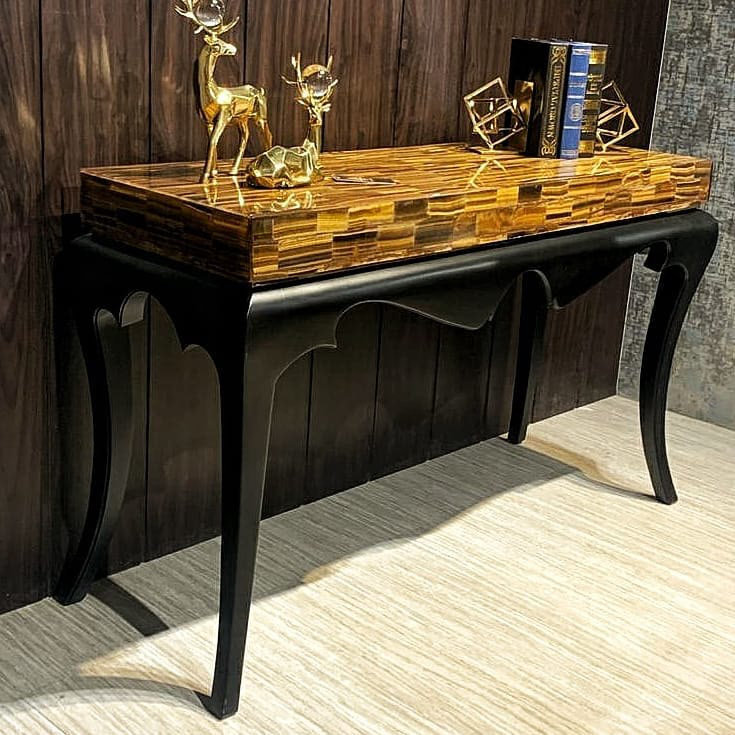
Tiger’s eye is a fibrous quartz with a sheen that moves as you move. It is hard, near 7, and arrives in narrow pieces, so it works as a small assembled top, a console face or a desk front — not a wide expanse.
Amethyst is purple quartz, and in furniture it comes as geode plates — crystal-tipped, hollow-backed, uneven. The crystal face is the point, so it belongs on a wall panel, a cabinet front or a lit back. Flattened and polished, it loses the thing you bought it for.
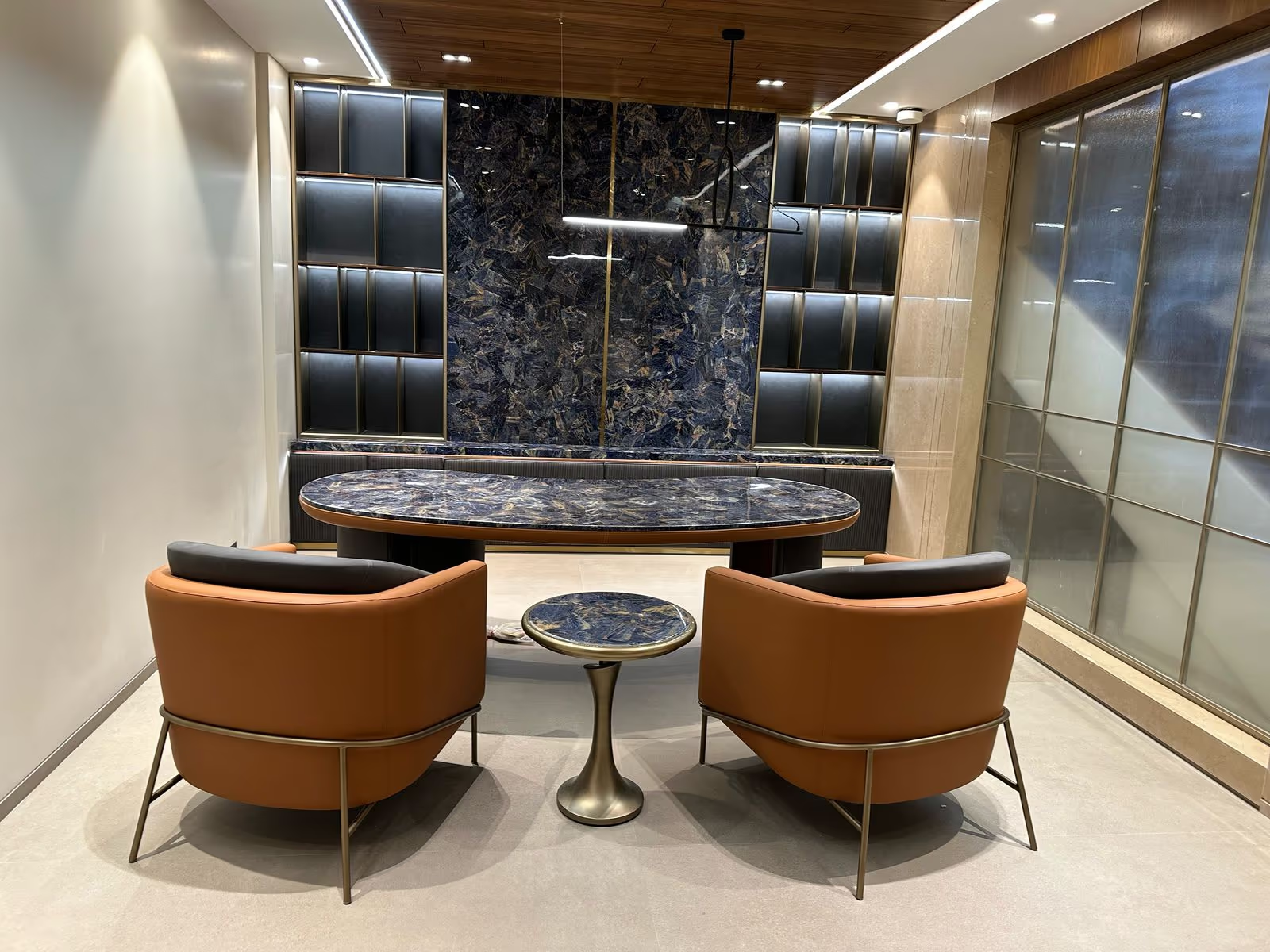
Sodalite is a deep blue rock flecked with white, around 5.5–6 — harder than marble, softer than quartz. It is one of the few true blues available in usable slabs, which is why it turns up on executive desk tops and consoles.
Quartz here means natural rock crystal, not engineered quartz worktop. Clear or white, near 7, usually assembled from pieces and resin-set. It is a backlighting material first: lit from behind, a crystal panel does what no other surface does.
The rules that apply to every stone
These rules decide whether your piece works. They are the same whichever stone you pick.
Stone is bought by the slab or the block, not the square foot. If the vein has to run across a top and continue down a waterfall edge, both pieces must come from the same block, cut in sequence. So you buy the block, and the offcut is yours whether you want it or not. That is why vein-matching costs more than area: you are paying for stone you will never see.
No two slabs are the same. A stone chosen from one photograph will not arrive identical, and no honest maker can promise it will. The only safe method is slab approval: the actual slab photographed whole, with a scale in frame and the cut lines marked on it. Nothing is cut before you approve it.
Stone is sold by the block, not the square foot. Vein-matching means buying the offcut too.
Seams are a decision, not a defect. Where a top is bigger than the slab, someone decides where the join falls. If you do not, the fabricator will, and it may land in the middle of the table. Mark seam positions on the general arrangement drawing.
Thickness and edge. 18–20mm is the normal working thickness. To get the visual weight of a 40–60mm slab without the mass, the edge is mitred — two 20mm pieces joined at 45 degrees, so the top reads thick and stays light. A genuinely thicker slab doubles the weight and changes the base.
Stone does not span. It is strong in compression and weak in bending. Wherever the base does not carry the slab directly, it needs a continuous substrate — plywood or aluminium honeycomb bonded to the back. Keep unsupported overhang short, and support any cantilever.
Resin backing and mesh are routine. Fragile, fissured and translucent stones are backed with resin and fibreglass mesh as standard practice. It is not a repair and not a lesser material. It is how a 20mm translucent slab survives being lifted, turned and transported.
Cutouts happen at the stone yard, not on site. A basin cutout, a cable grommet, a core-drill for a power module — all done on the bench, with water-cooled tooling, on a slab supported all round. A hole cut into an installed top is how tops crack.
Sealing and living with it. Every top leaves the workshop sealed. The test is simple: drop water on it and see if it beads. If it soaks in and darkens, re-seal. The full routine is in how to care for agate and stone tables.
Send us the room and the stone you have fallen for. We will show you the actual slab, cut lines marked, before anything is cut.
Start with your space →Where each stone belongs: a plain verdict
Most unhappy stone furniture is not badly made. It is the right stone in the wrong job.
| Stone | Piece | Traffic | Verdict |
|---|---|---|---|
| Onyx | Backlit bar front or reception face | Vertical, rarely touched | Best use of the stone. Yes. |
| Onyx | Dining or working table top | Daily, hot and acidic | No. Soft and porous — it will etch. Choose marble or agate. |
| Onyx | Backlit shelf or wall panel | Low | Yes. Light is the whole point. |
| Agate | Coffee or side table top | Daily | Yes, resin-backed and sealed. |
| Agate | Backlit console or bar top | Medium | Yes — this is where agate earns its price. |
| Agate | Full dining top | Daily | Only as an assembled slab on a substrate. Expect visible seams. |
| Marble | Dining, coffee, console, desk | Daily | Yes, sealed. Honed hides etching; polished hides fingerprints. |
| Petrified wood | Side and drink tables | Daily | Yes. The hardest and most forgiving of the family. |
| Mother-of-pearl inlay | Door fronts, centre tables, headboards | Low to medium | Yes, away from water and hard scrubbing. |
| Selenite | Lit panel or drum side table | Low only | Vertical or decorative only. A fingernail marks it. |
| Tiger’s eye | Console top, desk front | Medium | Yes, in small assembled fields. |
| Amethyst | Wall panel, cabinet front, lit back | Vertical | Yes. Never a surface you set a glass on. |
| Sodalite | Executive desk top, console top | Medium | Yes, sealed. Harder than marble. |
| Quartz (rock crystal) | Backlit panel, small top | Low to medium | Yes, resin-backed on a substrate. |
What drives the price of gemstone furniture
Five things move the number, and only one is the stone itself. Knowing them lets you steer a quote instead of reacting to it.
| Price driver | What it actually adds | How to control it |
|---|---|---|
| Rarity of the stone | Wide, clean, well-banded slabs are scarce; colour scarcity moves faster than size | Stay open on shade. A second colour choice widens the search enormously. |
| Backlighting | A light box, a resin or glass backing, an even LED sheet, a driver and an electrician | Backlight one feature face, not every panel in the room. |
| Area | Slab count, cutting time, polishing time and handling | Use stone as a face or a top, not as every surface. |
| Vein-matching wastage | The whole block, including the offcut you never see | Match veins only where the eye follows them — a waterfall edge, a book-matched front. |
| Inlay hours | Piece count. A dense field can be thousands of hand-cut pieces | A border or a central medallion gives most of the effect for a fraction of the hours. |
As market guidance, India runs roughly ₹80,000 upward ($960 upward) for a small marble side table and ₹85,000 upward ($1,000 upward) for a small agate one; ₹1,50,000 to ₹4,00,000 ($1,800 to $4,800) for a stone coffee table; ₹3,00,000 to ₹9,00,000 ($3,600 to $10,800) for a console. A marble dining top runs ₹3,50,000 to ₹12,00,000 ($4,200 to $14,400), and a wide agate or petrified wood one starts nearer ₹4,00,000 ($4,800) and climbs steeply with rarity. Treat that as the shape of the market, not a quotation. Designatore prices each project in writing, in ₹ and $, once the drawing and the slab are agreed.
How a stone piece gets built, in order
- Drawing first. A general arrangement drawing with plan, elevation and section. Seams, edge profile, thickness and cutouts are marked here, not later.
- Slab approval. The actual slab, photographed whole with a scale in frame and the cut lines marked. Nothing is cut before you approve it.
- Cutting and backing. Fragile or translucent stone is resin-backed with mesh, or laminated to glass, before it is moved again.
- Substrate, base and light box. The carrying structure is built to the drawing. A backlit panel gets its LED sheet, air gap and reachable driver.
- Inlay and carving by hand, then polish, seal, and quality control against the drawing before crating.
That runs across ten departments in one building, with 130+ craftsmen, CAD engineers and supervisors, and it has since 2018. Founder Nidhi Patel brings 30+ years to the slab-picking. Walk the floor at the factory, or see stone meet wood and brass in mixed-material furniture.
If you have a photograph of a stone piece you love, that is enough to start. Send it with your room size and we will tell you which stone it is, whether it belongs in that spot, and what it will weigh. Begin at customization, see finished pieces in the shop, or read the palette on materials.
Onyx, agate, marble, mother-of-pearl, selenite, tiger’s eye, petrified wood — see the palette and what each one is good for.
Explore our materials →