
Bespoke furniture cost in India runs from about ₹80,000 ($960) for one made-to-order piece to ₹20 lakh ($24,000) and up for a stone-and-wood centrepiece. GST on furniture is 18%. Delivery across mainland India is free. This 2026-27 data page carries the ranges by piece type, the seven drivers that move the number, and the tax and duty maths behind it.
You need a number you can put in a spreadsheet today. Not a mood board, not a promise — a range, a tax line, a freight line, and a reason each one moves. This page is that. It is the data hub for every cost question on this site, and each row below links to the guide that opens it up further.
One honest note before the numbers. We build for private homes and for offices. We do not take hospitality work, so no hospitality figures appear here. And we never publish our own price list, because every piece is cut to one room. What follows is what the Indian market runs for this kind of work, which is exactly what you need to set a budget before anyone quotes you.
Bespoke furniture cost in India: the 2026-27 master table
These are market ranges for made-to-order work in real materials — solid hardwood or true veneer over a stable core, natural stone, real metal, proper hardware. They are not ranges for thin board with a printed skin. All dollar figures use ₹83 = $1. The last column tells you what pushes a piece to the top of its own range.
| Piece | Market range (₹) | Market range ($) | What pushes it to the top |
|---|---|---|---|
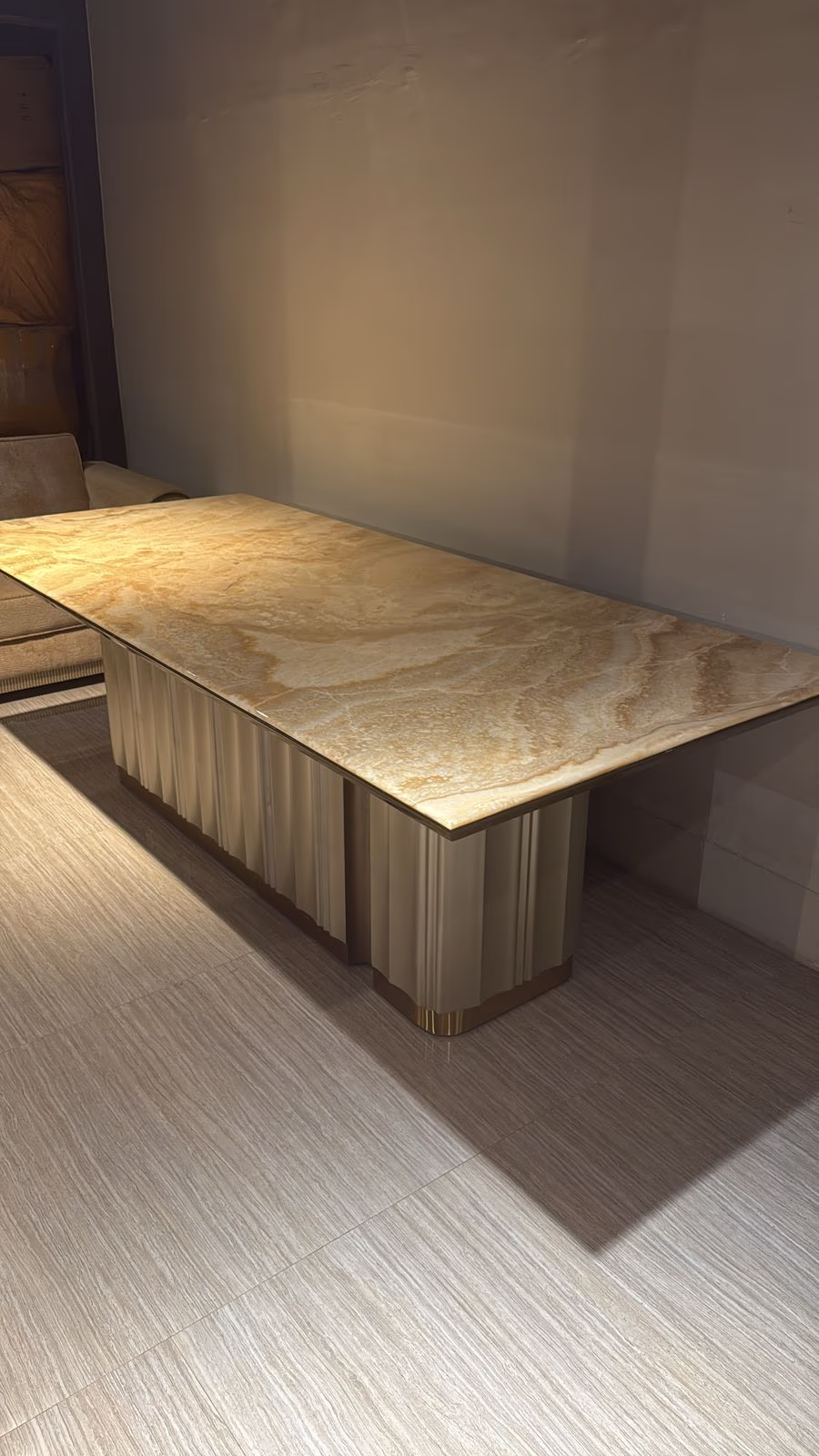
| Dining table | ₹1,20,000 – ₹12,00,000 | $1,450 – $14,400 | Rare stone top, 8–10 seats, carved pedestal base |
| Sofa, made to your room | ₹1,50,000 – ₹8,00,000 | $1,800 – $9,600 | Overall length past 3m, full-grain leather, hand-tufting |
| Bed with headboard | ₹1,80,000 – ₹8,00,000 | $2,160 – $9,600 | Wall-width upholstered headboard, burl veneer, storage base |
| Fitted or walk-in wardrobe | ₹2,50,000 – ₹15,00,000 | $3,000 – $18,000 | Run length, lit interiors, soft-close and lift hardware |
| Dressing table and bedside units | ₹1,00,000 – ₹4,00,000 | $1,200 – $4,800 | Lift-up mirror mechanism, stone top, fluted fronts |
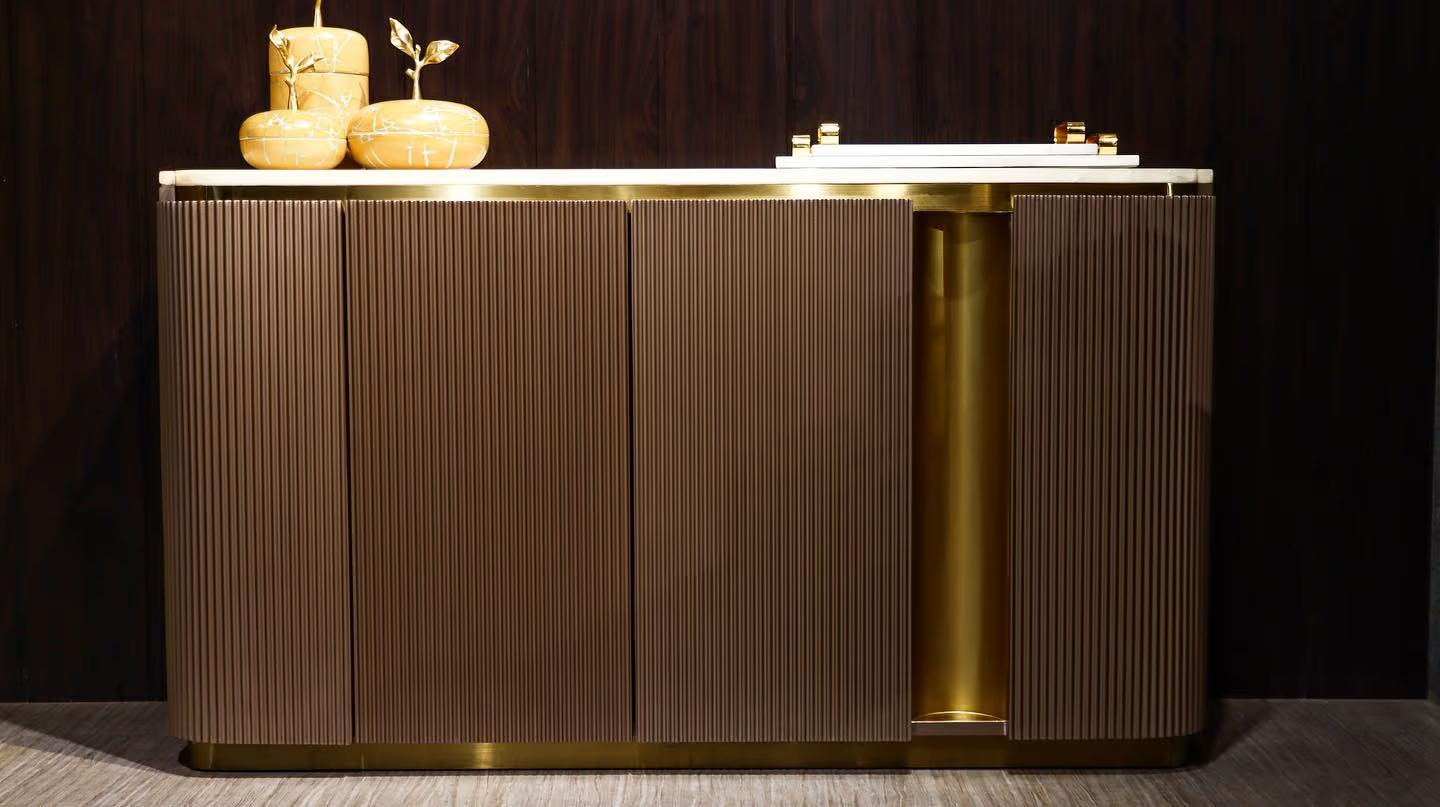
| Console or sideboard | ₹80,000 – ₹2,50,000 | $960 – $3,000 | Stone top, brass inlay, curved or cabriole legs |
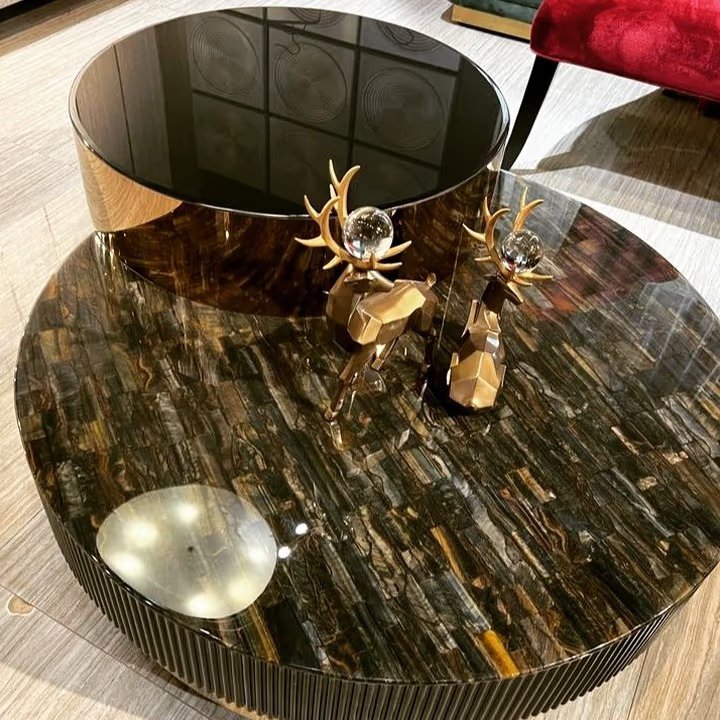
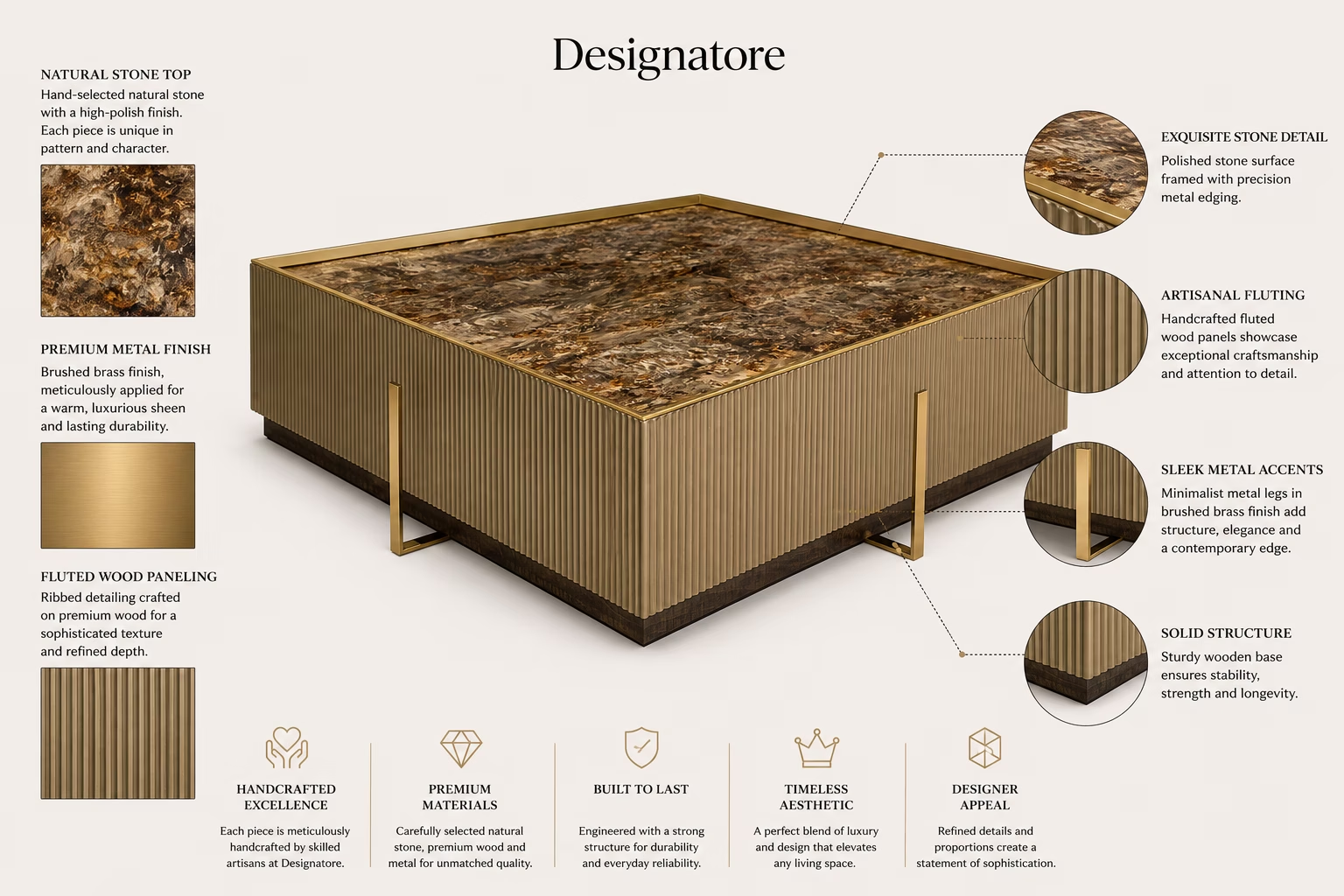
| Coffee and centre tables | ₹1,00,000 – ₹6,00,000 | $1,200 – $7,200 | Agate, onyx or petrified wood top, backlit and resin-backed |
| Pooja mandir | ₹1,00,000 – ₹5,00,000 | $1,200 – $6,000 | Hand-carved dome, gold or silver leaf, marble base |
| Executive or MD desk | ₹2,50,000 – ₹8,00,000 | $3,000 – $9,600 | Stone top, burl fronts, L-shape with concealed cable routing |
| Boardroom table | ₹4,00,000 – ₹15,00,000 | $4,800 – $18,000 | 10–14 seats, stone top, segmented build with power boxes |
| Reception desk | ₹2,00,000 – ₹6,00,000 | $2,400 – $7,200 | Backlit onyx front, curved carcass, brand wall integration |
| Display and TV units | ₹1,50,000 – ₹7,00,000 | $1,800 – $8,400 | Full-wall run, lit shelving, glass and metal frames |
| Stone-and-wood centrepiece | ₹8,00,000 – ₹20,00,000+ | $9,600 – $24,000+ | Vein-matched slab bought as a block, hand inlay, scale |
Read those ranges as bands, not prices. The width of each band is the whole story of this page — a dining table can be ₹1,20,000 or ₹12,00,000 and both are honest numbers for a well-built table. What separates them is the seven drivers below. For the piece-by-piece detail, see How Much Does Custom Furniture Cost?, How Much Does a Custom Dining Table Cost? and the made-to-space furniture price guide.
How our own number is set: we do not publish a price list, because we have not seen your room yet. Designatore quotes per project, in writing, in ₹ and $, once we know the sizes, the materials and the finish. Nothing is cut before you approve that quote and the drawing that goes with it.
Custom furniture price per sq ft: when the rate applies
A per-square-foot rate only works where a piece covers a set wall area. In India, fitted joinery — wardrobes, kitchens, panelling, storage walls — runs about ₹1,800 to ₹4,500 ($22–$54) per square foot, and wood, finish and hardware decide where you land. Office fit-outs price the same way, at roughly ₹1,500 to ₹6,000 ($18–$72) per square foot for the full furniture and joinery scope, which we break down in office interior cost in India.
It does not work for free-standing pieces. A dining table, a bed, a sofa or a desk carries its value in shape, span and joinery, not in flat area. A 4m table has almost no more surface than a 3.5m one, and a great deal more engineering. So ask for a whole-piece price there, and treat any per-foot quote for a table as a warning sign.
What drives custom furniture price: the seven drivers
Here are the seven, in the order they usually move the number. Each one is a lever you hold. Pick one to make special and keep the rest calm, and the budget behaves.
| Driver | What it changes | Rough weight in a quote |
|---|---|---|
| Size | Material, substrate, base engineering, transport | Lifts every other line with it |
| Material tier | Wood, stone, leather, metal, cloth | 40–55% of the price |
| Finish complexity | Coats, flatting, drying days, hand polish | 8–15% of the price |
| Carving and inlay | Pure hand hours at a bench | 15–25%, and far higher on a carved piece |
| Hardware | Hinges, runners, lift and push mechanisms | Invisible, and the line that surprises people |
| Quantity and repetition | One drawing and one setup across many units | Falls per unit as the run grows |
| Timeline compression | Overtime, parallel benches, freight mode | Adds cost without adding quality |
1. Size does not scale in a straight line
Doubling the length does not double the price. It changes the build. Ten diners need 600–700mm of table edge each, so a ten-seat top is 3.0–3.5m of usable edge. Past about 2.4m a top will not sit on two end legs without a mid-support or a much deeper apron, so the base is redrawn. Past about 3m the top often has to be engineered as a segmented panel with a concealed spline, because a single 4m slab will not enter a lift or turn a landing. That is a different substrate, a different base and a different install — not simply more material.
2. Material tier is the biggest single lever
Material is typically 40 to 55 percent of a bespoke quote. The tiers run: kiln-dried solid hardwood, then true veneer over a stable core, then marble, then semi-precious stone. Here is the same table base, the same size, the same hands, with only the top changed.
| Same table, different top | Price (₹) | Price ($) |
|---|---|---|
| Solid wood top | ₹1,50,000 | $1,800 |
| Marble top | ₹2,60,000 | $3,120 |
| Rare agate top | ₹4,20,000 | $5,040 |
Two honest facts sit under that table. First, veneer is not a cheat — but a face veneer needs a balancing backer or the panel cups, so a proper veneered panel costs more than a printed one and behaves like solid wood for decades. Read Solid Wood vs Veneer before you judge it. Second, stone is not bought by the square foot. It is bought by the slab, and if you want the vein to run across two halves of a top, you buy the block. That is why vein-matching costs more than area, and why a second slab from the same quarry can look nothing like the photo you approved.
3. Finish complexity is measured in drying days
Finish is 8 to 15 percent of a typical quote, and almost all of it is time. A matte lacquer is sprayed, cured and done. A high-gloss piano finish is built up in many thin coats, flatted back between coats so the next one has something to key into, then cut and polished until the reflection is straight. A hand polish is slower still. None of this can be rushed, because a coat that has not cured will bloom under the next one, and the whole panel goes back to bare.
4. Carving and inlay is the biggest multiplier
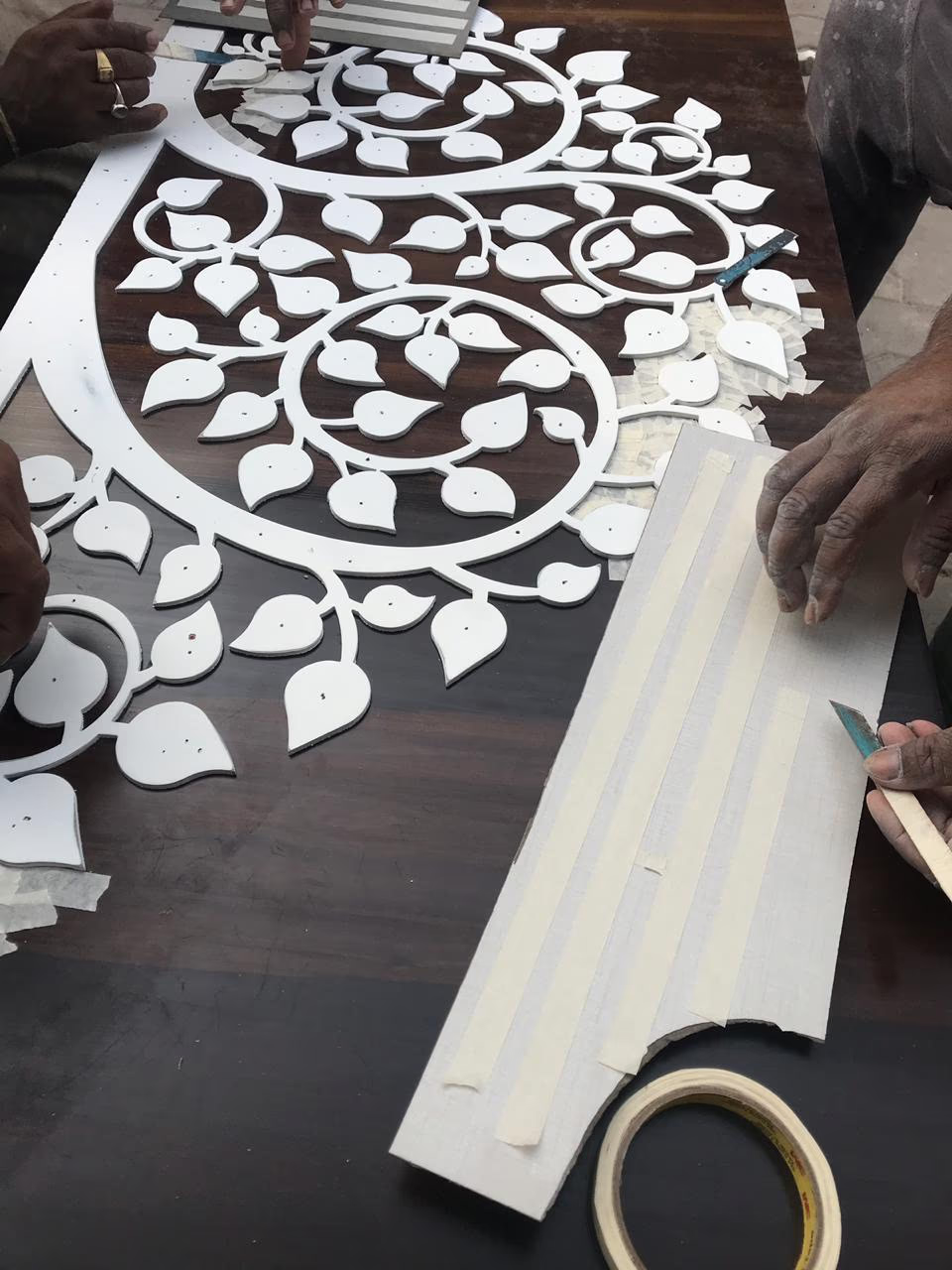
Handwork is normally 15 to 25 percent of a quote. On a carved or inlaid piece it is the largest line in the file. There is no machine setting for a hand-cut mother-of-pearl leaf or a carved mandala — a person cuts each piece, fits it dry, and beds it. A carved pooja mandir dome and a plain one can be the same wood, the same size and the same finish, and sit at opposite ends of the ₹1,00,000 to ₹5,00,000 band. If your budget is tight and your taste is rich, this is the driver to trade first.
5. Hardware is the invisible line
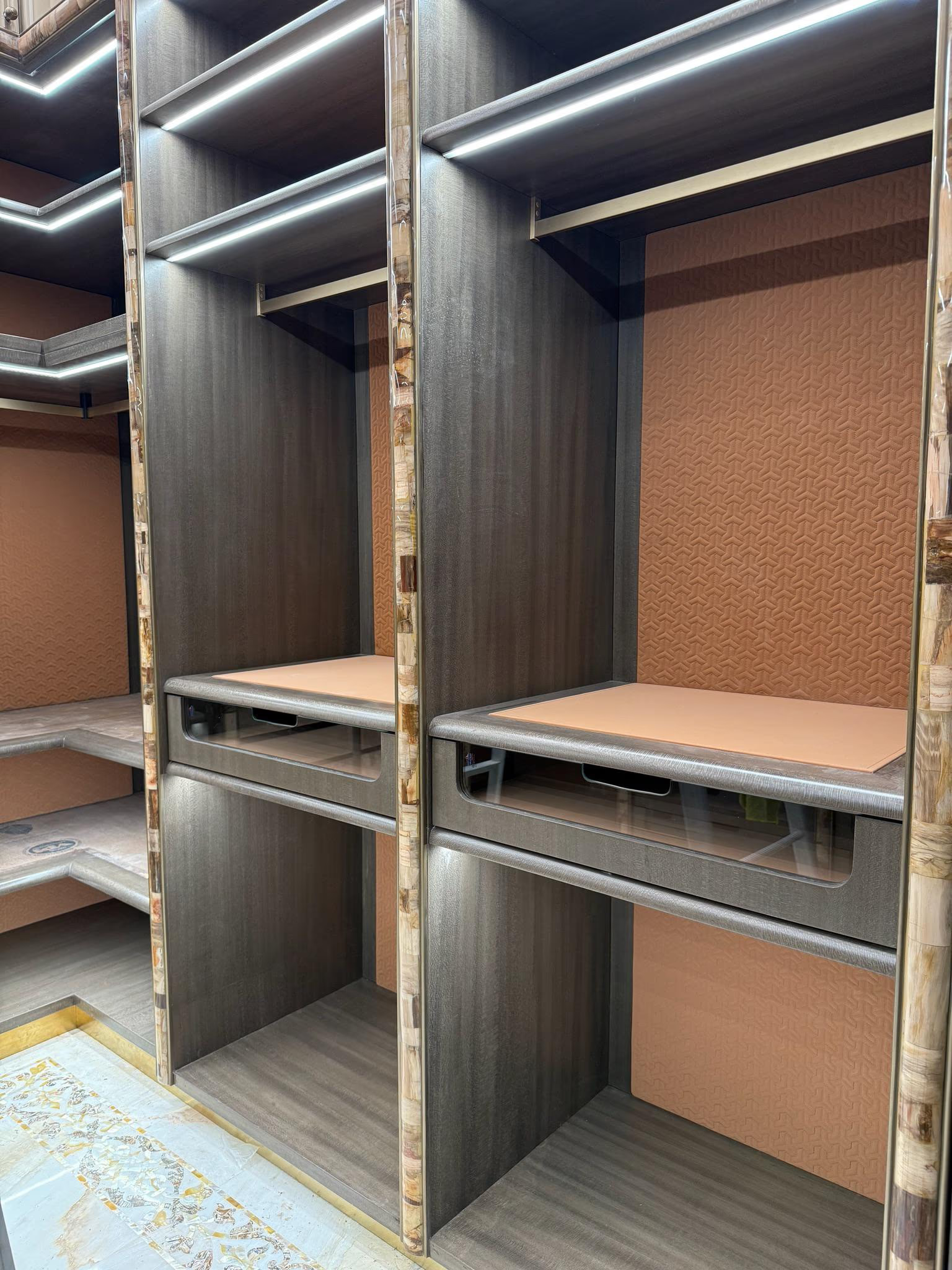
This is the one buyers forget. Soft-close runners, push-to-open latches, concealed hinges, gas lift mechanisms, a lift-up dressing mirror, lit interiors — none of it shows in a render, and all of it is bought. A walk-in wardrobe with a 600mm internal depth for the hanging rail, a 1,400–1,500mm long-hang bay and shelf spacing at 300–350mm can carry dozens of hinges and runners before a single door is fitted. That is a real part of why wardrobes run from ₹2,50,000 to ₹15,00,000 ($3,000–$18,000). Ask for hardware to be named in the quote, by function at least.
6. Quantity and repetition genuinely lowers the per-unit price
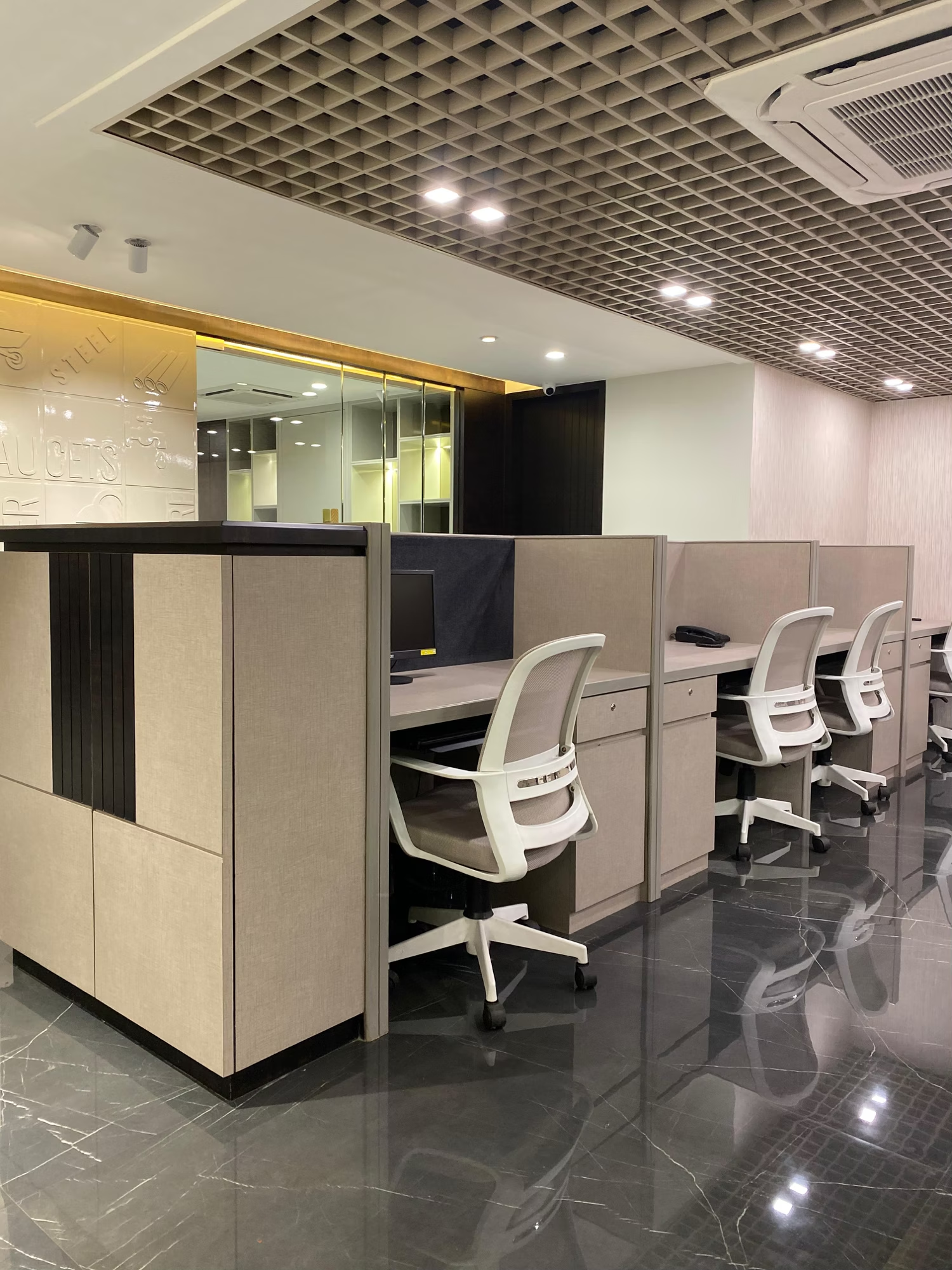
A run of 40 identical workstations shares one drawing, one cut list, one jig and one finish setup across all 40 units. Four different bespoke pieces need four of each. That is the whole reason office fit-outs can be quoted per square foot while a one-off centrepiece cannot. If a scheme has repeatable elements, group them in your schedule and price them as a run — see luxury office furniture and boardroom costs for how corporate work is normally split.
7. Timeline compression buys speed, not quality
A custom dining table normally takes six to twelve weeks from final design to delivery. Some of that is queueing and can be bought back with overtime and parallel benches. Some of it cannot. Timber does not go to the joinery floor until a pin meter reads 8–12% moisture, and finish coats need their drying days whatever the date on your calendar. Compressing a programme adds cost to the parts that can move and risk to the parts that cannot. The honest fix is to start earlier — the timings are in How Long Does Custom Furniture Take?.
Stone is bought by the slab. Vein-matching means buying the block, not the square foot.
Furniture GST in India, and the paperwork that rides with it
GST on furniture in India is 18%. It applies to a made-to-order piece exactly as it applies to a shelf piece, and it should appear as its own line in any quote you are asked to approve. If the tax is folded silently into a lumpsum, you cannot compare that quote with a clean one.
The second document is the e-way bill. Any consignment worth more than ₹50,000 needs one generated before the goods move. It is not optional and it is not a fee anyone should surprise you with — it is a compliance step that belongs to whoever is despatching the goods.
| Line | 2026-27 position | Who normally carries it |
|---|---|---|
| GST on furniture | 18% | The buyer, shown separately on the invoice |
| E-way bill | Required above ₹50,000 consignment value | The despatching manufacturer |
| Crating and packing | Part of the delivery scope | Named in the quote, not added later |
| Transit insurance | Should cover the full invoice value | Named in the quote, not added later |
Delivery cost: free in mainland India, and what the market charges
Here is a real line most budgets get wrong. Delivery anywhere in mainland India is free with us. That is the crate, the road freight, transit insurance for the full value, the e-way bill, all the paperwork, and the GST on all of it, with no minimum order. The only exception is Andaman & Nicobar and Lakshadweep, which move by sea and are billed at actual cost. The full scope is on the delivery page.
Compare that honestly to the market. A single crated sofa moved 1,000–1,500km by road typically runs ₹7,000 to ₹12,000 ($85–$145) once freight, the fuel adjustment, transit cover and GST on the freight are all added. Multiply that by a full home and you have a line worth several lakh that never appeared on anyone's mood board. When you compare two quotes, check whether one of them has quietly left this out.
Import comparison: what Chapter 94 goods cost at the border
Furniture is HS Chapter 94. Bringing it into India carries 20% Basic Customs Duty, a 5% Agri-Infra Cess, and then 18% IGST on the value plus duty. Stacked, that is about 47.5% of the shipped value in cash at the border. A GST-registered buyer reclaims the IGST later, which brings the non-recoverable share to roughly 25% — but the full amount leaves your account first, and the refund takes months.
| Import line | Rate | Effect on your budget |
|---|---|---|
| Basic Customs Duty (BCD) | 20% | Cash at the border, not recoverable |
| Agri-Infra Development Cess | 5% | Cash at the border, not recoverable |
| IGST | 18% on value plus duty | Cash at the border, reclaimable if GST-registered |
| Stacked total | ≈ 47.5% of shipped value | ≈ 25% non-recoverable after the IGST reclaim |
| Ocean freight, insurance, clearing, inland | Quoted per shipment | Added on top of every line above |
Duty rates change with each Budget. Treat the figures above as the 2026-27 position and reconfirm against the live CBIC rate before you quote a client. The full argument, with a worked container example, is in China vs India: The Real Cost of Furniture.
Run your own shipment through the landed-cost calculator and watch the sticker price climb.
Open the cost calculator →Cost per year of use: the number that settles the argument
Sticker price is the wrong measure for furniture you will own for decades. Divide by the years instead. A ₹2,50,000 ($3,000) dining table used for 25 years costs ₹10,000 ($120) a year. Nobody argues about ₹10,000 a year for the surface their family eats at every single day.
Now the sofa, worked all the way through, with the honest answer rather than the flattering one. A store sofa costs ₹80,000 ($960) and its foam is soft in a few years. A made-to-space sofa costs ₹3,00,000 ($3,600). Over 25 years you buy the store sofa three times.
| Over 25 years | Store sofa | Made-to-space sofa |
|---|---|---|
| Price each time | ₹80,000 ($960) | ₹3,00,000 ($3,600) |
| Times bought | 3 | 1 |
| Total spent | ₹2,40,000 ($2,890) | ₹3,00,000 ($3,600) |
| Cost per year | ₹9,600 ($116) | ₹12,000 ($145) |
| Fitted your wall | No | Yes |
| Can be repaired and re-covered | No | Yes |
The gap is ₹2,400 ($29) a year. That is the true premium for a piece cut to your room, and it is far smaller than the sticker suggests. It also ignores the hidden cost of a piece that never fitted — the rug bought to hide a gap, the side table bought to fill a corner. The longer view is in Is Bespoke Furniture Worth the Money? and Luxury Furniture as a Long-Term Investment.
What makes a furniture quote trustworthy
A quote you can compare is a quote that names things. A line that reads sofa set — lumpsum is not a price, it is a placeholder, and every change later becomes an extra. Run any quote through this checklist before you approve it.
- Sizes in millimetres. Overall length, depth and height for every piece. Not “3-seater”, not “king size”.
- Named materials. Which timber, solid or veneer over what core, which stone, which leather or cloth, and the metal finish.
- Finish references. A RAL or NCS number, or a signed sample. “Off-white matte” is four different colours.
- Hardware, by function at least. Soft-close, push-to-open, lift mechanism, concealed hinge — named, not assumed.
- Quantity and repetition. How many of each, so the run price is visible and not hidden inside a single total.
- Delivery city and scope. Crate, freight, transit insurance, e-way bill, install — in or out, stated.
- GST shown separately. The 18% as its own line, on top of a clear pre-tax value.
- Timeline. Weeks from final approval to delivery, and what the approval milestones are.
A quote that survives all eight can be laid beside another one and compared line for line. A quote that fails three of them will grow after you sign. The cost breakdown behind these lines is in What Drives the Price of Bespoke Furniture, and the traps are in custom furniture mistakes to avoid.
A worked budget: a 3BHK, main rooms first
Every number below is taken from the published ranges on this site, at the bottom of each band, so you can rebuild the arithmetic yourself. This is a comfort-luxury 3BHK, made-to-space, delivered and installed.
| Room | At the bottom of the band (₹) | Equivalent ($) |
|---|---|---|
| Living room — sofa, tables, media wall, seating | ₹6,00,000 | $7,200 |
| Master bedroom — bed, headboard, fitted wardrobe, bedsides | ₹5,00,000 | $6,000 |
| Dining room — table, chairs, buffet unit | ₹4,00,000 | $4,800 |
| Two guest bedrooms at ₹3,00,000 each | ₹6,00,000 | $7,200 |
| Modular kitchen | ₹6,00,000 | $7,200 |
| Home office / study | ₹3,00,000 | $3,600 |
| Foyer — console and mirror or art wall | ₹1,50,000 | $1,800 |
| Pooja mandir | ₹1,00,000 | $1,200 |
| Sub-total | ₹32,50,000 | $39,000 |
| Buffer at 15% | ₹4,87,500 | $5,900 |
| Planned total | ₹37,37,500 | ≈ $45,000 |
Now read that total honestly. It sits just under the ₹40–65 lakh comfort-luxury band published for a full 3BHK, and it should — because it takes the bottom of every single room at once, which no real home does. One or two rooms always sit higher, because that is where you chose to spend. Move the living room to ₹12,00,000 and the master to ₹10,00,000 and you are at ₹45,50,000 before the buffer, which is exactly where the published band starts. The room-by-room detail is in the full home furnishing budget.
How a Designatore price is actually set
We do not have a price list, and we are not going to invent one for a web page. The process is simple and it runs in one direction. You send a room — a photograph, a floor plan, a CAD file or a scaled PDF with dimensions on it. We design and detail the piece. You approve the design, the materials and the finish. Where it matters, we make a sample or a prototype first. Only then is a price fixed in writing, in ₹ and $, and only then does anything get cut.
That order is the whole point. A number quoted before the drawing exists is a guess, and a guess always moves. A number quoted after the drawing exists is a commitment. You can see finished work on the shop, the company facts on our facts page, and start a project at customization.
Send us the room and the schedule. We quote per project, in writing, in ₹ and $.
Get a project quote →Budgeting is easier when the numbers are on one page. Take the ranges above into your spreadsheet, add the 18% GST line, leave delivery at zero for mainland India, and hold a 10–15% buffer. Then send us the sizes and materials at customization, check what the free-delivery scope covers on the delivery page, and if an import is still on the table, run it through the landed-cost calculator first.