

To choose a furniture manufacturer in India, run seven tests: a factory they own, a drawing before any cut, your floor plan, departments under one roof, everything in writing, care after delivery, and a company you can verify by CIN. Skip Top-10 lists — the publisher is usually ranked first.
Search for the best furniture manufacturer in India and you will drown in ranked lists that all disagree with each other. This guide takes the opposite approach. It gives you no ranking at all. Instead it gives you seven tests you can run on any maker — including us — in about a day, plus the ten questions to ask before you sign. The tests are the point: a good manufacturer passes them easily, and a weak one cannot fake them.
We will show you how Designatore answers each test, because a guide like this should put its own maker on the record. But every test works on any company. Use them on all of us.
How to choose a luxury furniture manufacturer in India: the short answer
Choose the maker who can show you, not tell you. That means a factory they own and will let you see; a scaled drawing you approve before anything is cut; a design built from your floor plan rather than a catalogue size; real departments under one roof instead of a chain of subcontractors; a quote, timeline and warranty in writing; a named team after delivery; and a registered company you can verify on the government registry in two minutes. Seven tests. Everything else on this page unpacks them.
Test 1: do they own the factory, or do they place the order somewhere else
This is the first test because every other promise hangs on it. Plenty of companies that sound like manufacturers are really order-placers: they take your brief, pass it to a workshop you will never see, and add a margin. Nothing they promised you about timber, finish or timeline is in their control.
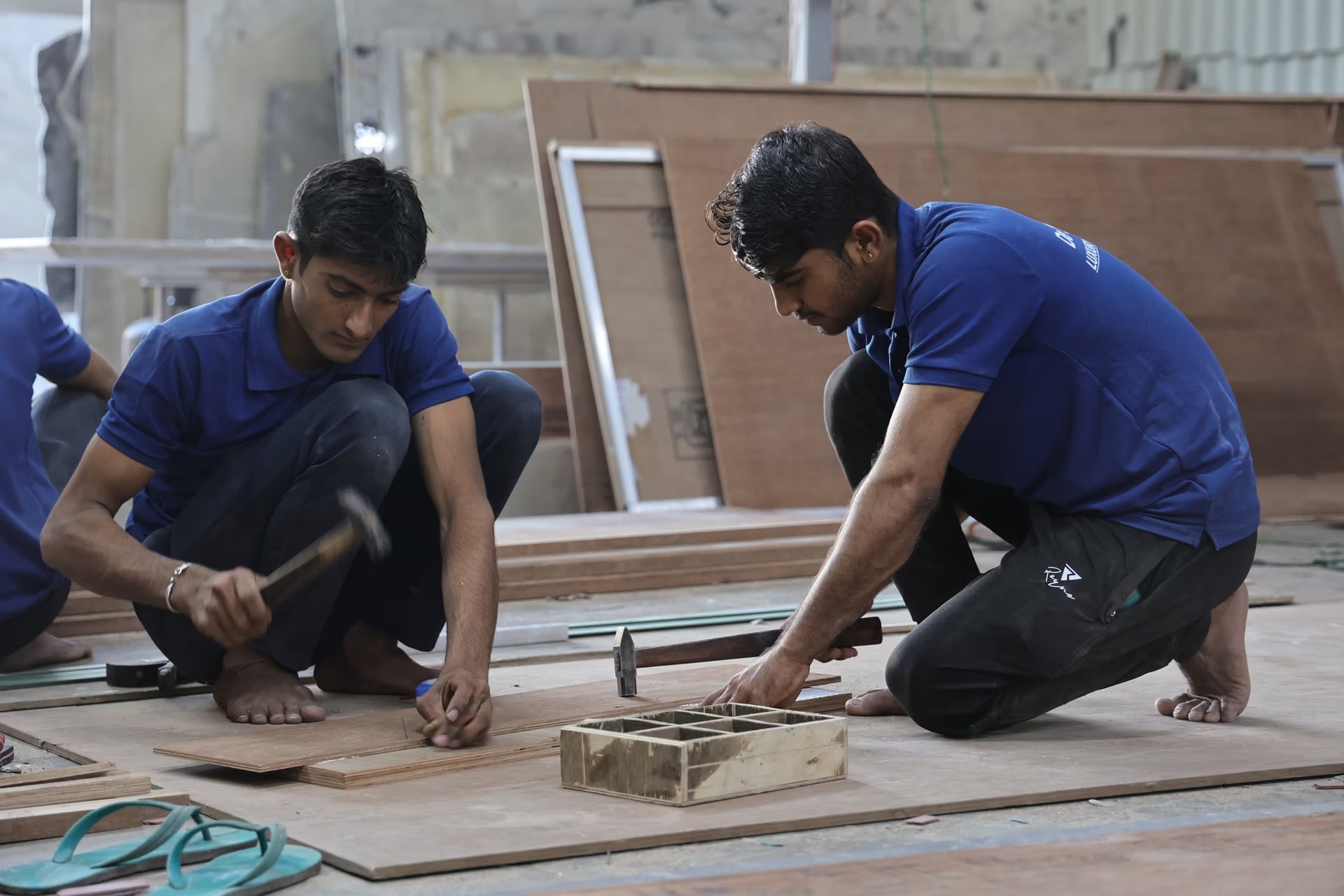
The test is one sentence: what is the factory address, and can I visit? A real manufacturer answers instantly. Designatore's answer is on the record — a purpose-built 80,000 sq ft factory you can read about, with the full story of the building in inside an 80,000 sq ft furniture factory. Ask any maker you are considering for the same, and watch how quickly the answer comes.

Test 2: will they show you the design before anything is cut
The drawing is your only protection. Before production, it is how you catch the wrong size, the wrong grain, the wrong handle. After delivery, it is the record of what was agreed — the thing a finished piece can be checked against. A maker who starts cutting without an approved drawing has removed both protections at once.
At Designatore nothing is cut until you approve the drawing; the whole journey from sketch to installed piece is laid out in from drawing to installation. The test for any maker: will I sign off a scaled drawing before production begins? Accept only an unhesitating yes.
Test 3: do they work from your floor plan, or from a catalogue size
There are two kinds of custom in the Indian market. One starts from a catalogue piece and lets you change the fabric. The other starts from your floor plan and designs the piece for your wall, your ceiling height, your walk-past space. Both are legitimate businesses — but only one is manufacturing to your home, and the price should say which one you are getting.
The test: send the maker one room's floor plan and ask what they would build there. A catalogue house will send you products. A true manufacturer will ask questions about the room. Our guide to bespoke furniture in India explains the full ladder, from catalogue tweak to genuinely made-for-your-wall.
Test 4: how many departments are under one roof, and how many are subcontracted
A piece of fine furniture passes through many crafts: timber seasoning, machining, joinery, carving, veneer pressing, upholstery, metal, stone, spray finishing, quality checks. Every craft that happens under the maker's own roof is a craft they control. Every craft sent outside is a queue you cannot see and a standard you cannot enforce.
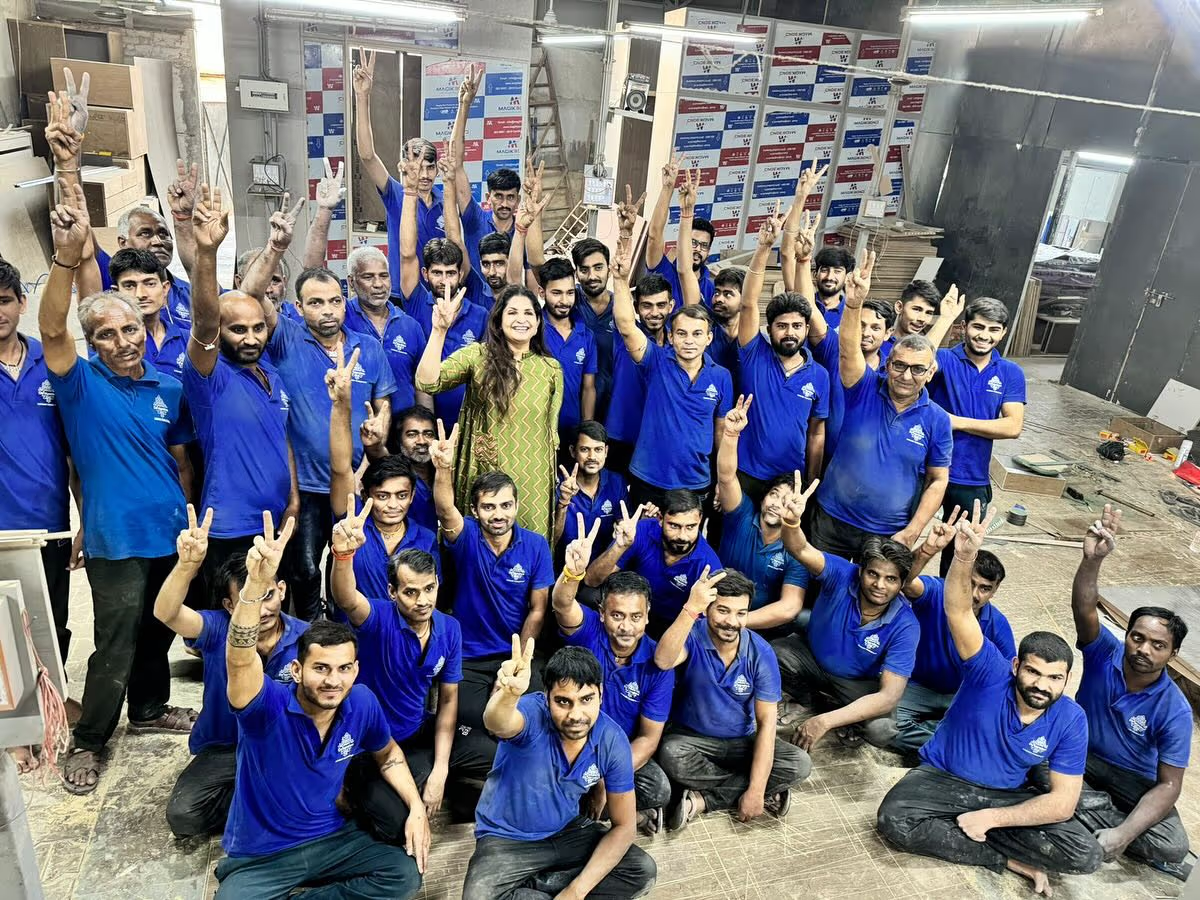
Nobody does everything in-house, and honest makers will tell you exactly where their roof ends. Designatore runs ten departments under one roof with a team of 130+ craftsmen, which is what 80,000 square feet is actually for. The test: ask for the list — what is in-house, what is bought in. The answer's precision tells you as much as its content.
Test 5: what is written down — quote, drawing, timeline, warranty
Memory is the cheapest material in the furniture trade, and the most expensive one to build on. Whatever is not written down does not exist: not the price, not the delivery week, not the promise about the polish. The paper trail is not bureaucracy — it is the difference between a disagreement and a dispute.
- The quote, itemised, so a later change is a revision and not a surprise.
- The drawing, signed by you, so the finished piece has a standard to meet.
- The timeline, with dates, so a delay is visible the week it begins.
- The warranty, in writing, so what is covered is a fact and not a memory.
Test 6: what happens after delivery
The delivery truck is where weak makers disappear. Furniture is used, moved, spilled on and leaned against for years, and a real manufacturer plans for that: its own installation team, a named person to contact, and a willingness to come back. Before you sign, ask three afters: who installs it, who do I call in month six, and what happens if a finish or a joint fails? The maker who answers with names and a process is planning to know you in year five. The one who answers vaguely is planning to be a stranger by then.
Test 7: can you verify the company exists
This is the test almost nobody runs, and it is the most powerful because it uses the government's records instead of the maker's marketing. Every registered Indian company has a CIN — a Corporate Identification Number — on the Ministry of Corporate Affairs registry. Two minutes on the MCA site tells you whether the company exists, when it was incorporated and whether it is active.
Designatore publishes its CIN — U74109GJ2025PTC161877 — along with every other verifiable detail on its company facts page, including how the registration relates to a house that has been trading since 2018. The test for any maker: ask for their CIN, then look it up. A company that will not give you a registry number is asking you to take everything else on faith too.
Ten questions to ask before you sign
The seven tests compress into ten questions. Ask them of any furniture manufacturer in India — in one meeting or one email — before money moves:
- Do you own the factory, and can I visit it?
- Will I see and approve a scaled drawing before anything is cut?
- Is my furniture designed from my floor plan, or adapted from a catalogue size?
- Is the timber kiln-seasoned and moisture-checked before cutting?
- Which departments are in-house, and which parts do you subcontract?
- Where is the finish applied — in a spray room, or on site?
- What will be in writing: quote, drawing, timeline, warranty?
- Who installs the furniture, and who exactly do I call after delivery?
- What is your company's CIN, and what does the registry show?
- Can I see photographs of real delivered projects, not renders?
Here is the same list as a working checklist — what each question is protecting you from, and what a good answer sounds like:
| Question | Why it matters | A good answer looks like |
|---|---|---|
| Do you own the factory? Can I visit? | Every other promise depends on who controls the making. | An address, and an open invitation. |
| Drawing approved before cutting? | The drawing is your only standard to check the piece against. | Yes, always — nothing is cut without your sign-off. |
| From my floor plan or a catalogue? | Decides whether the piece is made for your wall or near it. | Send the plan; they ask about the room, not the budget. |
| Is the timber kiln-seasoned? | Unseasoned wood warps and cracks a monsoon or two later. | Kiln-dried, with a moisture check before the saw. |
| What is in-house, what is subcontracted? | Each outside craft is a standard the maker cannot enforce. | A precise list, given without defensiveness. |
| Where is the finish applied? | A fine finish needs a sealed spray room, not household dust. | A dedicated finishing department, cured in the factory. |
| What is put in writing? | Whatever is not written down does not exist later. | Itemised quote, signed drawing, dated timeline, written warranty. |
| Who installs, and who do I call after? | The truck is where weak makers disappear. | Their own team installs; a named contact stays. |
| What is your CIN? | The registry verifies the company; marketing cannot. | The number, offered without hesitation. |
| Real photos of delivered work? | Renders show intent; photographs show ability. | Real projects, real rooms, and references if you ask. |
Test 1 is the fastest to run on us: the factory is real, it is 80,000 square feet, and this page walks you through it.
See the factory →What a "Top 10 furniture manufacturers" list is actually telling you
Now the elephant. When you searched for a manufacturer, you almost certainly met ranked lists — top ten this, best luxury that. Look closely at the format and a pattern appears: many of these lists are published by furniture companies themselves, and the publisher is frequently the company listed first. Most carry no author's name, no publication date and no stated method — no explanation of who was compared, on what, or by whom.
You can verify this yourself in thirty seconds: open any such list and look for three things — who owns the website, whether a ranking method is described, and where the site's owner sits in the ranking. A list that fails all three is not research; it is an advertisement wearing a medal it printed for itself. That is why this guide ranks nobody, Designatore included. Tests you run beat rankings you read, every time.
Red flags
The seven tests find good makers. These five signs find trouble — each one is the shadow of a test failed:
- No factory address, anywhere. Not on the website, not on the quote, not when asked. The making is happening somewhere they do not want you to see.
- A price before a survey. A firm quote before anyone has seen your space means the number was never about your furniture.
- No drawing before production. You are being asked to approve a piece that exists only in someone's head.
- Nothing in writing. No dated timeline, no written warranty — every future disagreement is already lost.
- A portfolio of renders and stock images. 3D renders show ambition; only photographs of delivered rooms show ability.
How Designatore answers all ten questions
A guide that hands out tests should sit the exam. Here are our answers, on the record: the factory is ours — 80,000 sq ft, purpose-built, with ten departments under one roof and a team of 130+ craftsmen. Every piece starts from your floor plan, and nothing is cut before you approve the drawing. Timber is kiln-seasoned and moisture-checked; finishes are sprayed and cured in a dedicated finishing department. The quote, drawing, timeline and warranty are written. Our own team delivers and installs, across India and worldwide, and stays reachable after. And the company is verifiable: CIN U74109GJ2025PTC161877, published with everything else on the facts page.
The tenth question — real delivered work — is answered in photographs across this site, and in guides like how bespoke furniture is made. And if the maker you are weighing us against is the carpenter already on your site, read carpenter vs furniture manufacturer — the honest version of that comparison, including when the carpenter should win.
When you are ready to run the tests on us properly — with your floor plan on the table — the first step is simple: start your project, and the first thing you will see is a drawing.