

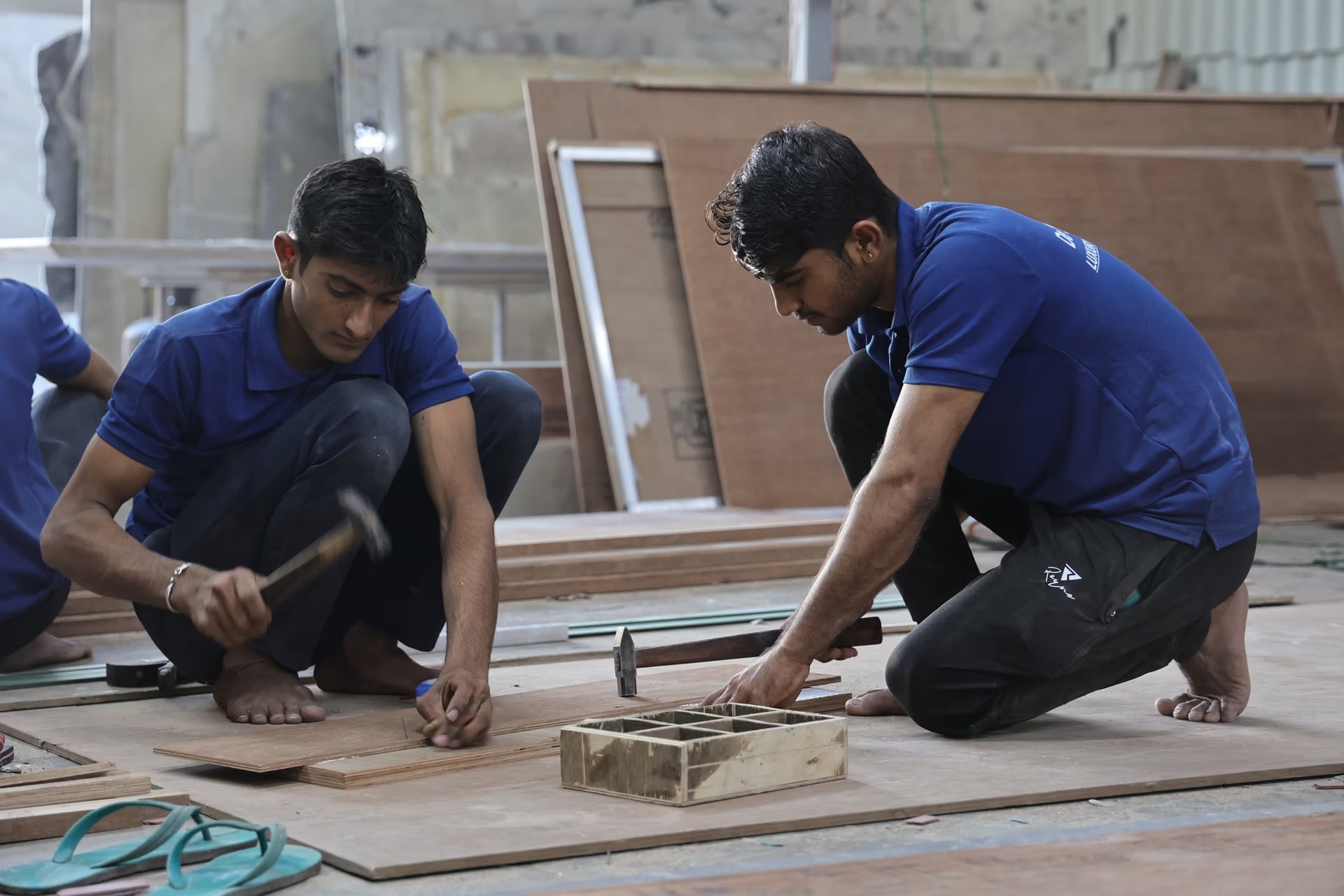
In carpenter vs furniture manufacturer, choose a carpenter for a repair, an awkward corner or a job this week, and a furniture manufacturer for pieces you will keep for decades. A factory gives you a drawing before any cut, kiln-seasoned timber, a dust-free spray finish and one company to call.
In most Indian homes, the real choice was never between two furniture brands. It was between the carpenter the contractor already brought on site and a manufacturer you have never met. One is standing in your living room with a saw. The other is a name, a factory and a process. This guide sets the two side by side, plainly, so you know which one your project actually needs.
One thing first, because it matters: this is not a page about skill. Many site carpenters are highly skilled, and the 130+ craftsmen in our own factory are carpenters by trade. The difference is not the hands. It is the place — and what the place makes possible.
Carpenter or furniture manufacturer: the short answer
A carpenter is right for small, fast, flexible work: a repair, a shelf, a fitted niche, a tight budget, a deadline this week. A furniture manufacturer is right for furniture you plan to live with for decades: seasoned timber, an approved drawing, a factory finish, matched pieces across a whole home, and a company that answers the phone in year five. If the piece matters for twenty years, the factory wins. If the job matters for Friday, the carpenter wins.
What an on-site carpenter actually does well
Be fair to the man on site, because he does real things well. He is there, today. He can measure the wall with his own tape and adjust as he goes. He can scribe a shelf into a wall that is not straight — and most walls are not. He charges for his time and his timber, with no factory, transport or overhead built in. For many jobs that is exactly what you want.
- Speed. He can start tomorrow and finish this week. No queue, no production slot.
- Flexibility. Change your mind mid-job and he changes with you, on the spot.
- Awkward spaces. A niche under the stairs, a sloping loft wall — site work fits what site work finds.
- Low starting cost. No drawing fee, no factory overhead, no delivery run.
Every one of those strengths comes from the same fact: the work happens in your home. And every weakness in the next section comes from the same fact too.
What changes when furniture is built in a factory
Move the same work into a real factory and five things change that no amount of on-site skill can copy. Our own building is 80,000 sq ft with ten departments under one roof, and each department exists because one of these five needs its own room.
- A drawing before a cut. Nothing is built until you approve a scaled drawing. What was agreed is on paper, not in memory.
- Seasoned timber. Wood is kiln-dried and moisture-checked before it is cut, so it does not warp and crack in your home later.
- A finish room. Polish is sprayed in a sealed, dust-free space and left to cure — a surface a brush in a dusty room cannot give.
- Repeatability. CNC-cut parts repeat exactly, so eight dining chairs are truly identical and a whole home carries one line.
- A clean site. Cutting, sanding and spraying happen in the factory. Your home gets delivery and installation, not weeks of dust.
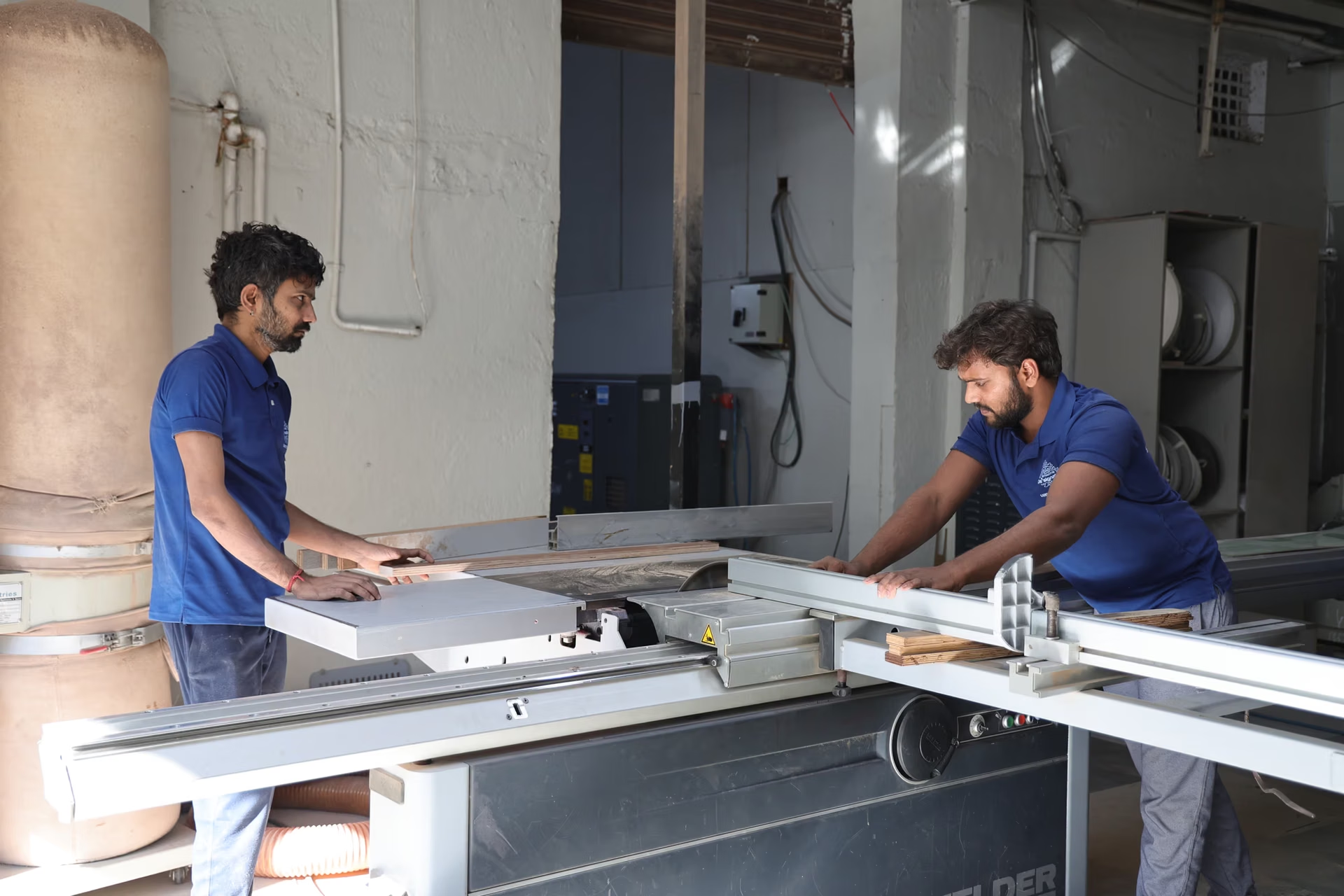
Carpenter vs furniture manufacturer: the key differences
Here is the whole comparison in one table. Read it as what the place allows, not as a scorecard of the people.
| What matters | On-site carpentry | Factory-built furniture |
|---|---|---|
| Who draws it | Often no one. The design lives in a photo and a chat. | A designer. You approve a scaled drawing first. |
| Seeing it before it is cut | No. The first version you see is the finished one. | Yes. Nothing is cut until the drawing is approved. |
| Timber seasoning | Whatever the local yard has that week. | Kiln-seasoned, moisture-checked before cutting. |
| Finish environment | Brush and hand polish, in household dust. | A sealed spray room, dust-free, with time to cure. |
| Repeatability across a home | Each piece comes out a little different. | CNC-cut parts repeat exactly, room after room. |
| Hardware | What the nearest shop stocks that day. | Sourced to specification and fitted in the factory. |
| Dust and your other rooms | Cutting and sanding happen inside your home. | All of it stays in the factory. Your home stays clean. |
| Who to call if it goes wrong | One person, and the agreement lives in memory. | One company, and the agreement lives on paper. |
| If the maker leaves mid-job | The work stops with him. | A 130+ team carries on; no one pair of hands is the plan. |
| Time spent on site | Weeks of workers in your home. | Days: delivery and installation only. |
The difference is not the hands. It is the place the hands work in.
Finish is the difference you can see
Run your hand over a factory-finished table and then over one polished on site, and you will feel the argument. A fine finish needs a sealed room. Spray equipment lays the coat evenly; filtered air keeps dust out of it while it is wet; controlled time lets each coat cure before the next. In a home, the same polish is brushed on in the same air the cutting happened in. The dust lands in the wet coat and stays there, and every touch-up shows.
This is why a spray-finish environment is a department in our factory, not a corner of it. The finish is the part of the furniture you touch every day, and it is the single clearest reason factory-made furniture feels different from site-made work on day one.
Seasoning is the difference you see two monsoons later
The finish shows on day one. The timber shows in year two. Wood holds moisture, and freshly bought timber holds a lot of it. Cut it and build with it the same week, and the piece will move as that moisture leaves — slowly, through a dry summer and a wet monsoon and back. Doors start to bind. Panels crack along the grain. Joints that were tight open a hair, then a gap.
A factory breaks that cycle before the first cut. Timber is kiln-seasoned — dried slowly in a controlled chamber — and checked with a moisture meter before it reaches the saw. A site carpenter cannot bring a kiln to your home, and cannot wait months for timber to dry in your corridor. He builds with what the yard sells, and the yard sells wood that is still breathing. Neither of you finds out until the second monsoon, when he is long gone.

Who carries the risk if it goes wrong
Now the uncomfortable question. Suppose the wardrobe door binds, or the polish clouds, or the piece is simply not what you pictured. With site work, there is usually no drawing, so there is nothing to check the piece against. The agreement lives in memory, and memory favours whoever holds the chisel. If the carpenter has moved to the next job — or the next city — the problem is now yours.
With a manufacturer, the drawing you approved is the contract for what the piece should be. There is a company name, a written quote and a written timeline, and a team that still exists in year five. That is what you are really buying when you pay more than the site quote: not just better building, but someone who must stand behind it. Our guide on how to choose a furniture manufacturer in India shows how to test whether a maker will actually be there.
When a carpenter is the right choice
Honest advice cuts both ways, so here it is plainly. Call a carpenter, not a manufacturer, when:
- It is a repair. A loose hinge, a sagging shelf, a chair joint that needs re-gluing. Site work, done in an hour.
- It is one awkward niche. A shelf under the stairs or a box around a pipe — small fitted work in odd corners is his home ground.
- The budget is small. For a simple, practical piece, factory overhead buys you nothing the job needs.
- It must happen this week. No factory can beat a man who starts tomorrow morning.
We mean this. A factory process exists to protect furniture you will keep for decades. Pointing it at a one-day job is using a crane to lift a chair.
When a furniture manufacturer is worth it
Bring in a manufacturer when the furniture itself is the point — when the piece must fit the room exactly, match its siblings exactly, and still look right in fifteen years. In practice that means:
- The main rooms of a home you own. The living room, the bedroom, the dining room — the pieces you see and use every day.
- A whole home in one look. Matched grain, matched finish and one line across many rooms takes factory repeatability.
- Fine materials. Rare veneers, stone tops and detailed joinery need seasoned timber and a proper finish room.
- Anything you want an answer for later. A drawing, a written agreement and a company to call in year five.
If that is your project, the wider decision — made-for-you versus off-the-shelf — is covered in bespoke vs ready-made furniture, and how bespoke furniture is made walks the factory journey step by step.
Not sure which side of this line your project sits on? Send us a photo of the space and we will tell you honestly — including when a good carpenter is all the job needs.
Send us your space →How Designatore works with your contractor, not against them
Most of our projects already have a contractor on site, with carpenters on the team. That is not a conflict; it is a handover. Site carpentry and factory furniture are different trades doing different jobs, and a clean project uses both.
- We share drawings early. Your contractor gets the dimensions, wall loads and power points our pieces need, before the walls are closed.
- The site team does the site work. Civil work, panelling, flooring and fitted site carpentry stay with your contractor.
- We build in the factory. The furniture is made in our 80,000 sq ft factory — seasoned timber, approved drawings, spray finish — while the site progresses.
- We install at the end. Our team delivers and installs finished pieces into a ready site, in days, not weeks.

The bottom line on carpenter vs furniture manufacturer
For a repair, a niche, a small budget or a deadline this week, call the carpenter and thank him. For furniture you will look at every day for twenty years, use a manufacturer: kiln-seasoned timber, a drawing you approve before anything is cut, a dust-free spray finish, parts that repeat exactly, and a company that still answers in year five. The skill is honourable on both sides. The place decides what the skill can deliver.
If your project is on the factory side of the line, the first step is simple: send us your space, and we will show you the drawing before a single piece of timber is cut.