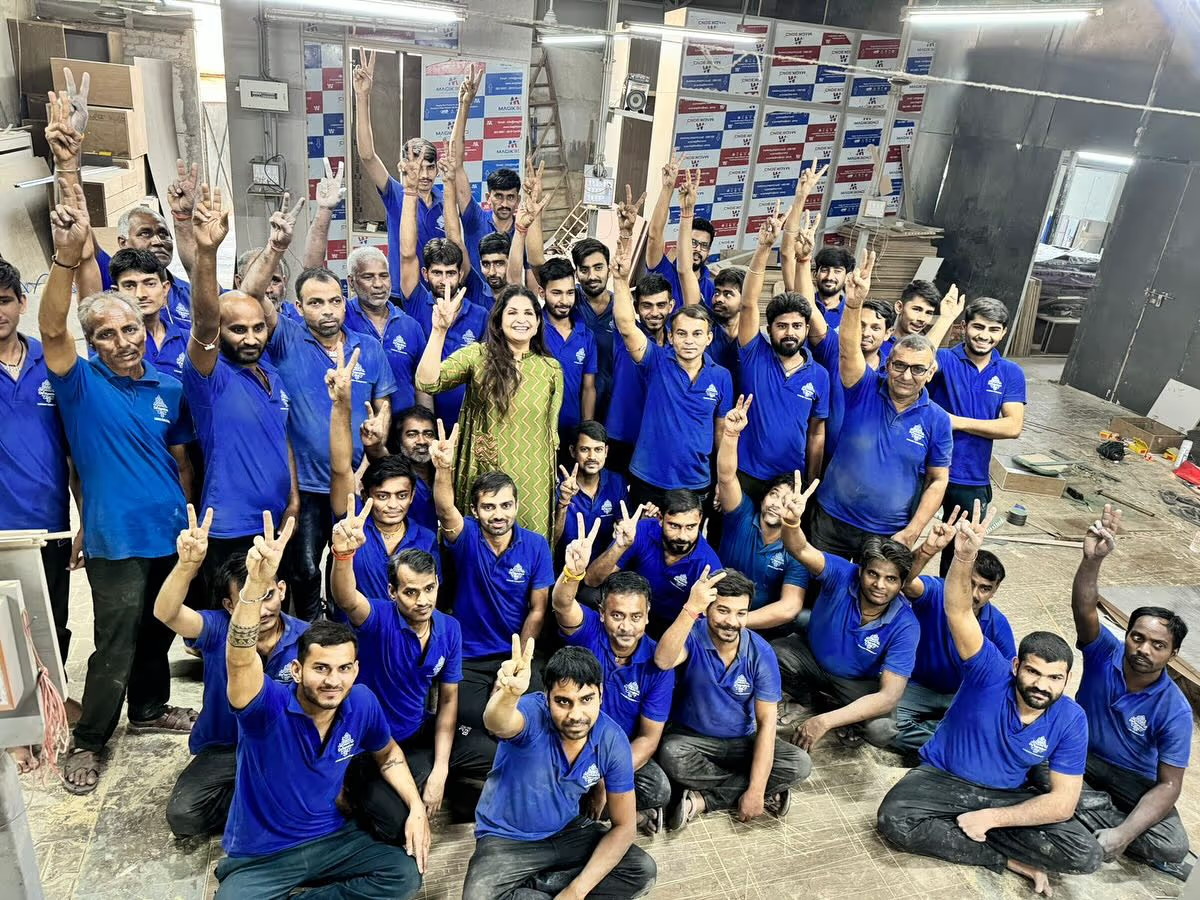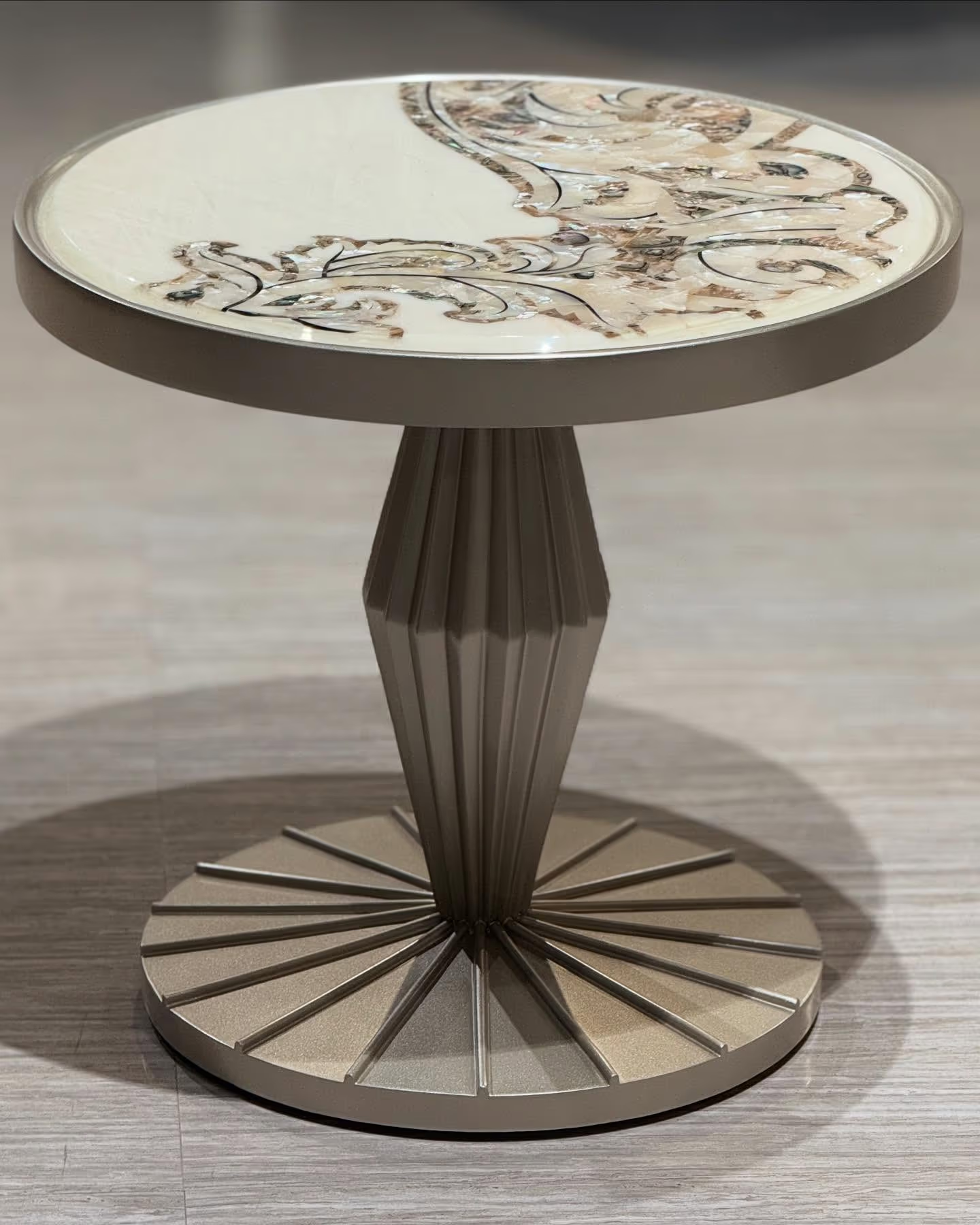

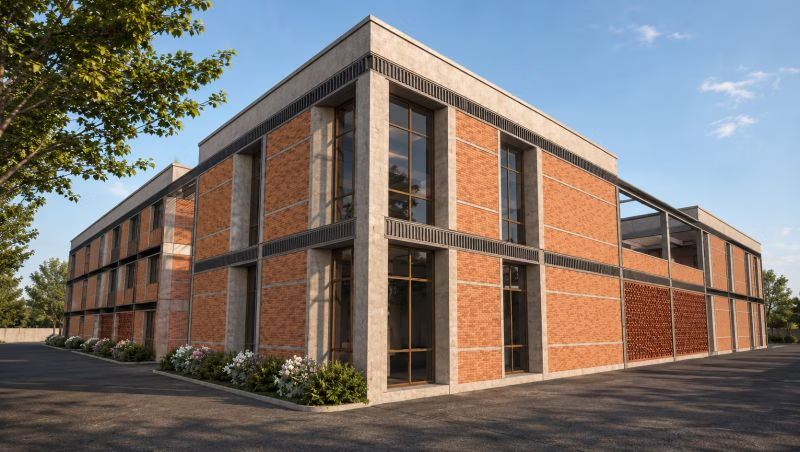
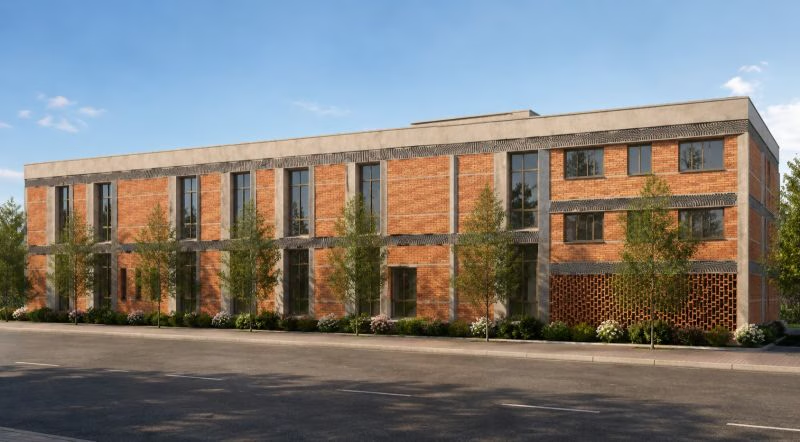
Designatore’s luxury furniture factory in India is 80,000 square feet, operating today in Village Bil, Vadodara district, Gujarat. Ten departments sit under one roof, from design to packing. A team of 130-plus builds every piece here. You are welcome to visit. This is what the building holds, and how to audit any furniture factory before you order.
Four vendors have told you they make it in their own factory. It is the easiest sentence in this trade to say and the hardest to check. Sometimes it means 80,000 square feet and ten departments. Sometimes it means a rented shed, a sub-contracted polish shop, and a phone number for a man who has the keys.
So this is two documents at once. The first is a description of one building — ours, on Bhayli Bil Road in Village Bil, Vadodara district, Gujarat. The second is a checklist you can carry into any furniture factory in India and use in an hour. If you want the feel of the craft rather than the floor plan, read Inside Our Atelier. This page is the floor plan.
What an 80,000 Sq Ft Luxury Furniture Factory in India Actually Holds
Square footage is not a boast. It is arithmetic. One hardwood carcass job on its own needs a timber store, a breakdown saw, a machining bay, bench space, a spray room, somewhere for the finish to cure, and somewhere to stand the finished piece where nobody leans a ladder against it. Now run ten crafts at once, on many projects at once, and the number stops being marketing.
Designatore is a luxury furniture manufacturer in India, with its factory in Vadodara, Gujarat. The building is purpose-built and operating today — not planned, not coming. It has been trading since 2018 under founder and designer Nidhi Patel, who has more than thirty years designing homes, offices and factories. Every verifiable detail about the company sits on one page of company facts, including the registered name and CIN.
The Ten Departments in the Factory, in Order
Furniture moves through this building in one direction. Ten departments, in a fixed order, each with its own space and its own supervisor. Here is the map first, then what each room is really for.
| # | Department | What it is protecting the work from |
|---|---|---|
| 01 | Design & Technical Development | Guesswork — a piece built from a picture instead of a dimensioned drawing |
| 02 | Material Storage & Processing | Moisture, warping and hides stored on their edge |
| 03 | CNC & Precision Manufacturing | Drift — the twentieth part not matching the first |
| 04 | Woodworking & Joinery | Joints that fight timber movement instead of allowing it |
| 05 | Veneering & Finishing | Cupped panels and grain that does not run through a set |
| 06 | Painting & Polishing | Dust under lacquer, and three near-misses of one colour |
| 07 | Upholstery | Nap running two ways, and leather cut from two lots |
| 08 | Quality Control | A piece leaving the building unchecked against its own drawing |
| 09 | Assembly & Packaging | Transit damage — corners, glass, stone and mirror |
| 10 | Research & Development | New finishes and materials being tested on a client instead of a sample |
01 Design & Technical Development. Nothing is cut until this room has finished. Your floor plan, photograph, CAD file or rough sketch becomes a general arrangement drawing, then elevations, sections and joinery details, then a cut list. Sizes are fixed to the millimetre, and checked against the route in — the lift car, the stair turn, the 900mm corridor. A factory without this room finds out about the lift on delivery day. We go through it stage by stage in our design process.
02 Material Storage & Processing. Timber, veneer, stone, metal and fabric are stored, not stacked. Incoming timber typically reads 12–18% moisture. Nothing goes to the joinery floor until a pin meter reads 8–12%, which is what Indian interiors need. Hides are kept flat. Veneer flitches stay in the order they were sliced. Outsource your storage and you buy somebody else’s humidity along with the wood — the point of choosing the right wood for India’s climate.
03 CNC & Precision Manufacturing. Computer-guided cutting takes parts straight from the drawing file, so the twentieth cabinet side is the same as the first. This matters most in a run — eight wardrobe carcasses, forty chair frames, a whole wall of shelving. The hand work that follows is only ever as good as the geometry it starts from. A part cut 2mm out is a shadow line you will see for twenty years.
04 Woodworking & Joinery. Frames, carcasses and joints, built at the bench. Wood moves. It moves across the grain, not along it. Joinery that allows that movement holds; joinery that fights it opens. A stapled butt joint survives the showroom and fails the third summer. This floor is also where somebody says out loud that a 12-seat boardroom top will not enter your lift, and engineers it as a segmented top with a concealed spline instead.
05 Veneering & Finishing. Veneer is laid, matched and pressed here. A face veneer needs a backing veneer or the panel cups — that is physics, not preference. Book-matching a run of wardrobe fronts means one flitch, kept in sequence, for the whole run. Send the panels out and they come back from two flitches, and no polish on earth will make the grain agree. More on the trade-off in solid wood vs veneer.
06 Painting & Polishing. A separate, dust-controlled space, and the reason is simple. One person sanding near one person spraying puts grit under the lacquer, and grit under lacquer means cutting the whole surface back and starting again. Colour is mixed against a RAL or NCS reference and made up in batch, so the bed, the side tables and the wardrobe in one room are one colour, not three near-misses of it.
07 Upholstery. Frames are webbed, filled and covered here. Velvet has a nap direction, and a whole suite has to be cut one way, or two sofas facing each other read as two different colours. Leather hides average 45–55 sq ft and carry natural range marks, so a large sofa is cut from one lot and laid out before a knife touches it. Sofas are built to numbers — 550–650mm seat depth, 420–450mm seat height, 800–900mm back — never to the word three-seater.
08 Quality Control. Every piece is checked against its drawing and signed off before it can move. Not against a memory of the drawing — against the sheet. Doors are opened and closed. Drawers are loaded. The finish is read under strong light at a low angle, which is where marks hide. If it fails, it goes back to the bench, and the rejection is written down.
09 Assembly & Packaging. The piece is fitted together, cleaned and packed. A crate is built around the piece; the piece is not made to fit a box. Glass, stone and mirror get their own voids. Corners get hard protection, because corners are what a truck finds. Delivery in mainland India is free — crate, road freight, transit insurance at full value, the e-way bill and the GST on all of it.
10 Research & Development. New materials, finishes and methods are tested here before they ever go on a client’s piece. A lacquer that looks perfect on a sample and fails at 85% relative humidity is something we would much rather find in this room than in your drawing room. India swings roughly 30% to 85% RH across a year. That swing is the real test bench, and it is why imported furniture cracks here when it did not crack in the warehouse it was built in.
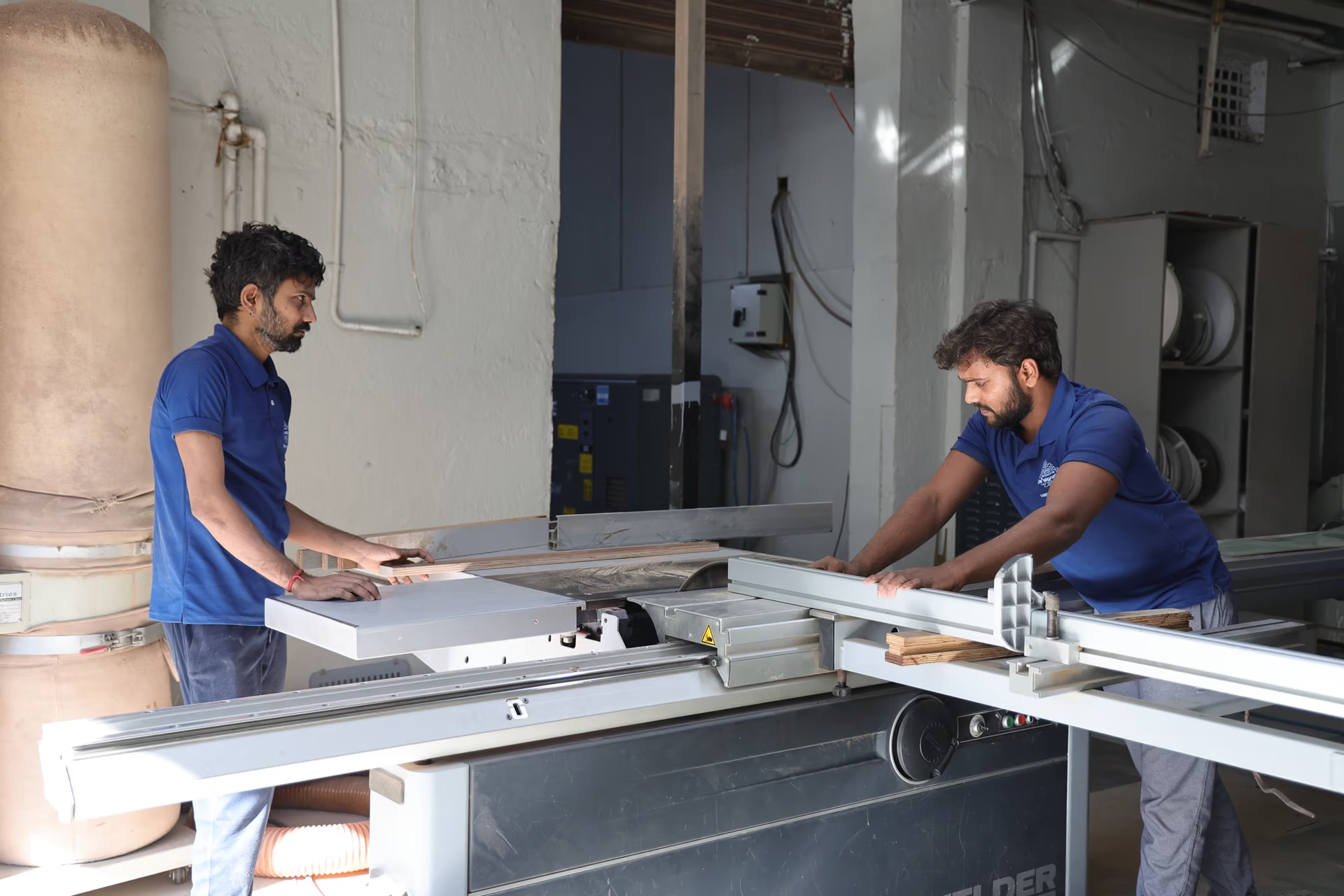
What ‘Under One Roof’ Means in Furniture Manufacturing
One roof is not a romantic idea. It is a handling count and an accountability count, and both of them end up on your invoice or in your snag list.
A piece that leaves the building to be polished queues twice — once in your maker’s schedule and once in the polisher’s. It is loaded, driven, unloaded, handled, and loaded again. And when a corner comes back chipped, there are now two people who can each say the damage was the other’s. You will not win that argument. You will simply pay for it, in weeks or in money.
Then there is matching, which is the failure buyers actually notice. A wardrobe whose carcass, veneer, lacquer and upholstered insert are made by four vendors will not match itself. Four suppliers means four colour batches, two flitches, and two leather lots. It will look almost right, in a way you cannot unsee, in your own bedroom, at seven in the evening, under one warm light.
One roof means one colour batch, one veneer flitch, one leather lot, one hardware standard — and one person to hold responsible. That last one is the whole point. Everything else follows from it.
A factory with no rejections is not a factory with quality control. It is a factory with no record.
The 130 People Inside the Factory
A building is a shed until people are in it. There are more than 130 of us in this one, and they fall into four groups that need each other.
- Craftsmen — joiners, carvers, veneer layers, polishers, upholsterers, and the setters who fit stone and brass. Most of them have one craft they have done for decades, and it shows in the work you can see in our craft.
- CAD engineers — they turn design intent into general arrangement drawings, shop drawings and cut lists, and into the files the cutting machines read. They are why the floor is never guessing.
- Architects and designers — they hold the room, not just the piece. They check each piece against the floor plan, the light, the door swing and the route in, which is a different job from designing the piece well.
- Supervisors — they own the schedule inside each department and, more importantly, the handover between them. A piece that sits for four days between two departments is the most common way a promised date quietly dies.
All of them work to the same standard set by founder Nidhi Patel, whose thirty-plus years cover interiors, homes, offices and factories. If you are an architect or interior designer specifying for a client, that mix is the point: you are talking to people who read a floor plan, not only people who cut wood. That is the working relationship described on our trade page.
What This Factory Does Not Make
An audit is also about scope. A maker who says yes to every enquiry that arrives is telling you the floor has no plan, and that your delivery date is quietly competing with work they should have refused.
We build for homes, for offices and boardrooms, and for the trade — architects and interior designers buying for their own clients. Designatore is not a hospitality FF&E supplier, and we do not run a general outdoor range. Swings and bar counters are the one exception: those are built for indoor and outdoor use by design. Everything else that leaves this building is made for interiors.
That boundary is what lets ten departments keep a schedule. The finish room is the narrowest of the ten, because a lacquer cannot be hurried and cure time does not negotiate — every job in the building has to pass through it in turn. Refusing work outside our lane is the only honest way to protect the dates on the work we have already taken.
How to Audit Any Furniture Factory Before You Order
Now the useful part, and it applies to us as much as to anyone else. You do not need a technical background to audit a furniture factory. You need nine questions and a willingness to ask them out loud. Here is what to look at, what it tells you, and what a bad answer sounds like.
| What to look at | What it tells you | A bad answer |
|---|---|---|
| The timber store — ask what moisture content wood is released at | Whether anyone is measuring. Incoming timber runs 12–18%; interiors work needs 8–12% | “It is fully seasoned.” No number, no meter, no log |
| The finishing room | Whether spraying is separated and dust-controlled | Someone spraying in the same bay where someone is sanding |
| A shop drawing for a piece in production right now | Whether the floor builds to a document | A render. Or “the drawing is with the designer” |
| The piece that drawing belongs to — go and compare them | Whether the document and the object agree | The piece is “nearly the same, small changes on site” |
| The last three quality rejections, and what they were for | Whether quality control has teeth | “We never have rejections” |
| The veneer store | Whether flitches are kept in sequence for matched runs | Loose stacks. “We will match it at the time” |
| The packing bay | Whether crates are built around pieces | Standard cartons and a blanket, chosen off a shelf of sizes |
| What work is not done in this building | Whether they will tell you the truth | “Everything is in-house” — said too fast, with no list |
| Drawings on the floor — count them | Whether the makers can be held to something | No paper anywhere. Instructions given verbally |
Three of those rows deserve a longer answer, because they are the ones buyers skip.
The rejection question is the sharpest tool you have. Ask what the last three rejections were for, and listen for specifics: a 3mm gap on a drawer front, a bloom in a lacquer, a seam that pulled. A factory with real quality control rejects its own work every week and can tell you exactly why. A factory that says it never rejects anything is telling you it does not inspect anything.
Ask what is not done in the building. Every honest maker in India buys something in — timber, veneer, stone slabs, hides, fabric, glass, brass, hardware. That is sourcing, not outsourcing, and nobody should be shy about it. The real question is whether any stage of making leaves: the polish, the upholstery, the carving. It is a fair question and it has a short, honest answer. If someone will not give you a list, you have your answer anyway.
Ask about the piece in year six. Who repairs it. Who re-polishes a top. Who re-upholsters a sofa in the same leather, or as close as the hide market allows. Furniture is the only large purchase people make without asking this, and it is the question a trading company cannot answer well, because in year six there is nobody at the other end of the phone. A manufacturer can — the same building, the same benches, the same finish room.
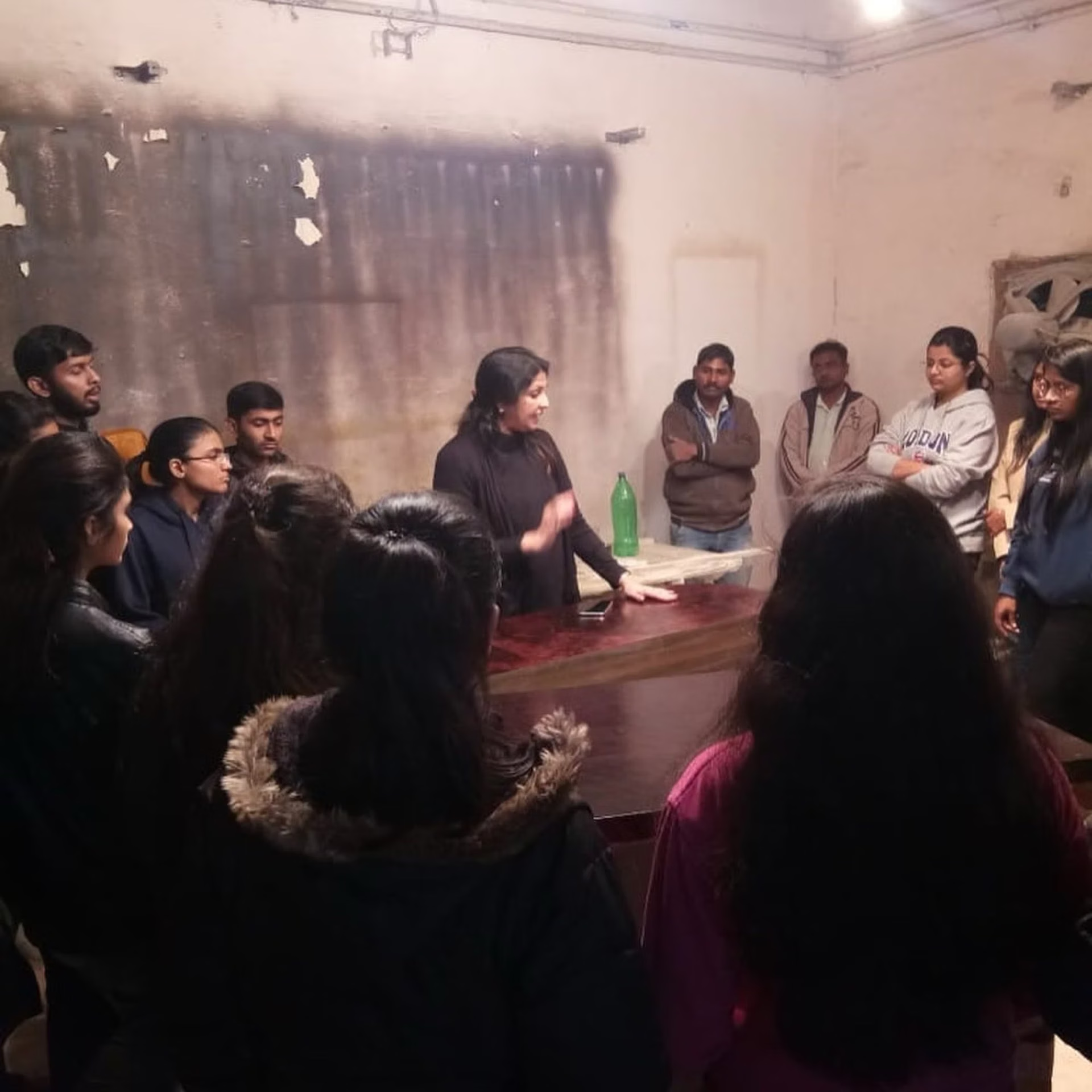
The fastest way to audit a factory is to stand in it. Ours is open six days a week.
Plan a factory visit →Visiting the Furniture Factory in Vadodara, Gujarat
The factory is open 10 AM to 7 PM, Monday to Saturday, and Sundays by appointment. You are welcome to visit, and clients with work in production are encouraged to. Call +91 94260 73781 for the studio, new commissions and architects, or +91 90990 14328 for the works, trade and delivery. The full picture of the building, with photographs, is on our factory page.
If you come, do not let anyone give you the polished loop. Ask to walk the ten departments in order, from the timber store to the packing bay, and ask the nine questions above as you go. Ask to see a piece at the bench and the drawing it came from, side by side. Ask to open a wardrobe door and close it again. It takes about an hour, and it will tell you more than any brochure.
If you cannot travel — and many of our clients are furnishing a house in India from another country — the same evidence can come to you. Drawings before cutting, photographs at each stage, and quality control checked against the sheet. The path from drawing to installed piece is set out in how bespoke furniture is made.
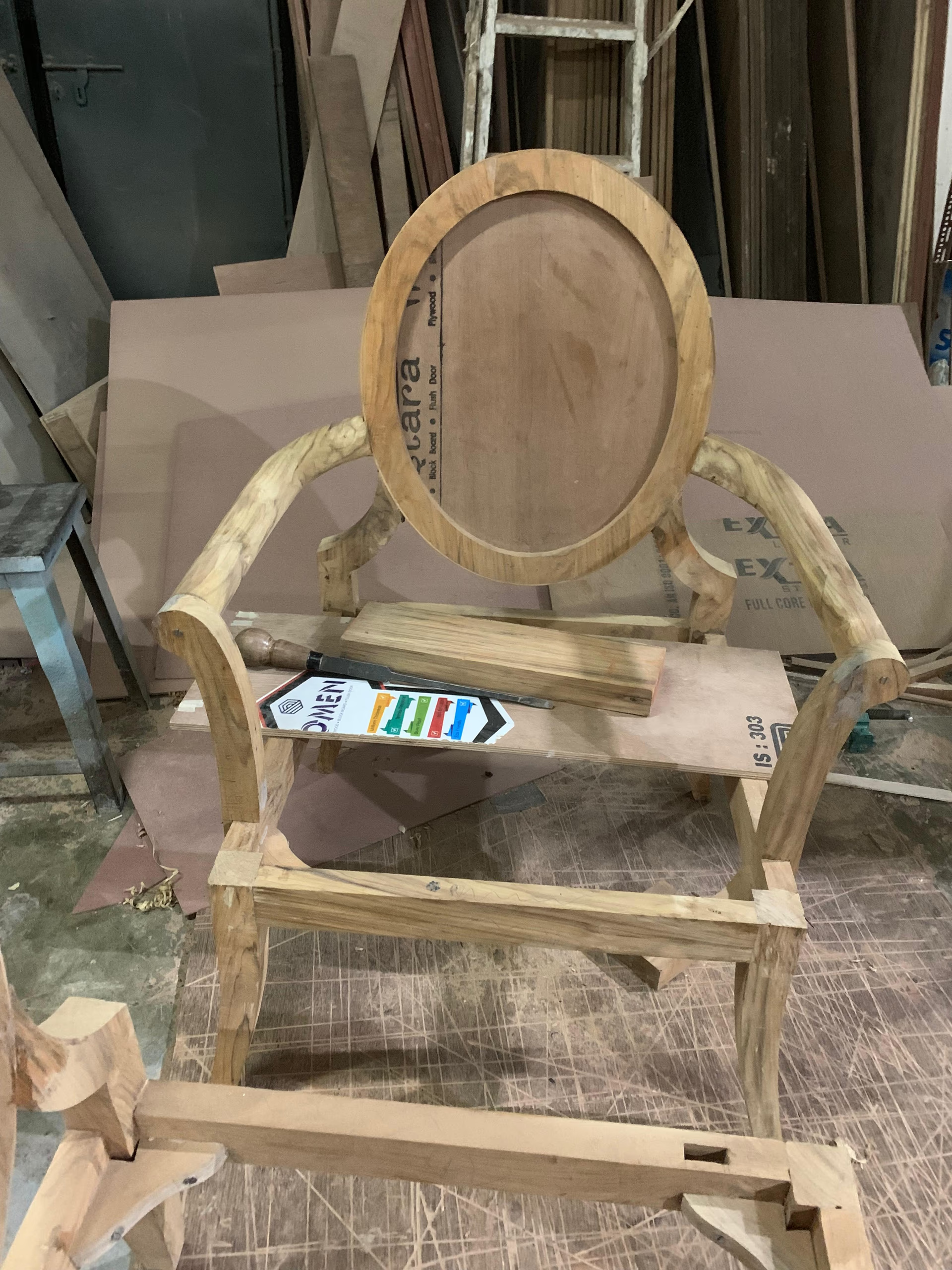
If you are weighing up a maker for a large order, come and use the checklist on us. Book a walk-through through contact, see the building and its ten departments on the factory page, or, if you are specifying for a client, start with the trade page and send us a plan.