
FF&E means furniture, fixtures and equipment — the loose and semi-fixed items that go in after the fit-out. On a corporate floor in India, FF&E is manufactured to a schedule, not bought off a catalogue. Designatore manufactures FF&E for corporate offices, workplaces and large private residences. We do not take hotel, restaurant or hospitality work.
You have a package to place and three ways to place it. You can import it, buy it off a catalogue, or have it manufactured to your drawings. The package might be a corporate headquarters floor, a row of executive cabins, a whole villa, or a set of apartments. Whichever it is, the decision is made once and lived with for ten years.
This guide is written for the person holding that decision — the project architect, the design firm’s procurement lead, the developer’s project manager. It explains what FF&E actually is, what a schedule line must contain before anyone can price it, how the package sequences with the site, and what really drives the number. Designatore is a luxury furniture manufacturer in India, with its factory in Vadodara, Gujarat, and this is how we see the work from the making side.
What FF&E Means, and What It Is Not
FF&E stands for furniture, fixtures and equipment. The simplest test is the roof test. If you could lift the roof off the building and take the item out without calling a mason, it is FF&E. A desk, a chair, a boardroom table, a loose console, a sofa, a lamp — all FF&E. A wall unit screwed into the blockwork and skimmed flush with the plaster is not. That is fit-out joinery, and it belongs to the building.
The boundary sounds academic until the money moves. A fixed wall unit and a loose console are drawn differently, quoted differently, delivered differently and installed differently. The fixed unit needs a site survey after the plaster is done, because a wall is never as straight as the drawing says. The loose console is built to a fixed size in the factory and simply carried in. Put a fixed item in the loose furniture BOQ and you have bought a piece that arrives with no scribe allowance and a visible gap down one side.
| Category | What it covers | Who usually carries it | How it is priced |
|---|---|---|---|
| Fit-out / fixed joinery | Partitions, ceilings, flooring, wall panelling, units screwed to the structure | Main contractor | Site work, measured after survey, with scribe and making-good allowance |
| FF&E — furniture | Workstations, desks, boardroom and conference tables, seating, loose storage | FF&E manufacturer or contract supplier | Per item against a schedule line, made off site, crated and installed |
| FF&E — fixtures | Semi-fixed items: reception desks, lockers, display and trophy cabinetry | FF&E manufacturer, fixed on site | Per item, plus a fixing and levelling scope on site |
| OS&E | Operating supplies and equipment: crockery, bins, signage holders, small appliances | Client or facilities team | Consumable procurement, usually outside the furniture package |
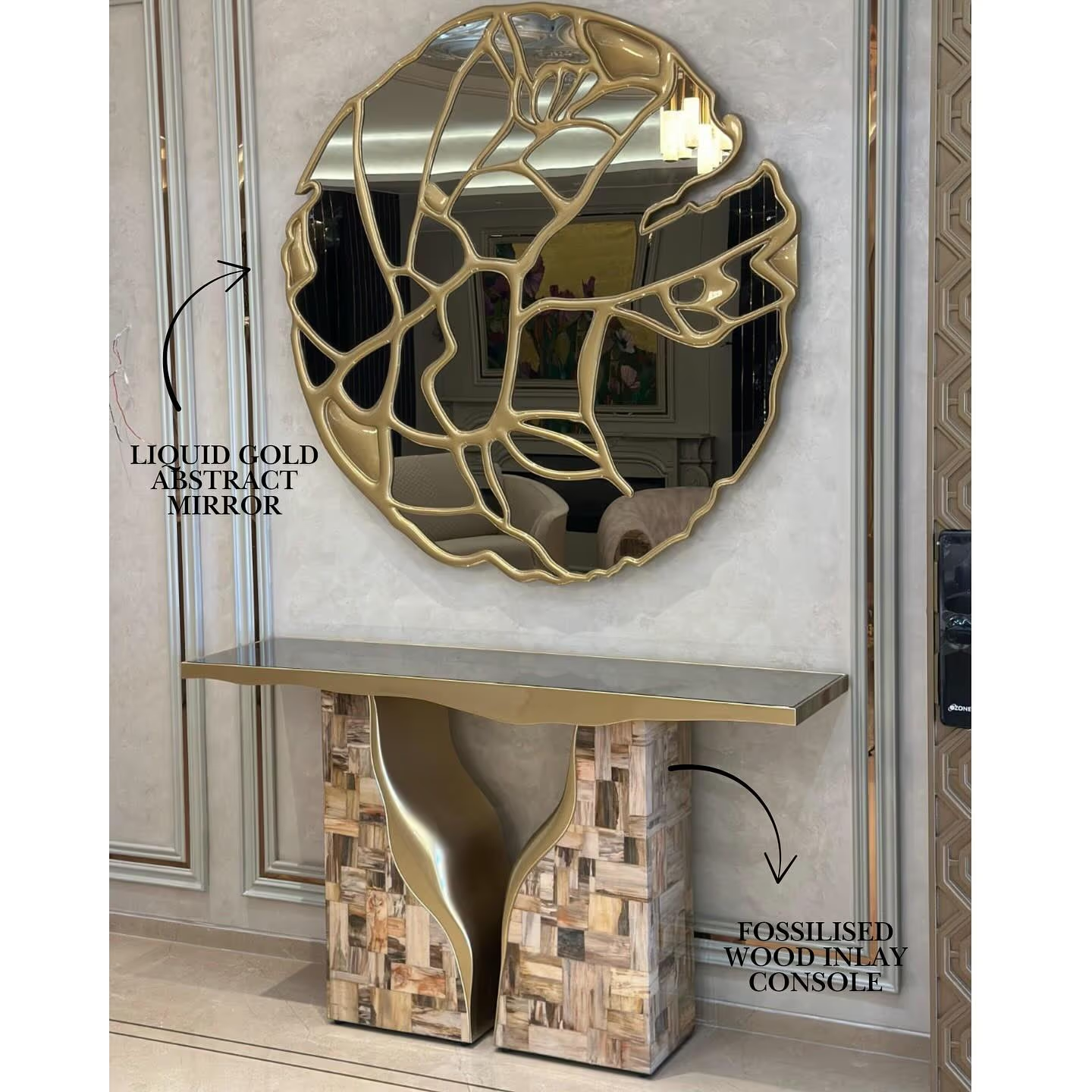
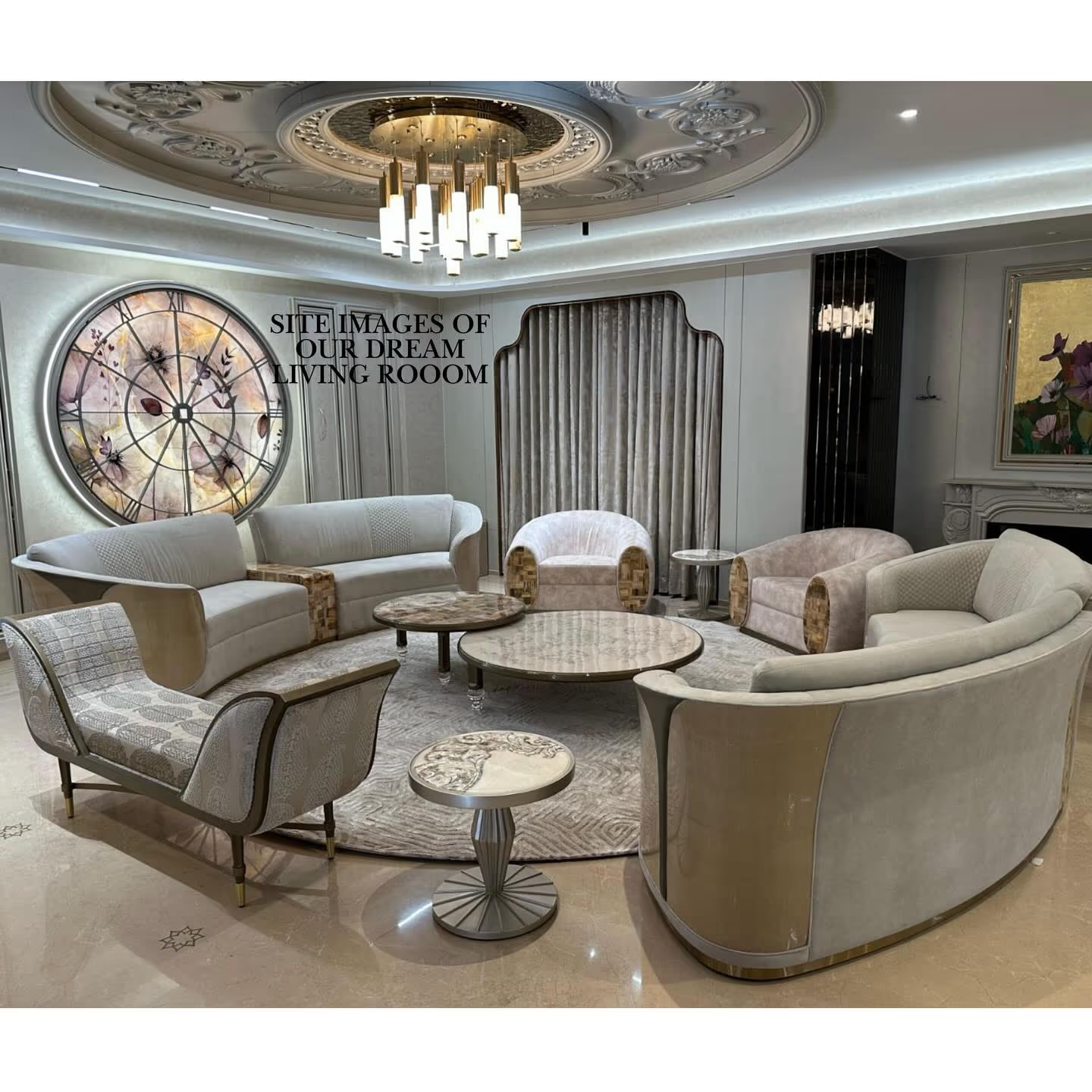
| Loose furniture | Sofas, coffee tables, consoles, side tables, rugs, decorative pieces | FF&E manufacturer or the designer’s own sourcing | Per item, no site fixing, easiest to phase late |
Get this table agreed in writing at tender stage. Every argument we have seen at handover started with one line that two parties each believed was in the other’s scope. Furniture in India sits under HS Chapter 94 and carries 18% GST, so the split also decides how the tax and the e-way bill paperwork read.
The Sectors We Manufacture FF&E For — and the One We Do Not
FF&E is a word the market has attached to hotels. So let us be plain, early, and once. Designatore does not take hotel, restaurant, resort, café or any hospitality FF&E. We do not quote it and we do not want it. If that is your package, a specialist contract supplier will serve you better than we would.
What we do manufacture is two sectors, and the trade that buys for them:
- Corporate offices and workplaces — headquarters floors, leadership cabins, boardrooms, reception, workstations, breakout and cafeteria seating. See corporate.
- Large private residences — whole villas, penthouses, apartment sets, and the loose and fitted pieces inside them.
- Architects and interior designers buying for their own clients in those two sectors, under their own drawings and their own name. See trade.
Saying no is not modesty. It is capacity arithmetic. We run 130+ people across ten departments in one 80,000 sq ft factory — Design & Technical Development, Material Storage & Processing, CNC & Precision Manufacturing, Woodworking & Joinery, Veneering & Finishing, Painting & Polishing, Upholstery, Quality Control, Assembly & Packaging, and Research & Development. Every hour on that floor is booked against a delivery date. A maker who says no to work outside its lane is a maker who finishes yours on the week the schedule promised.
What an Office FF&E Package Contains
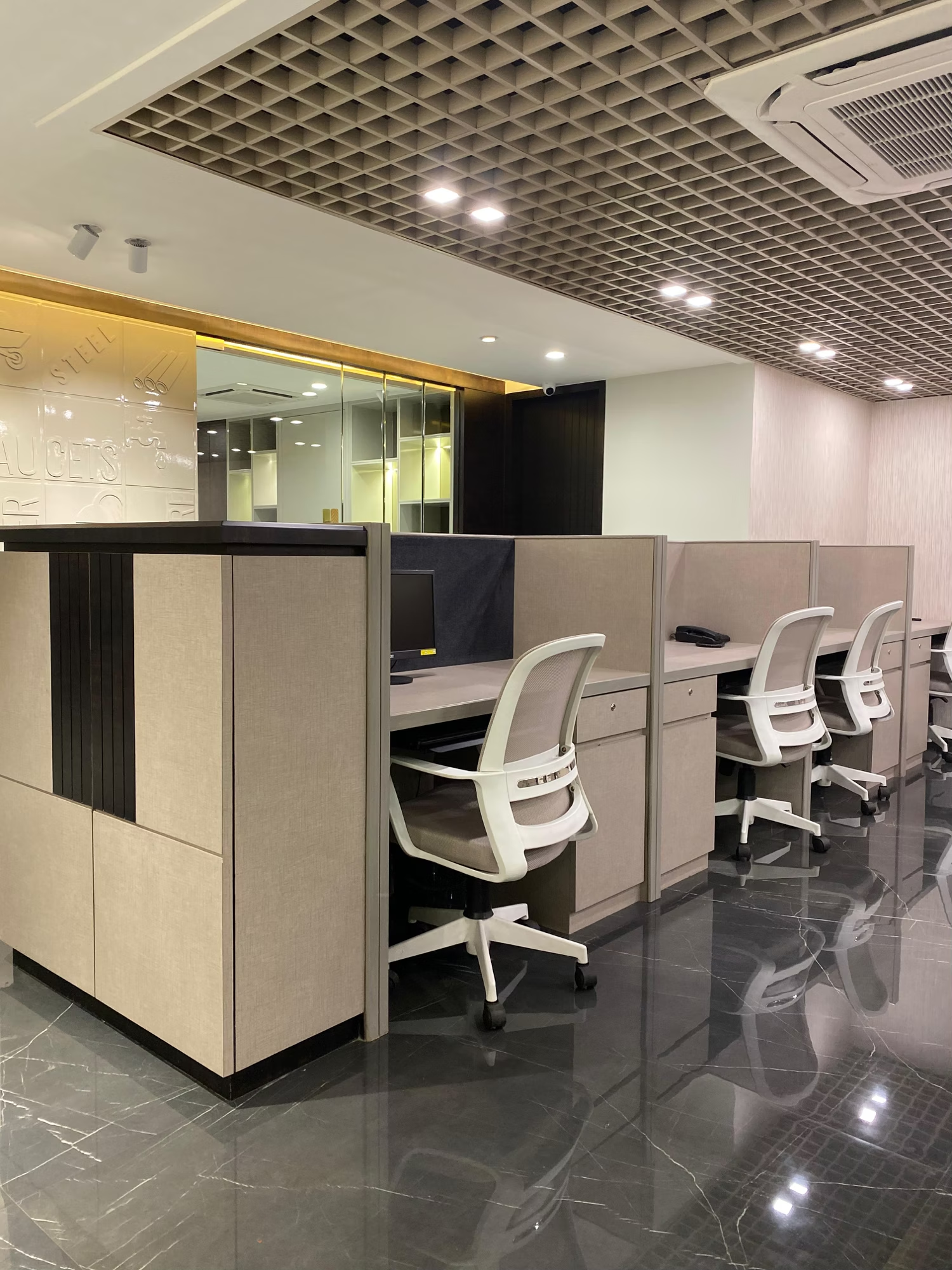
A corporate floor is not one item repeated. It is roughly eight families of item, each with its own drawing set and its own critical dimension. Miss one family from the schedule and it surfaces three weeks before handover, when there is no production time left to fix it.
- Workstations — usually 1,200 × 600mm or 1,500 × 750mm per person, with cable management, screens and a shared spine. Knee clearance must stay 650mm high and 600mm deep, or the desk is unusable no matter how it looks.
- Task and visitor seating — the highest-count line in the package and the one most often ordered late.
- Executive desks and cabins — see our custom executive desk guide for how these are specified.
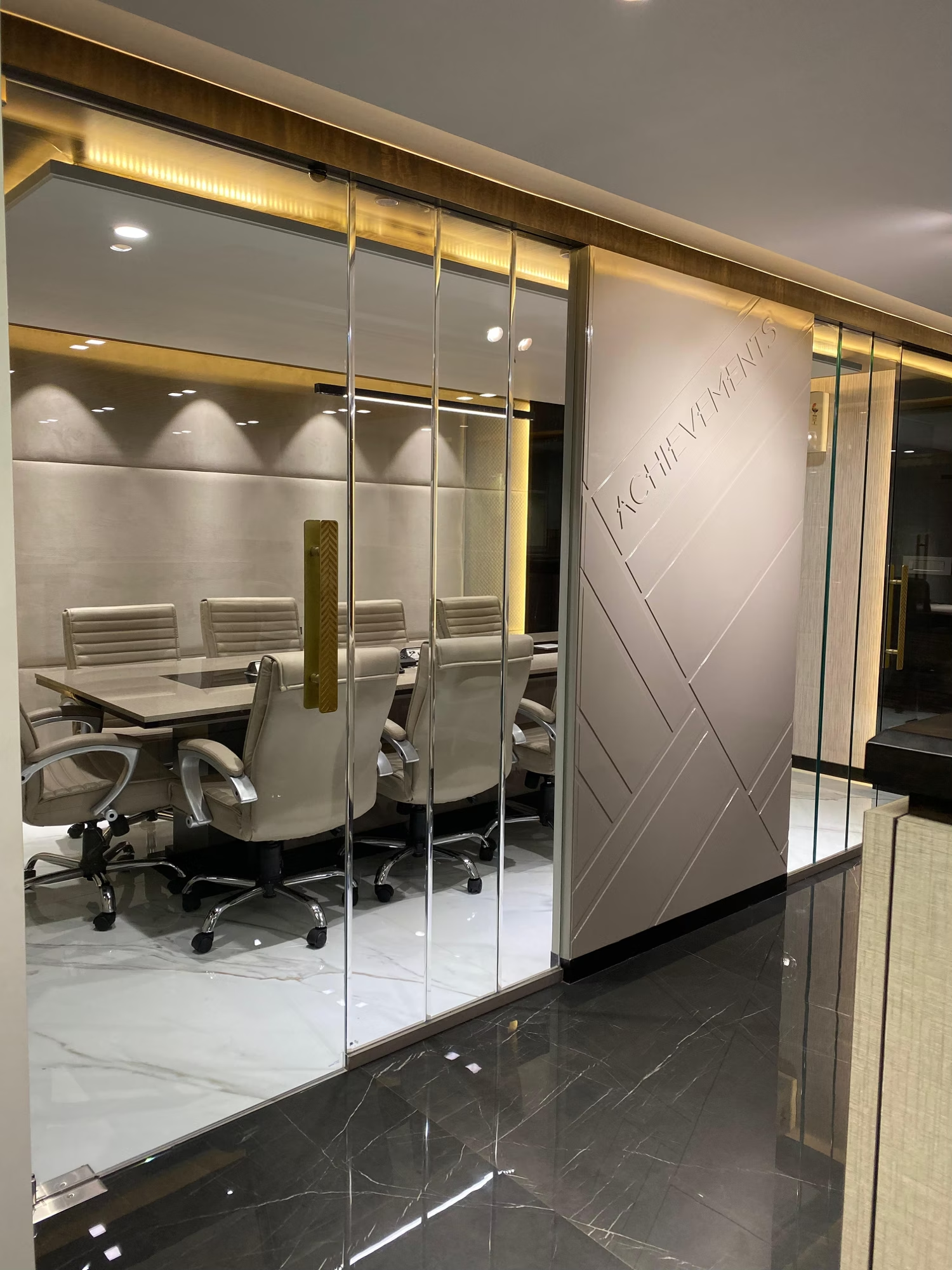
- Boardroom and conference tables — top at 750–760mm high, with 1,050mm minimum walkway behind a pushed-back chair, and power and data cut into the top before finishing.
- Reception desks — semi-fixed, levelled and fixed on site, usually the single most photographed piece on the floor.
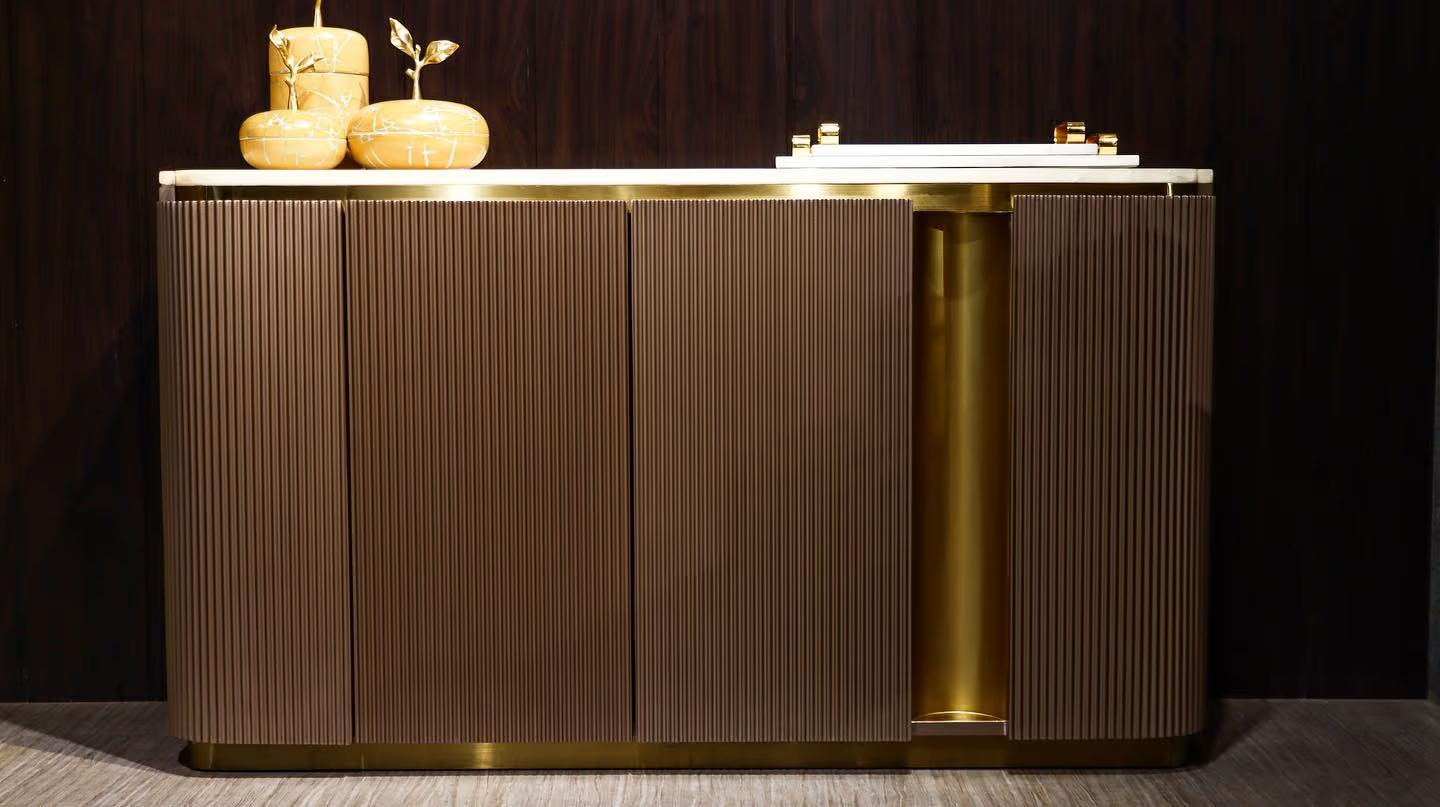
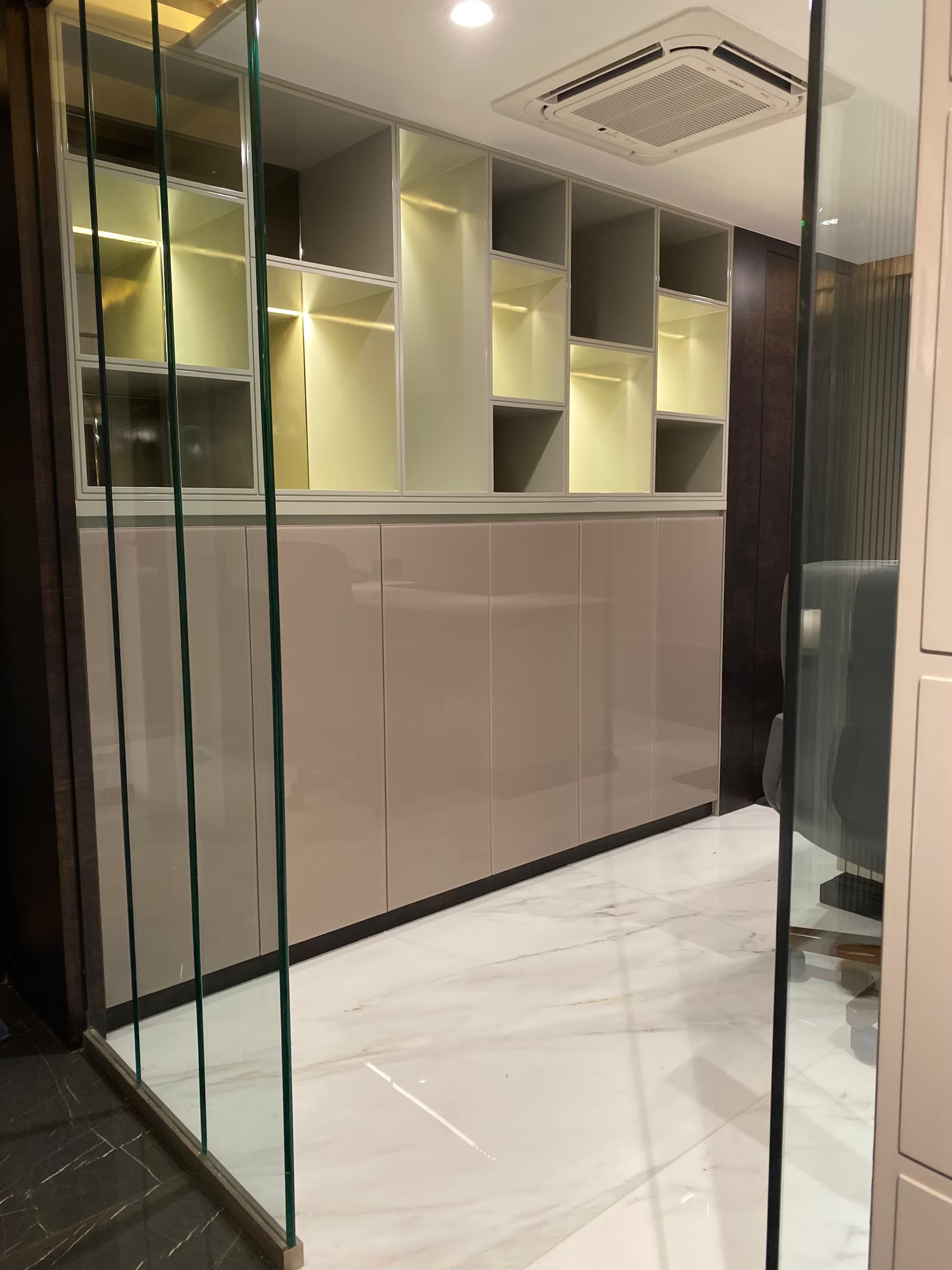
- Storage and display cabinetry — cabin credenzas, filing, trophy and display units, backlit shelving.
- Breakout and cafeteria seating — high stools, banquettes, small round tables at 900–1,050mm counter height.
- Lockers and the loose pieces that finish it — sofas, coffee tables, consoles, side tables.
How to Write an FF&E Schedule Line That Can Be Quoted
The FF&E schedule is the spine of the package. It is the document that turns a mood board into a price. A good schedule line can be priced by a manufacturer without a single phone call. A bad one guarantees that four vendors quote four different pieces and you compare numbers that were never comparable.
The most common failure is specifying by name instead of by dimension. “3-seater sofa” is not a specification. A 3-seater can be 1,900mm long or 2,600mm long. It can have a 550mm seat depth or a 650mm one, and those two sofas sit completely differently in the same room. Name the numbers, and everyone builds the same thing.
| A line that cannot be quoted | The same line, ready for manufacture |
|---|---|
| Sofa — 1 no. | 3-seat sofa, 2,400 × 950 × 780mm overall, seat height 440mm, seat depth 580mm, frame kiln-dried hardwood, upholstery [fabric ref], legs brushed brass, quantity 4, delivery Pune, week 32 |
| Boardroom table — large | Boardroom table, 12-seat, 4,200 × 1,400 × 750mm, segmented top with concealed spline for lift access, veneer [flitch ref], base RAL 9005 matt lacquer, 2 power/data cut-outs, quantity 1, delivery Mumbai, week 28 |
| Cabin storage unit | Credenza, 2,100 × 500 × 750mm, carcass 18mm ply, front fluted veneer [ref], soft-close drawers, brass pull [hardware ref], wall-fixed, quantity 9, delivery Bengaluru, week 30 |
| Task chairs — 60 nos. | Task chair, seat height 430–530mm adjustable, seat depth 460mm, back height 620mm, mesh back, upholstered seat [ref], 5-star base, quantity 60, delivery Bengaluru, week 31 |
Send the schedule with drawings, not instead of them. A scaled PDF plan with dimensions beats a beautiful render with no sizes, every time. DWG, DXF, PDF, SKP, 3DM and STEP are all workable. We turn them into GA drawings, then shop drawings, then a cut list — and we detail the same way whether the file arrives as a CAD set or a floor plan drawn on paper. That process is set out in how we design furniture around your room.
FF&E is the last trade in and the first thing your client sees. Nothing hides at that stage.
Why One FF&E Manufacturer Beats Four Vendors
Splitting a package across vendors looks like risk management. On finishes it is the opposite. Materials come in batches, and batches do not repeat.
A leather hide averages 45–55 sq ft and is dyed in lots. A second lot, dyed three months later from different hides, will read slightly warmer or slightly greyer than the first. On one chair nobody notices. On forty chairs around one boardroom table, half from lot A and half from lot B, you see it from the door and you cannot unsee it. The same is true of veneer. Veneer is sold by the flitch — consecutive leaves from one log — and once a flitch is finished it is gone. Two flitches of the same species are two different woods.
One manufacturer for the whole package means one veneer flitch, one lacquer batch, one leather lot, one hardware standard and one RAL or NCS reference across every item. It also means one person is accountable when a workstation and a cabin credenza are supposed to be the same colour. Four vendors means four readings of the same brief, and no one to call when they do not agree.
Where a package is genuinely too large for a single batch, say so at the start. Then the honest answer is to zone it — all of floor 3 from one lot, all of floor 4 from the next — so that any variation falls at a door line where the eye already expects a break, not across one room.
Architects and design firms: we manufacture under your drawings, your name and your client relationship.
See how the trade programme works →Sequencing FF&E With the Site Programme
FF&E is the last trade in and the first thing the client sees. That single sentence explains most of the pain in the category. Everything upstream of you can slip, and the handover date rarely moves with it.
The real order on a corporate fit-out runs like this, and there is no shortcut through it.
- Civil and blockwork — wet trades, screeds, plaster. The building is full of water at this stage.
- Services — electrical, data, HVAC, sprinklers, first fix.
- Ceiling and lighting — grid closed, levels set.
- Flooring — laid, cured and protected.
- Site clean and power on — the floor must be dry, dust-controlled and lockable.
- FF&E delivery and installation — crates in, unwrapped, positioned, levelled, fixed, snagged.
- Snag close-out and handover — touch-up, making good, as-built record.
Furniture delivered into a wet site is furniture damaged. We kiln-dry timber to 8–12% moisture content for Indian interiors, which is where it needs to sit for a building that swings between roughly 30% and 85% relative humidity across a year. Park that same piece in a room still drying out from screed and plaster, and it drinks moisture it was never meant to hold. MDF and particle board swell irreversibly once wet — there is no drying them back. Wood moves across the grain, not along it, so a 600mm-wide veneered door is the first thing to cup.
Phasing changes the crating plan, not just the calendar. A floor-by-floor handover means crates must be labelled by floor and by room, staged in the order they will be unpacked, and sized to enter the service lift. Measure the lift car and the lift door before the crate is designed, not after. A 12-seat boardroom top that will not enter a lift has to be engineered as a segmented top with a concealed spline — a decision made in the drawing office weeks earlier, or not at all. Check the corridor too: 900mm is the working minimum, and a 600mm carcass cannot always turn a 1.2m corridor corner.
Prototypes and Mock-Ups Before a Production Run
Before we cut sixty workstations, we build one. You sit at it, open the drawers, check the cable route, put a laptop on it and look at the finish under the actual light the office will have. Then you sign it. That signed sample becomes the reference every following unit is measured against.
The mock-up is the cheapest insurance in the project. One prototype costs the price of one unit and a few days. Discovering after the run that the seat height is 20mm wrong, or that the finish flashes under LED downlights, costs sixty units and the handover date. On repeated items — workstations, task chairs, cabin credenzas, cafeteria seating — a prototype is not optional in our process.
For one-off pieces we work with samples instead: a finished corner sample, a veneer lay-up, a stone slab viewed physically. Stone is the sharpest case. Slabs are sold per slab, and vein-matching means buying the block rather than the square foot. A stone top ordered from one photograph is a gamble, because the second slab of the same block can look nothing like the first. Onyx and agate are translucent, so they are usually backlit and resin-backed for strength. Whatever the piece, nothing is cut before you approve.
Quality Control, Snag Lists and Installation
Quality control on an FF&E package is checking against a drawing, not against taste. Taste was settled at sign-off. From that point the only question is whether the item in front of us matches the approved shop drawing, the approved finish sample and the approved hardware reference. Our Quality Control department is one of the ten, and it sits between Upholstery and Assembly & Packaging for that reason — nothing goes into a crate that has not been measured.
What gets checked: overall dimensions against the shop drawing; seat height and seat depth on every upholstered item; drawer and door alignment across a run; finish against the signed sample under the same light; hardware against the specified reference; velvet nap direction, which must be cut one way across an entire suite or two chairs in the same room will read as two colours.
On site, installation runs to a snag list — a written, numbered record of every defect found at handover, with who owns it and when it closes. A snag list is a good sign, not a bad one. It means somebody walked the floor with a torch and a tape. Making good is part of the scope: touch-up, re-levelling, adjusting a door that has settled, replacing a marked panel. Ask for the as-built record at close-out so the facilities team knows what they own.
FF&E Manufacturing Cost in India: What Drives the Number
We do not publish a price list. Every project is quoted in writing, in ₹ and $, against your own schedule. But you still need to budget before you tender, so here is what the Indian market runs, and — more usefully — what actually moves the number inside a quote.
| Item / scope | Indian market range (₹) | Approx ($) |
|---|---|---|
| Full office fit-out including FF&E, per sq ft | ₹1,500 – ₹6,000 | $18 – $72 |
| Custom reception desk | ₹2 L – ₹6 L | $2,400 – $7,200 |
| Boardroom / conference table (before chairs) | ₹4 L – ₹15 L | $4,800 – $18,000 |
| Leadership or executive desk | ₹4 L – ₹15 L | $4,800 – $18,000 |
| A single leadership cabin, fully furnished | ₹8 L – ₹40 L | $9,600 – $48,000 |
Those are market bands for planning, at ₹83 = $1, not a Designatore quote. Six things move a real number more than anything else:
- Quantity and repetition. Sixty identical workstations cost far less per unit than sixty different ones. Repetition is the single biggest lever you control.
- Material tier. Laminate, veneer, solid timber, semi-precious stone and heavy leather are different worlds of cost. Read how we choose materials.
- Finish complexity. A matt lacquer is one thing. Fluting, carving, high-gloss polish, inlay and hand-applied patina each add hours per piece.
- Hardware. Runners, hinges, locks and pulls on a 200-drawer package are a line item, not a detail.
- Site access and phasing. Lift size, corridor width, night-only working windows and floor-by-floor delivery all add handling.
- Timeline compression. Asking for eight weeks of work in five is the most expensive request in the category, and the one most likely to cost quality.
For the wider budget picture around the furniture, our office interior cost guide for India breaks the fit-out down per square foot and by cabin type.
Importing FF&E vs Making It in India
Imported furniture sits under HS Chapter 94. At the Indian border it carries 20% Basic Customs Duty, 5% Agri-Infra Cess and 18% IGST on the value plus duty — about 47.5% of the shipped value in cash, and roughly 25% non-recoverable once a GST-registered buyer reclaims the IGST. That refund still means paying the full amount upfront and waiting for it. Add ocean freight, marine insurance, clearing and inland transport, and a low sticker price typically climbs 40–70% by the time it reaches your floor.
Then there is the part a container cannot carry. Imported FF&E is built to warehouse-standard sizes, not to your survey, so it arrives at a floor whose columns and cores it has never met. If a piece is damaged or wrong, the fix is months away with an ocean in between — and FF&E is the trade with the least float in the programme. We set the full arithmetic out in China vs India: the real cost of furniture for your project, and you can run your own package through the landed-cost calculator.
Reconfirm the live CBIC rate before you quote a client. Duty structures change with each budget, and a rate quoted from memory is a rate that will be wrong in a year.
Delivery, Crating and Free Freight Across India
Delivery anywhere in mainland India is free. That includes the crate, road freight, transit insurance for the full value of the goods, the e-way bill, all the paperwork, and the GST on all of it. There is no minimum order. An e-way bill is required in any case above ₹50,000 of consignment value, and on an FF&E package that is every truck — so it is handled as standard, not as an extra. The two exceptions are Andaman & Nicobar and Lakshadweep, which travel by sea and are billed at actual cost.
Outside India we deliver worldwide, quoted per project. We handle export packing and documents. Freight, duty and clearing depend on the destination port, so those are quoted honestly rather than guessed. The full policy is on the delivery page.
Crating is part of the specification, not an afterthought. Tell us the phasing, the lift dimensions and the floor sequence at drawing stage, and the crates are built and labelled to match — by floor, by room, in unpacking order. Tell us at dispatch, and someone will be dismantling a crate in a corridor at 11pm.
Ready to price a package? Send us the FF&E schedule and the floor plan — DWG, PDF or a scanned drawing all work — and we will come back with GA drawings and a written quote in ₹ and $. Start at customization, see the corporate work at corporate, or come and walk the factory in Vadodara before you place a single line.